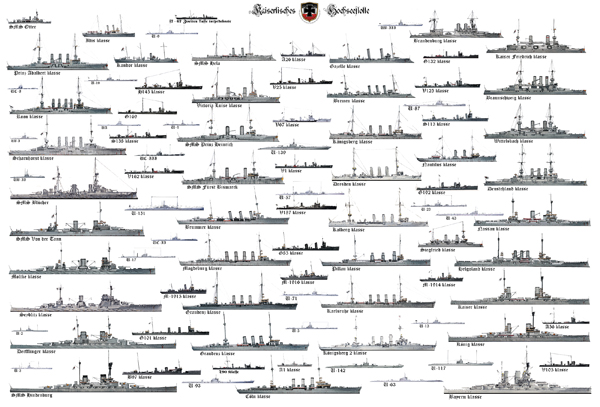
 Germany (1906)
Battleships Deutschland, Hannover, Pommern, Schleisen, Schleswig-Holstein
The five battleships of the Deutschland class were the last pre-dreadnoughts built in Germany. Ordered in 1903-1905 just as HMS Dreadnought was under construction, they were completed and accepted into service in 1906-1908 and virtually obsolete by 1914. Tirpitz eluded these criticisms by arguing that future dreadnoughts would need refit to the Kiel Canal, a long and especially costly endeavour, worth the price of pre-dreanought. Thus Deutschland, Pommern, Hannover, Schlesien, and Schleswig-Holstein were still highly regarded, and not only they took part in the Battle of Jutland, but they were still around in WW2, especially Schleswig-Holstein, which “opened the ball” on Poland on 1st September 1939.
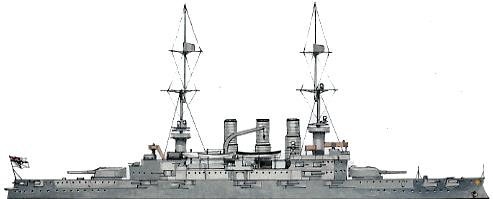
Illustration of the class in 1914.
Design
In a few short brush strokes, the Deutschland were an incremental evolution of the previous Braunschweig, slightly smaller with rearranged funnel but a higher power-to-weight ratio and improved secondary battery, whereas their light battery was homogeneously fixed to 18-20 guns 8,8 cm naval guns. The armour was also redesigned, better distributed and benefited most to the turrets and barbettes, making them overall the best of all German pre-dreadnoughts.
Development
In 1900, Vizeadmiral (Vice Admiral) Alfred von Tirpitz, at the head of the Reichsmarineamt or Imperial Naval Office wanted the Second Naval Law to be voted by the Reichstag. This was an amendment to the 1898 1st Naval Law, and stated a fleet strenght of 19 battleships by 1 April 1904, reached with the Wittelsbach-class, but not it radically increase it to thirty-eight. In this first tranche, the Braunschweig class had the new 28 cm (11 in) guns, giving them a firepower more serious against foreign opposition. The naval command wanted ten battleships (so five more) of the Braunschweig type to be registered in the 1901 fiscal year, with two ships laid down yearly, but they ultimately only five were granted and during construction minor improvements were applied to the design, that culminated in the 1903 fiscal year with the lead ship of a second group called SMS Deutschland. It was then significantly altered ever more to become a brand new class of its own.
Changes were made to the secondary and tertiary batteries mostly, based on recent reports, notably from the new ideas (not yet from the Russo-Japanese war as this was still 1903). Designers notably decided to discard wing turrets for secondary guns due to their weight and support structures and instead return to a casemate-only arrangement, more efficient and lighter. This had another benefit, freeing deck space to fit four more 8.8 cm (3.5 in) guns and relocate the last four in protective embrasures. Deutschland and Hannover also were modified to act as flagships for the fleet (1st) and squadron (2nd), and thus received extra accommodation spaces. Wit this class also came mixed sets of fire-tube and water-tube boilers and later an uniform set of water-tube boilers. These were lighter, with weight savings going into the armor layout with a slightly thicker armor belt, and strengthened upper deck.

SMS Lothringen through the Kiel Canal
The Deutschland design however was criticized as not only they took not account of the Russo-Japanese war as they were completed in 1905-1906, but also not taking in account the new trend of all-big-gun batteries. They were even not semi-dreadnoughts, having no intermediate heavy camiber, something all navies started to go for in 1904. By intermediate, this was a caliber around 200mm or 8-inches, however it was estimated the 170 mm were largely enough, especially compared to the usual 120-150 mm of more navies. This pushed back still the start of the Nassau class, first German dreadnought battleships to 1903. Tirpitz insisted on the Deutschlands for the same reasons the French pushed back the construction of their own Courbet class: Inadequate facilities to built larger ships.
They just did not fit in the existing naval infrastructure, and delaying the class by long construction of new drydocks meant a serious dent in the program. The most significant issue overall was the Kaiser Wilhelm Canal. It neede dto be dredged further and Widened, as well as improving harbor facilities, all which was to also cost the equivalent of two battleships. Tirpitz mostly wanted to avoid another budgetary fight with the Reichstag, just after battling so gard to obtain the 1900 law. So construciton of the Deutschland-class went on, the last being completed in 1908, making obsolescent at the time. The entire world just jumped in the Dreadnought bandwagon from December 1906.
Hull and general design
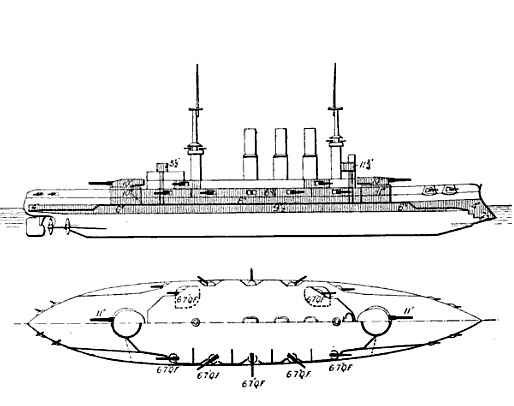
Deutschland class armour schematics
The Deutschland-class measured 125.9 m (413 ft 1 in) long (waterline), 127.6 m (418 ft 8 in) overall, for a beam of 22.2 m (72 ft 10 in) and draft of 8.21 m (26 ft 11 in) forward, so the were a bit smaller, at least in lenght than the Braunschweig class. Displacement was slighty less at 13,191 metric tons (12,983 long tons) on normal load and up to 14,218 metric tons (13,993 long tons) when fully loaded. Versus 13,208/14,394 t. Their hulls was however still built the same, with transverse and longitudinal steel frames and riveted steel hull plates over them. The hull was also divided into twelve watertight compartments, one less than the Braunschweig, apart HMS Pommern. There was als a double bottom, but it extended for 84 percent of the length of the ship versus 60% for the Braunschweig, quite a feat.
Deutschland and Hannover were completed as flagships so they had an enlarged superstructure aft, housing greater command staffs, and differed in details between them. Deutschland was the only one having a large forward CT incorporating a central firing control position, and Pommern had the same conning tower, but the other three ships had shorter conning towers without fire-control. All five however had short military mastsn with lighter poles atop and spotting tops platfom, two for these, above the roof of the spoting tops.
The crew amounted to 35 officers and 708 enlisted men, like the previous class. As flagship, there was either an admiral staff or squadron commander’s staff, the latter made of 13 officers and 66 enlisted men, and as a divisional flagship, 2 officers and 23 enlisted men. This of course changed in the interwar and by 1935, Schlesien had 29 officers and 559 enlisted men plus 214 cadets, making her quite crowded. Schleswig-Holstein was also modified as TS but had a crew of 31 officers and 565 men plus 175 cadets. All carried for these crews a fleet of the usual boats, two picket boats, one admiral’s barge, two launches, one pinnace, two cutters, two yawls, and two dinghies handled by large cranes amidships. They were stacked alonngside the funnels, far from the main guns blast. Deutschland differed by having some of these boats located further forward.
Powerplant
Deutschland and sisters had all the same arangement as before, three shafts, driven each via a transmission by a triple-expansion steam engine: As usual, the outer shafts received three-bladed 4.80 m (15 ft 9 in) diameter propellers, while the center shaft used for lower rev and cruise had a four-bladed fixed-pitch bronze propeller 4.5 m (14 ft 9 in) in diameter. Each engine was also located in its own engine room. Deutschland was the only one fitted with eight water-tube boilers plus six fire-tube boilers. However this configuration was stated as complicated to maintain so the other four went for an uniform twelve water-tube models, all coal-fired. They were located in three separate boiler rooms for flooding safety with each group of four exhausted in a single funnel, making for their 3-funnel silhouette, like the Braunschweig.
Deutschland had engined rated for 16,000 metric horsepower (15,781 ihp; 11,768 kW). This of course differed from the other four, rated instead at 17,000 metric horsepower (16,767 ihp; 12,503 kW). So if the design speed was 18 knots (33 km/h; 21 mph), on trials they diverged between them. All five exceeded that figure. SMS Deutschland, from 17,000 metric horsepower (17,000 ihp; 13,000 kW) obtained a modest 18.6 knots (34.4 km/h; 21.4 mph). But the others, based on 17,696 shp and up to 19,330 metric horsepower (17,454 to 19,066 ihp; 13,015 to 14,217 kW) went between 18.5 and 19.1 knots (34.3 to 35.4 km/h; 21.3 to 22.0 mph) with Schleswig-Holstein being the fastest.
Deutschland had a built-in series of compartments part of the overall side protection, large enough for 700 t (690 long tons; 770 short tons) of coal. The others were better distributed in that matter and could carry more, up to 850 t (840 long tons; 940 short tons), stil leaving many other spaces freed. If needed, they could be filled as well and used as as coal storage, bringing the total to 1,540 t (1,520 long tons; 1,700 short tons) for Deutschland, 1,750 t (1,720 long tons; 1,930 short tons) for the other four. Maximum range was thus 4,800 nautical miles (8,900 km; 5,500 mi) at a cruising speed of 10 knots (19 km/h; 12 mph). There was also an electrical power unit made of four turbo generators for a total of 260 kilowatts (350 hp), each working at 110 volts for lighting and all on-board electrical systems. The ship could use her armament while her boilers were shut cold.
The Deutschland class being lighter but shorter than the previous class, handled less easily but at least suffered less marked weather helm. Their metacentric height was 0.98 m (3 ft 3 in). Steering was controlled with a single rudder, which limuted their evolutions and turing radius.
Protection
The Deutschland class had of course Krupp cemented armor, the best at the time:
–Main armoured Belt: Lead ship 225 mm (8.9 in) waterline down to 140 mm (5.5 in), lower edge. 240 mm (9.4 in) waterline/170 mm (6.7 in) lower edge for her sisters.
–Belt’s outer ends: 100 mm (3.9 in) on all ships. Belt was backed 80 mm (3.1 in) teak.
–Upper belt/casemate deck: Deutschland 160 mm (6.3 in). Others 170 mm thick.
-Compartments filled with cork cofferdams to stop uncontrolled flooding
–Armored deck: 40 mm (1.6 in) thick. Sloped section 97 mm (3.8 in) bow and stern sections, 67 mm (2.6 in) main section.
–Main battery gun turrets: sides 280 mm (11 in), roofs 50 mm.
–Main Barbettes: 250 mm (9.8 in).
–Forward conning tower: 300 mm (12 in) sides, 80 mm roof
–Rear conning tower: 140 mm (5.5 in) sides.
To compare, here are Braunschweig’s protection Figures
Main armored belt: 225 mm (8.9 in) thick amidships (Over the magazines and propulsion spaces).
Deck armor: 40 mm (1.6 in) thick horizontal, edges sloping down to meet the belt’s lower edge: 75 mm (2.95 in) amidships, 140 mm (5.5 in) fore and aft
Upper belt: 140 mm between the fore and aft barbettes.
Casemate Deck: 140 mm thick, along the main deck.
Casemate guns: 70 mm (2.8 in) gun shields.
Main battery turrets: 250 mm sides, 50 mm (1.97 in) roofs
Secondary turrets: 150 mm (5.9 in) sides.
Forward conning tower: 300 mm (11.8 in), roof 50 mm
Aft conning tower: 150 mm thick sides, 30 mm (1.2 in) roof.
Armament

This was a repeat of the preceding Braunschweig class with changes fore the secondary battery, from turrets to casemates and more 88 cm gnuns.
Four 28 cm SK L/40 QF
 Hydraulically operated twin turrets, electric power as a base. Centerline, forward and aft as all previous designs. They fired 240-kilogram (530 lb) shells at 820 meters per second (2,700 ft/s) and there were 85 shells per gun in the magazines so 340 total. These guns were in C/01 turrets, with independent cradles for a −4 degrees depression, +30 degrees elecvation, making for a best (not optimal) range of 18,800 meters (61,700 ft). Fire control was limited to two rangefinders in the spottiing tops and platforms over the bridges for and aft.
fourteen 17 cm SK L/40 QF

A 17 cm SK L/40 on a Kusten-Mittlepivot-Lafette
All of which were mounted in casemates, five on either side in the upper deck, the remaining four a deck above in the superstructure, coverine each corner. They fired 64-kilogram (141 lb) shells at 850 meters per second (2,800 ft/s) muzzle velocity. The calibre was determined to be the largest possible shell reasonably handled without machinery, but the crew suffered of obvious exhaustion on the long run. These guns could elevate to 22 degrees for a top range of 14,500 m (15,900 yd), again not optimal for accuracy. The rate of fire was about a shot every 9-10 seconds, making for 6 rpm. Each gun was provided with 130 shells, making for a total of 1,820.
Twenty-Two 8,8cm SK L/35 QF
For defense against torpedo boats, the tertiary battery comprised a uniform array of twenty-two 8.8 cm SK L/35 all placed in casemates in hull sponsons, and embrasures in the superstructure, or open mounts, shielded in that case. They fired 7 kg (15.4 lb) shells, at a muzzle velocity of 770 m/s (2,526 ft/s). The cradle elevation to 25 degrees enabled a maximum range of 9,090 m (9,940 yd). There were 130 shells, making for a total of 2,860. When completed there were in shortages, so instead four 3.7 cm (1.5 in) QF autocannos were installed and quickly removed.
Six Torpedo Tubes
Like all previous battleships they came with six 45 cm (17.7 in) torpedo tubes in a lozenge arrangement: One bow, one stern, two broadside, all below the waterline. There was a total of 16 torpedoes. These Schwartzkopf models measured 5.15 m (16.9 ft) and carried a 147.5 kg (325 lb) TNT warhead. They had two speeds: 26 knots and 3,000 m (9,800 ft) or 31 knots (57 km/h; 36 mph), and 1,500 m (4,900 ft).
Modifications
Already in WW1 they were quite extensive:
1909 and 1914:
-Searchlights changed from positions
-New, fully enclosed spotting top to the fore mast.
late 1915: Schlesien and Schleswig-Holstein had eight oil-fired boilers installed.
Late 1916: Deutschland had two 8.8 cm guns removed and replaced by AA mountings.
1917: Some were partially or fully disarmed, guns recycled on railway units.
Late 1917: Deutschland completely disarmed
1918: Schleswig-Holstein down to 4x 10.5 cm (4.1 in) SK L/45 guns, 4x 8.8 cm SK L/30 guns
1918: Schlesien re-armed the same, also for training duties.
1920; Reichsmarine Modifications:
Back in active service as authorized by the treaty of Versailles, they all received modernizations and alterations:
1921: Hannover, never disarmed, kept her 28 cm and 17 cm guns but was down to eight 8.8 cm, lost her torpedo tubes
1925: Modernization for Schlesien and Schleswig-Holstein:
-Re-installation of their 28 cm batteries
-Fourteen 15 cm (5.9 in) SK L/45 guns
-Eight 8.8 cm guns.
-New large tubular fore masts installed with fully enclosed spotting tops.
-Two forward funnels merged (in 1928 for Schleswig-Holstein)
-Forward sponsons plated over.
Late (1930-1931)Reichsmarine Modifications:
Hannover:
-2x above-water 50 cm (20 in) torpedo tubes fitted, 4x 8.8 cm AA guns.
-New Tubular mast installed, bow sponsons plated over.
Schlesien & Schleswig-Holstein:
Two 15 cm guns removed, four 50 cm torpedo tubes, four 8.8 cm AA guns.
Kriegsmarine Era
1935: 15 cm guns removed. Schlesien had four 2 cm (0.79 in) AA guns, same for Schleswig-Holstein 1936, plus sponsons removed.
1938: Schlesien had her coal-burning boilers removed, boiler room converted as accommodation space and training room for cadets. Uptake removed (two straight funnels).
1939, September, Schleswig-Holstein: +Eight 2 cm guns.
February 1940: Schlesien: +four 3.7 cm (1.5 in) L/83 AA guns.
April 1940: Remaining 15 cm guns removed, Schleswig-Holstein three removed.
August 1940: Schlesien: 3.7 cm guns removed for the defence of Hamburg. Schleswig-Holstein: Completely disarmed but for her 28 cm guns.
1941: Schlesien: +four 8.8 cm guns, +four 3.7 cm guns, three 2 cm guns.
1943: Hannover reconstructed as target ship: Superstructure recut out and all guns removed but her turrets remained. Schlesien: +two 3.7 cm guns
1944: Schlesien: +four 4 cm (1.6 in) Bofors added, +sixteen 2 cm guns and 8.8 cm replaced with six 10.5 cm FLAK, ten 4 cm AA, twenty-two 2 cm.
1944: Schleswig-Holstein: under refit equipped the same, but never completed before loss (6x 10.5 cm guns, 10x 4 cm guns, 26x 2 cm guns, 4x 3.7 cm).
Deutschland class specifications |
|
| Displacement | 13,191 t (12,983 long tons), Full load: 14,218 t (13,993 long tons) |
| Dimensions | 127.6 x 22.2 x 8.21m (418 ft 8 in x 72 ft 10 in x 26 ft 11 in) |
| Propulsion | 3 shafts VTE engines, 16 Wagner WT boilers, 17,000 PS (12,503 kW; 16,767 ihp) |
| Speed | 18.5 knots (34.3 km/h; 21.3 mph), see notes |
| Range | 4,800 nmi (8,900 km; 5,500 mi); 10 knots (19 km/h; 12 mph) |
| Armament | 2×2 280 mm, 14×170 mm, 22x88mm, 8x450mm TT. |
| Armour | Belt 240, turrets 280, barbettes 305mm, Deck 40 mm |
| Crew | 35+708 (officers+sailors) |
Evaluation
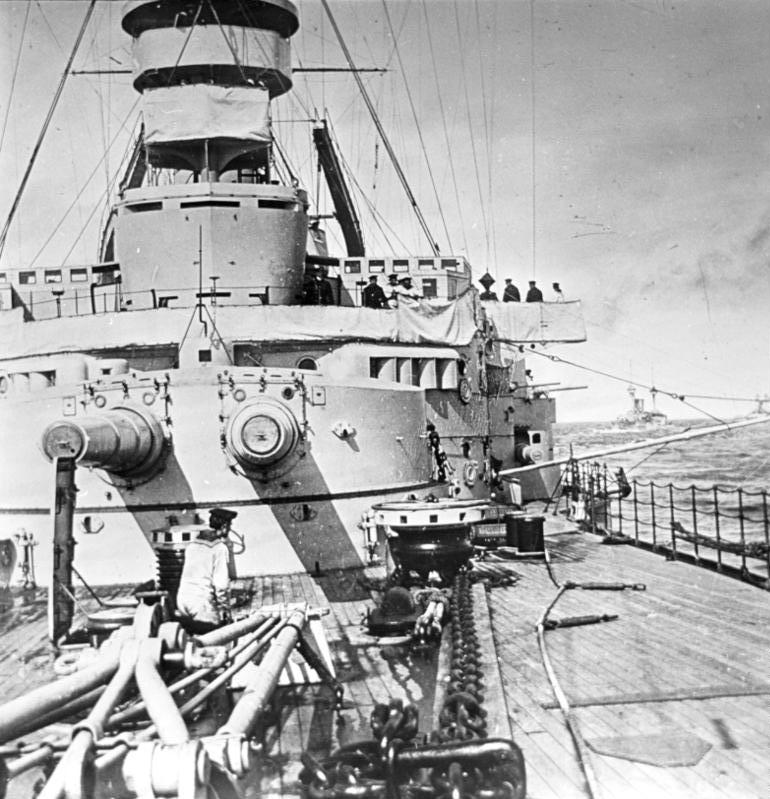
SMS deutschland, prow view
As they were still fresh, even in 1914, they were affected to the front line 2nd squadron. In May 1916, during the Battle of Jutland, they had the opportunity to make talk their powder and show their metal. Pommern barely had time to fire some volleys before being literally ripped open by the explosion of a torpedo in an ammunition bunker, launched by British destroyers of the 12th squadron. Until 1917 these ships remained inactive, withdrawn from Hochseeflotte. Outside of Deutschland, scrapped in 1920, they formed the core of the naval force of the Weimar’s Reichsmarine. They were converted into training ships and rebuilt. In September, 1st, 1939, battleship Schleswig-Holstein fired the first shots of ww2, on polish Westerplatte arsenal.
Gallery


 Deutschland

Deutschland class Linienschiffe off Kiel.
Deutschland was ordered as contract “N” to Germaniawerft, Kiel, laid down first on 20 June 1903, launched on 19 November 1904 and commissioned on 3 August 1906. She was the second of the name after the 1874 armored frigate Deutschland. Trials lasted from 3 August 1906 until late September. She replaced the Kaiser Wilhelm II as flagship, Kaiserliches Marine, from 26 September under Admiral Prince Heinrich. First commander was Kapitän zur See Wilhelm Becker for a month and KzS Günther von Krosigk by September. In the II Battle Squadron, she replaced Weissenburg. Prince Heinrich insisted on accurate gunfire and precise maneuvering as a unit.
She had her first exercises in the North Sea by December 1906, and back to Kiel. On 16 February 1907, she was in the newly created Hochseeflotte (High Seas Fleet) and returned for Fleet maneuvers in the North Sea by early 1907 and made a spring cruise to Skagen in Denmark, then mock attacks on Kiel. In June, she was part of a cruise to Norway after fleet training. She sailed to Swinemünde by early August, to impress Czar Nicholas II on his yacht Standart. She then took part in the annual autumn fleet maneuvers, delayed for a large fleet review of 112 warships, for Kaiser Wilhelm II in the Schillig roadstead. In the autumn she was in the North Sea and had joint maneuvers with IX Army Corps off Apenrade. Back to Kiel on 14 September and by November, she trained in the Kattegat before a dry-dock time and annual refit.
In February 1908, Deutschland took part in the Baltic Sea manoeuvers with the Kaiser on board for witnessing the launch of SMS Nassau, on 7 March. Next she carried the Kaiser to Helgoland in the German Bight with the cruiser Berlin. In May–June her training was off Helgoland observed by the Kaiser’s own son, Crown Prince Wilhelm aboard Deutschland. In July 1908, she made a major exercise in the Atlantic, albeit tensions with Britain over the naval arms race went higher. The cruise started on 17 July, to the North Sea and Atlantic. Deutschland stopped at Funchal as well as Santa Cruz de Tenerife and was back home on 13 August. There were the usual autumn maneuvers (27 August-12 September) and she toured German cities to increase public support for more naval spendings, getting onboard thousands of visitors.
In 1909 the routine repeated, but uner KzS Ehler Behring from April. In June she won the Kaiser’s Schießpreis (Shooting Prize) for the II Squadron. Again she cruised in the Atlantic from 7 July to 1 August and this time stopped at Bilbao. However on her return the High Seas Fleet was invited by the British Royal Navy for a review in Spithead, in a effort to ease tension and observe the German battleships closer. She was later in overhaul (additional pedestal-mounted searchlights, and an X-ray machine -a first). In late 1909, Prince Heinrich was replaced by Admiral Henning von Holtzendorff, which tried strategic experimentation. This was due to the new Nassau-class battleships being too wide for the Kaiser Wilhelm Canal. The fleet was transferred to Wilhelmshaven, on the Jade, to receive the four dreadnoughts, from 1 April 1910.
In May 1910, the fleet trained in the Kattegat. Holtzendorff strategy saw a battle with the Royal Navy into the narrows. The annual summer cruise in Norway, was followed by fleet training and a fleet review in Danzig on 29 August. Deutschland won the Schießpreis 1910 as well. In November she departed with the aviso Hela and dispatch boat Sleipner to host Wilhelm II for the opening of the Naval Academy Mürwik in Flensburg. Due to her draft she stayed outisde Gelting Bay, Flensburg Firth. There was next a training cruise into the Baltic. By early March 1911, Deutschland brought Wilhelm II to Helgoland, had fleet exercises in the Skagerrak, Kattegat and later was present at Kiel to welcome a US and RN squadron in June-July. The autumn maneuvers remainedin the Baltic and the Kattegat by fear of new tensions if venturing in the Atlantic. Deutschland won the 1911 Schießpreis and had another fleet review as a Austro-Hungarian delegation came with Archduke Franz Ferdinand and Admiral Rudolf Montecuccoli. Theobald von Bethmann Hollweg, Chancellor, was aboard Deutschland. On 1 October, she was demoted from the II Squadron when the Reichstag authorized the fleet to keep a 17th battleship in commission.
In mid-1912, with the Agadir Crisis, she remained in the Baltic. In September, after the autumn maneuvers, she ran aground, and needed damage repairs in drydock, completed by November so she could be part of the Baltic cruise, under KzS Hugo Meurer. By 30 January 1913, Holtzendorff was relieved and replaced by VAdm Friedrich von Ingenohl but he lowered his flag aboard Deutschland to transfer to the new shiny dreadnought, SMS Friedrich der Grosse. She also lost the associated golden bow ornament from the II Battle Squadron. The training routune went on the same, albeit she resumed flagship duties in late 1913 (Friedrich der Grosse in dry-dock).
On 14 July 1914, she was part of the annual summer cruise to Norway but when the July Crisis developed, the Kaiser ended the cruise earlier to prepare the fleet back in port. She was in Kiel, when Wilhelmshaven on 1 August. The II Squadron was tasked with coastal defense at the mouth of the Elbe. On 2-23 October, she was back at Wilhelmshaven, and on 27 October-4 November, was overhauled in Kiel. On 10 November she made a sweep in the Baltic, to Bornholm. On 17 November she was back near the Elbe. Her sisters covered the English coast raid of 15–16 December.
Back to Wilhelmshaven on 21 January, she became flgship for Ingenohl as Friedrich der Grosse was transferred to the Baltic for training. The crew heard of the Battle of Dogger Bank and Ingenohl was relieved of command, replaced by VAdm Hugo von Pohl. Deutschland was back off the Elbe. On 21 February 1915 she was drydocked in Kiel until 12 March and back to the Elbe, then II Squadron flagship under KAdm Felix Funke, then KAdm Franz Mauve from 12 August. On 21 September she was in the Baltic for training until 11 October, and back in drydocky in Kiel for maintenance.
She returned in Coastal defense duty until early 1916, transferred to the AG Vulcan dry-dock in Hamburg for maintenance (27 February to 1 April 1916). On 24–25 April 1916 she joined her sisters under VAdm Reinhard Scheer in support of the battlecruisers of I Scouting Group for a new raid on Yarmouth and Lowestoft, in which Seydlitz was damaged by a mine in poor visibility. On 4 May, she made a sortie off Horns Reef, followed by Baltic training on 11-22 May.
Scheer planned another North Sea sortie, waiting for the rapirs of Seydlitz to be completed until late May. The II Battle Squadron only had three pre-dreadnoughts in the absence of Pommern, guarding the mouth of the Elbe, and Lothringen, worn out, recommissioned, left in port. Before 16:00 the I Scouting Group met Beatty’s 1st Battlecruiser Squadron, starting an artillery duel siing the loss of HMS Indefatigable, HMS Queen Mary, but the manage to draw the British lined towards the High Seas Fleet.
Beatty turned back with Scheer on his tail, rght in the open arms of the 5th Battle Squadron under Jellicoe, at top speed. Deutschland and the others being slower, they fell behind. By 19:30, the Grand Fleet confronted Scheer, and if turning back Scheer could have ordered the sacrifice of these pre-dreadnoughts to make good is escape. The whole German line made a simultaneous 180° and the II Battle Squadron ended on the disengaged side of the German line. Mauve wanted a return to the rear of the line, behind the III Battle Squadron but realized this would made him blocking the path of Hipper’s battlecruisers. So instead he went for the head of the line, defending instead the passing by I Scouting Group. These pre-dreanought were grimly nicknamed the “five-minute ships”, but poor visibility made for only a brieg exchanges. Deutschland fired only a single main gun round and Mauve decided a turn to starboard.
Evening fell on the 31st, and in the night march back to Germany, Deutschland, Pommern, and Hannover ended behind König’s III Battle Squadron, rear of the line. British destroyers caght them and notably attacked Deutschland. Deutschland and König turned away to dodge possible torpeod attacks, but had a hard time hitting them. Deutschland fired a few 8.8 cm shells. However the scene was litup when Pommern exploded after after torpedo hits, with fragments raining down around Deutschland. She, like the rest of the fleet made it at the Horns Reef by 4:00 on 1 June and she reached Wilhelmshaven hours later. Dreadnoughts took up defensive positions and the II Squadron entered the harbor.
Post-Jutland, was not tender for the pre-dreadnoughts. With many new battleships in construction previous crews were needed. Deutschland and the three surviving sisters went back as picket duty at the mouth of the Elbe, or guard duty in the Baltic. They were ignored when the High Seas Fleet made her 18 August sortie and singe July, KzS Rudolf Bartels replaced Meurer as captain, then, KzS Reinhold Schmidt. By late 1916, the II Squadron was removed frm the Hochseeflotte, and from 22 December 1916 to 16 January 1917, Deutschland remained inactive in the Kiel’s Bay. On 24 January, she was sent in drydock in Hamburg for a last maintenance until 4 April, seeing some AA additions.
Next she returned to Altenbruch roads, Elbe, from 28 July and the Baltic in guard duty, briefly flagship of the coastal defense command, western Baltic. On 15 August the Squadron was disbanded and on 31 August, Deutschland was sent to Kiel to be decommissioned on 10 September, guns removed, then transferred to Wilhelmshaven as a barracks ship. On 25 January 1920 she was stricke, sold for scrapping, done by 1922. Her bow ornament is still on display at the Eckernförde underwater weapons school, the bell inside the mausoleum of Prince Heinrich, Hemmelmark estate.
Hannover

Hannover was ordered under contact “P” at Kaiserliche Werft, Wilhelmshaven, laid down on 7 November 1904, launched on 29 September 1905 and commissioned on 1 October 1907.
She was in sea trials on 1 October 1907, interrupted to join fleet exercises in the Skagerrak, the newt month, resumed, and after other training sessions she as declared fuly operational by 13 February 1908, assigned to II Battle Squadron with Deutschland and Pommern, replacing Brandenburg. Her career was the same as above until transferred to I Squadron as the flagship for two years under VAdm Henning von Holtzendorff (Schlesien, Mecklenburg, Zähringen, Wettin, Wittelsbach, Kaiser Karl der Grosse, Kaiser Barbarossa,,aviso Blitz (tender)). In November she trained in the Baltic Sea and had the same routine of yealry exercises between the baltic, North Sea and summer cruise to Norway, for five years. In April 1910, the squadron moved to Wilhelmshaven and welcomed the dreadnoughts Nassau and Westfalen, replacing Kaiser Karl der Grosse and Kaiser Barbarossa. She was replaced as flagship by Westfalen, but replaced Wittelsbach as squadron’s deputy commander flaghip, Konteradmiral Günther von Krosigk. She won the Schießpreis as well.
The Posen replaced Hannover as deputy command flagship on 3 October, then Helgoland took her place in the squadron so Hannover was transferred back to II Squadron in Kiel. In 1912 she replaced Braunschweig as deputy command flagship on 27 April for KAdm Ehrhard Schmidt. He was later replaced by KAdm Wilhelm von Souchon, the man of the Med Sqn. in 1914.
1913 resembled to 1912, with the same Norway summer cruise, and Franz Mauve went on board when Souchon took command of his Mediterranean Division. In 1914 the summer cruise to Norway was cut short and she was back in port and preparing for hostilities, official on 4 August with UK, the main adversary of the Hochseeflotte.
Hannover was snt as guardship at the Altenbruch roadstead, Elbe River then sent Kiel to have the underwater protection improved against torpedoes and mines. She was in battleship support during the raid on Scarborough, Hartlepool, and Whitby on 15–16 December. At some point, withour radars they could not know they were 10 nmi (19 km; 12 mi) of an isolated squadron of six British battleships. She was also at sea for the Battle of Dogger Bank on 24 January 1915 again in distant support. On 17–18 April, she covered a minelaying operation off the Swarte Bank, before a sweep on the Dogger Bank on 21–22 April. On 16 May, she was back in Kiel to have one of 28 cm gun replaced. On 28 June she had oil firing systems installed for her boilers until 12 July. KzS Gottfried von Dalwigk zu Lichtenfels replaced Mauve, still on Hannover and on 11–12 September, the I Reconnaissance Group mined the Swarte Bank with Hannover and the II Squadron in support, then a sweep on 23–24 October and on 5–7 March 1916,while she remained in the German Bight ready to sail. Next was the raid on Yarmouth and Lowestoft on 24–25 April.
On 31 May, the day of the most epic naval battle of the great war, SMS Hannover was still flagship in IV Division, II Battle Squadron under KtAdm. Mauve, at the rear of the German line. They were nicnamed the “5 minutes ships” given their age and capabilities. In the “Run to the North”, Scheer ordered a pursuit leaving Hannover and her Sqn well at the rear of the German line, but at 19:30, the Grand Fleet revered the situation, and Scheer reversed course (Gefechtskehrtwendung “battle about turn”), a sharp 180° simultaneously of the whole line, and Hannover and the other five squadron ships were still on the disengaged side, astern of III Battle Squadron dreadnoughts, but Mauve attempted to place his ships at the head of the line.
They were very briefly engaged in poor visibility. Hannover fired eight main guns rounds, trying to hit battlecruiser HMS Princess Royal which fired on her as well several times and she received fragments from 13.5-inch (34 cm) shells so Mauve decided for a prudent 8-point turn to starboard.
The was the attempt to punch back to Germany with Deutschland, Pommern, and Hannover behind König and the III Battle Squadron, soon joined by Hessen, Schlesien, and Schleswig-Holstein. After 01:00, HMS Black Prince was spotted and destroyed and by 03:00, British destroyers started to attack, notably Hannover. Pommern was the only one not didging torpedoes in time and she went off in a tremendous explosion. Hannover being astern of Pommern she was forced to turn hard to starboard to avoid her wreck and miraculously escaped a third torpedo from HMS Onslaught passing closely astern. After 04:00, their secondary and teriary guns fired frantically, notably on reported submarines. In reality these were Stettin and München and fire ceased. Horns Reef was reached and Hannover entered Wilhelmshaven a few hours later. In addition to her eight 28 cm shells, she fired twenty-one 17 cm rounds, and forty-four 8.8 cm shells and completely unscathed expect superfirial shrapnel damage.
Newt she was on guard duty in the Elbe, housing Now-KAdm Dalwigk zu Lichtenfels in the II Squadron until 15 August 1917. She was refitted in Kiel from 4 November 1916 and between 10 February to 23 April 1917, became flagship for VAdm Hubert von Rebeur-Paschwitz. On 21 March, she saw her guns partly removed and from 25 June to 16 September, she was modified as guard ship in the Danish straits, seein that mission until 27 September and replacing Lothringen. Insubordination was reported on 4 November 1918, which degenerated as a wider mutiny in the whole High Seas Fleet, from Wilhelmshaven to Kiel. On 11 November according to armistice, she escaped internment at Scapa Flow, but was demilitarized. She was stationed in Swinemünde, Kiel (14–15 November) with Schlesien, then decommissioned on 17 December.
Postwar she ws reinstated in the newly formed Reichsmarine authorized under Article 181, possibly as one of the two ships kept in reserve for coastal defense. Hannover was modernized in 1920-1921 to returned to full service and by 10 February 1921, recommissioned as flagship, Commander, Naval Forces Baltic Sea, KzS und Kommodore Hugo von Rosenberg, based in Swinemünde. This comprised the light cruiser Medusa, survey ship Panther, I Torpedo-boat Flotilla. The sumer saw the first major post-war exercises in the western Baltic and she visited Gotland. In March 1922 she was used as icebreaker in the eastern Baltic. On 1 April she was transferred to Kiel. In night-fighting exercises on 23 May, she collided with the torpedo boat S18 (10 killed on the TB). Later that year (summer cruise) she visited Finland, then Stockholm from 18 to 22 October, hosting Gustaf V of Sweden.
In 1923, she visited Örnsköldsvik and Karlskrona, Sweden, but was no longer flagship on 22 September. There was now the North Sea and Baltic Sea commands, the latter to which Hannover was assigned. In mid-1924, this newly formed Baltic Battleship Division made a cruise to Spain, Portugalete in July. Paul Behncke was aboard the ship during these autumn maneuvers, and there was later a fleet review off Hel, Poland, on 10 September. Hannover collided in December with a tugboat, torn from its moorings. This flooded the engine room so she was repaired in Wilhelmshaven until February 1925. New she was in Norway, visiting Oslo and Ulvik, and trained in the North Sea. On 1 October, Hannover resumed her flagship, role as 2nd Admiral of the Battleship Division, KzS und Kommodore Wilhelm Prentzel (Hannover, Braunschweig, Amazone, II Torpedo-boat Flotilla).
She took part in several major cruises in 1926 to Spain and the Mediterranean, stopping at Palma in Majorca, Cartagena, Vigo and later Helsingfors in Finland. The fall saw an Atlantic cruise, stop in Funchal, Las Palmas, Porto de Preia, Santa Cruz de la Palma, Villagarcia, and Amsterdam on their way back. On 1 March 1927 she was decommissioned for modernization (new mast, but she kept her three funnels), recommissioned on 25 January 1930, Battleship Division. She cruised the Mediterranean from 2 April, stopping at Vigo, Valencia, Messina, Athens, Argostolion, Palma de Mallorca, and Cádiz, Wilhelmshaven followed by a large fleet parade in the Baltic on 20 May 1931 for President Paul von Hindenburg. He last trip was in June, to Bergen and the autumn maneuvers and a naval review for VAdm Iwan Oldekop on 11 September. Erich Raeder came aboard the ship. She was sent to Kiel, decommissioned on 25 September, struck in 1936. There was a plan to rebuild her as a target ship but instead she was disposed of in explosive tests, then BU between May 1944 and October 1946, in Bremerhaven.
Pommern (1904)
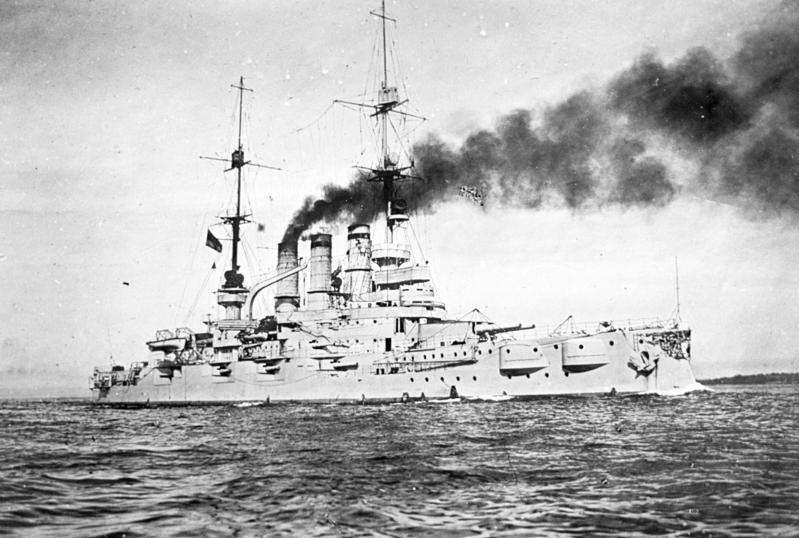
Pommern was ordered under contract “O” at AG Vulcan, Stettin, laid down on 22 March 1904, launched on 2 December 1905 and commissioned on 6 August 1907.
She was assigned to II Battle Squadron, Hochseeflotte with her sisters, replacing Kurfürst Friedrich Wilhelm and took part in the fleet maneuvers of February 1908. See above for the remainder of her prewar career. Pommern took part in several celebrations commemorating notably the 50th anniversaries of events from the Second Schleswig War, like on 17 March 1914, at Swinemünde, on for Battle of Jasmund and Sonderburg on 2 May 1914 for the 50th anniversary of the Battle of Dybbøl.
In July 1914, she took part in the abbreviated annual summer cruise to Norway. The II Squadron was deployed in the German Bight to protect the coast from the Royal Navy and she was stationed at the mouth of the Elbe as second echelone for ships patrolling further out off the Bight.
When the tactic swapped to try to lure out part of the British Grand Fleet to destroy it in detail, raids were launched, from battlecruisers, always with battleships in support. The II Battle Squadron thus became support for the I Scouting Group for the Scarborough, Hartlepool, and Whitby raid, and on 15 December, they came 10 nmi (19 km; 12 mi) of six British battleships. But rival destroyer screens clashed in the darkness and von Ingenohl, broke off the engagement (and was later relieved of command).
They were in support also for the raids of 17–18 and 21–23 April 1915, 17–18 May, 23–24 October and On 24–25 April 1916. At the Battle of Jutland, see above. The II Battle Squadron was positioned at the rear of the German line under KAdm Franz Mauve. After Scheer’s U-turn, Pommern and the other five were on the disengaged side but Mauve attempted instead to place his ships at the head of the line, taking risk but protecting the withdrawal of the battlecruisers. Pommern however saw little targets in the darkness, and shooting was ineffective. Pommern was hit by a 12-inch (30.5 cm) shell from Indomitable, and haul out of line, then seeing it was futile, Mauve ordered an 8-point turn south to disengage. But At 3:10 on 1 June, Pommern was torpedoed by the British destroyer Onslaught. At least one, orbably two hit, and managed to detonate one of the 17 cm ammunition magazines. The explosion broke her in half, leaving no chance to the crew. The stern capsized but remained afloat for 20 minutes, propellers turning in the air. Hannover, directly astern dodged the wreck, but did not stop. Pommern’s entire crew (839 officers and enlisted men) were killed when both halves sank, there was no survivors. She became the only battleship sunk at Jutland. Post-battle, the realization of their vulnerabilities prompted Scheer to leave them behind in the 18–19 August 1916 raid. Her bow ornament is preserved at Laboe Naval Memorial.
Schlesien

Schlesien was ordered under contract “R”, laid down at Schichau-Werke, Danzig on 19 November 1904, launched on 28 May 1906 and completed on 5 May 1908. Her sea trials were delayed from 6 July to 5 September to do torpedo testing in place of the cruiser Vineta, overhauled. She was fully crewed on 22 September and joined the I Battle Squadron. Her career from there resemble the ships above. Atlantic cruise in suller, meeting the British Royal Navy in Spithead. Transfer from Kiel to Wilhelmshaven in April 1910, Kattegat manoeuvers and summer cruise in Norway, fleet training, fleet review in Danzig, Baltic cruise, rince and repeat in 1911 and 1912, restricted in the context of the Agadir Crisis, then 1913 and abbreviated the annual Norwegian summer cruise in the July Crisis. Like the othere she stand guard in the German Bight and supported battlecruisers raids. Fast forward to the Battle of Jutland. After Scheer decided to reverse course with the Gefechtskehrtwendung maneuver, Schlesien and the other five “5 minutes ships” were led by Admiral Mauve into a short confrontation in darkness and poor visbility. On the 31st night return Schlesien and Schleswig-Holstein fell behind and had to deal with British destroyers, targeting Schlesien, but she remained largely undamaged when reaching Horns Reef. Post-Jutland, Schlesien was in picket duty at the mouth of the Elbe and became a torpedo target ship for U-boats. She was left behind on the 18 August sortie and until 9 February 1917, remained in guard of the Danish straits and icebreaker, guarding also the Elbe and used as target ship in the Baltic. On 27 July she was withdrawn from service, converted into a training ship for engine room personne, from 20 August to 16 April 1918. Next she was drydocked at Kaiserliche Werft, Wilhelmshaven, converted as TS for naval cadets. By November 1918, she was in Kiel during the mutiny but remained loyal and went to Flensburg, then Swinemünde, and under Fregattenkapitän von Waldeye-Hartz she was put out of service and the crew partly dismissed. She continued afterwards to train cadets until the interwar.
In the new Reichsmarine she was kept in reserve due to her weak armament, but in the mid-1920s, to replace older vessels it was decided to rearm and modernize Schlesien in 1926–1927. She started her trials from 1 March 1927 and the crew from Hannover. She became flagship, Commander of the Naval Forces, North Sea (KAdm Alexander Werth) based in Wilhelmshaven. In May 1927, President Paul von Hindenburg came to Wilhelmshaven and witnessed her fleet maneuvers between August and September plus a naval review on 14 September. KAdm Wilhelm Prentzel replaced Werth from 29 September, then KAdm Walther Franz. She made a fleet cruise in the Atlantic with shooting training on Baden, then another Atlantic cruise in April-May 1929. In February 1930, KAdm Richard Foerster had his mark on board, and in April-June she made a major training cruise in the Mediterranean and visited by King Victor Emmanuel III of Italy.
In June 1931, Schlesien visited Norway and hosted the mark of Kommodore Max Bastian by September 1932, and Kapitän zur See Wilhelm Canaris (yes, future chief of the Abwehr) for two years. Schlesien made another trip into the Atlantic in January 1933, which included a stop in Iceland from 6 to 9 January. On 10 December 1933, the new heavy cruiser Deutschland replaced Schlesien Schlesien was converted back into a training ship for cadets until 8 April 1935, formally removed from the fleet on 30 September. For the next three years she made several overseas training cruises (1 December 1935 to 29 February 1936), some modernization, then 12 October 1936 to 22 April 1937 to the Americas, October 1937, April 1938, March 1939. After the start of the war,
she remained in her role, but on 21-27 September she was used to shell Polish artillery positions at Hel and Jastarnia. From January to March 1940 she served as an icebreaker for U-boats and escorted minesweepers in the Little Belt for Operation Weserübung, but was deactivated on 2 August, keeping a skeleton crew and by January 1941, reactivated only as an icebreaker in the Baltic until 31 March, decommissioned in Gotenhafen, and stationary training hulk.
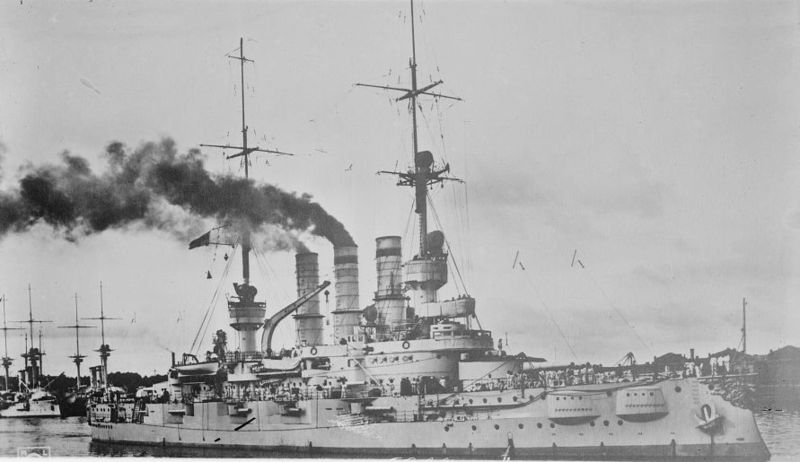
SMS Schliesen (Bain News).
She was reactivated once again for Operation Barbarossa, from late April to protect minelayers with Schleswig-Holstein in the Baltic in order to deny all sortie by the Soviet Baltic Fleet. Schlesien was detached in October, returned to Gotenhafen, resumed training duties alternated in weinter with Icebreaker service until April 1942. She then returned to Gotenhafen with Gneisenau and the icebreaker Castor and continued with training duties in the Baltic by 1943-1944, as fuel oil dwindled down. In 1944, her AA armament was considerably boosted and she obtained a FuMO-25 search radar and FuMB-6 radar detection set before taking station at Gotenhafen, then Sopot (15-21 March 1945) for gunfire support and repatriating 1,000 wounded soldiers from Sopot to Swinemünde, then resupply ammunition. In port, she shelled the advancing Soviet 2nd Shock Army. On 2 May, she was ordered to guard the Peenebrücke Wolgast bridge and the following day, while south of Greifswalder Oie, she struck a British air-dropped naval mine, detonating and causing significant flooding. Towed by Z39 to Swinemünde, she was stripped of her AA to defend the citt and laid there until the crew scuttled her as she was about to be captured by the Soviets. Her wreck was BU between 1949 and 1956 with some parts still visible in 1970.
Schleswig-Holstein (1906)
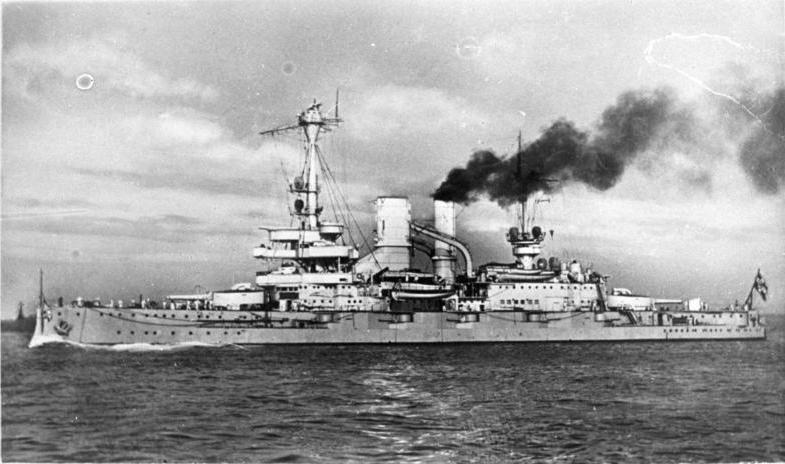
SMS Schleswig-Holstein (contact “Q”) was laid down at Germaniawerft, Kiel on 18 August 1905, launched on 17 December 1906 and commissioned on 6 July 1908. Whe training she received the crew from Schlesien. On 21 September, she was assigned to II Battle Squadron and from there had the same career zd other sisters in the above unit. Over the next five years maneuvers, summer cruises, North sea, atlantic, Norway, Baltic, took a hit in the 1913 Agadir Crisis but she still won the Kaiser’s Schiesspreis and by July 1914 her annual summer cruise wa curtailed and she returned to Wilhelmshaven. Like the others she was in guard duty at the mouth of the Elbe River and by October, was modified in Kiel (underwater protection) and she was in cover for Hipper’s battlecruisers of the I Scouting Group on various occasions. She took part in the fleet advance to the Dogger Bank on 21–22 April 1915 notably and to the Battle of Jutland. After the Gefechtskehrtwendung, the II Battle Squadron fell to the disengaged side but Admiral Mauve tried to place his ships at the head of the line and were very briefly engaged in poor visibility. Gunners on Schleswig-Holstein could not make out a target but was hit at 21:35 on her the port-side, holing 40 cm (16 in) and exploding against the inner casemate armor, blowing 4.50 m (14.8 ft) superstructure deck. This also disalbled the port side casemate guns and killed 3 men wounding 9. Admiral Mauve halted the fight and ordered a 8-point turn to starboard.
During the night voyage back to Germany British destroyers came in an tried to torpedo Schleswig-Holstein, but she dodged the attack, unlike Pommern. After 05:00, she fired on what was thought to be British submarines. She reached Horns Reef and then Wilhelmshaven, having only fired twenty 17 cm rounds.
She was repaired on 10–25 June 1916 and became a target for U-boats alternated with a guard ship, at Altenbruch (Elbe) and was decommissioned there on 2 May 1917, then disarmed, assigned to the 5th U-boat Flotilla as barracks ship, in Bremerhaven. In 1918 she was in Kiel, until the reddition.
In the Reichsmarine she was retained with Hannover and Schlesien as three Braunschweig-class, then recommissioned as fleet flagship on 31 January 1926 after an extensive refit. With Hannover she departed for a training cruise into the Atlantic (14 May-17 June 1926) and Vice Admiral Konrad Mommsen, met with King Alfonso XIII. She had another cruise from 30 March to 14 June 1927, agann to Spain and Portugal. She was drydocked until January 1928 but with the new Deutschland-class Panzerschiffe to be commissioned from 1933, she left front-line service and by May 1935. No longer flagship on 22 September 1935 she was transformed as a cadet training ship until the summer of 1936. In October 1936 she departed for a six-month voyage to South America-Caribbean. In 1937 around Africa, in 1938–1939 to South American under command of Gustav Kieseritzky from June 1938. 1 September 1939, Schleswig-Holstein was pre-positioned in Danzig, moored close to the Polish ammunition depot at Westerplatte. The pretext was a ceremonial visit a day before. Around 04:47 she opened fire with her main battery, the signal for ground troops to start the assault and end the Battle of Westerplatte after several attempts.
Schleswig-Holstein was joined by T196 and Von der Gröben, helping infantry and army engineers ashore to take the depot with concerted heavy fire support until the surrender on 7 September. Next she shelled Polish positions at Hel and Redłowo until they fell on 13 September. On the 25-27th, she shelled Hel with Schlesien again, being lightly damaged by Polish coastal batteries.
Afterwards she went to resupply and train waiting for more.
From April 1940 she was selected for Operation Weserubung, starting with the invasion of Denmark, assigned to Gruppe 7 with the TB Claus von Bevern and auxiliary ships, to support the capture of Korsør and Nyborg. She was grounded in the Great Belt west of Agersø and afterwards, transferred back to training as flagship of the Training Units. By late 1943 she was reactivated, modernized and recommissioned on 1 February 1944 as cadet training ship and refitted at Gotenhafen as a convoy escort ship but this was halted fue to intense allied air attacks and being hit three times on 18 December 1944 alone. She foundered in shallow water, permanently disabled, the crew sent to defend Marienburg like most former Kriegsmarine crews at that stage.
After the city fell to the Soviets, the remaining guard crew scuttled her on 21 March. She was refloated in 1945–1946 by the Soviet Navy, transferred to Tallinn, then towed out in 1948 and beached to be used as target off the island of Osmussaar, still there in 1966. Her bell is now at the Military History Museum of the Bundeswehr, Dresden.
Read More
Books
Campbell, N. J. M. & Sieche, Erwin (1986). “Germany”. Conway’s all the world fighting ships 1921-1947.
Campbell, John (1998). Jutland: An Analysis of the Fighting. New York: Lyons Press.
Dodson, Aidan (2014). “Last of the Line: The German Battleships of the Braunschweig and Deutschland Classes”. Jordan, John; Dent, Stephen (eds.). Warship 2014.
Dodson, Aidan (2016). The Kaiser’s Battlefleet: German Capital Ships 1871–1918. Barnsley: Seaforth Publishing.
Friedman, Norman (2011). Naval Weapons of World War One: Guns, Torpedoes, Mines and ASW Weapons of All Nations; An Illustrated Directory. NIP
Grießmer, Axel (1999). Die Linienschiffe der Kaiserlichen Marine: 1906–1918; Konstruktionen zwischen Rüstungskonkurrenz und Flottengesetz Bonn: Bernard & Graefe Verlag.
Gröner, Erich (1990). German Warships: 1815–1945. Vol. I: Major Surface Vessels. NIP
Herwig, Holger (1998) [1980]. “Luxury” Fleet: The Imperial German Navy 1888–1918. Amherst: Humanity Books.
Hildebrand, Hans H.; Röhr, Albert & Steinmetz, Hans-Otto (1993). Die Deutschen Kriegsschiffe: Biographien – ein Spiegel der Marinegeschichte von 1815 bis zur Gegenwart
Staff, Gary (2010). German Battleships: 1914–1918. Vol. 1: Deutschland, Nassau and Helgoland Classes. Osprey Books.
Tarrant, V. E. (2001) [1995]. Jutland: The German Perspective. London: Cassell Military Paperbacks.
Dodson, Aidan; Cant, Serena (2020). Spoils of War: The Fate of Enemy Fleets after the Two World Wars. Barnsley: Seaforth Publishing.
Koop, Gerhard & Schmolke, Klaus-Peter (2001). Die Panzer- und Linienschiffe der Brandenburg-, Kaiser Friedrich III-, Wittlesbach-, Braunschweig- und Deutschland-Klasse.
Weir, Gary E. (1992). Building the Kaiser’s Navy: The Imperial Navy Office and German Industry in the Tirpitz Era, 1890–1919. NIP.
Links
historyofwar.org/ deutschland_class
kbismarck.org/
The Deutschland class on wikipedia
worldwar1.co.uk sms-deutschland.html
dreadnoughtproject.org Deutschland Class
worldnavalships.com deutschland
On historyofwar.org
commons.wikimedia.org/ Deutschland_class
Videos
Drachinfels’s Deutchsland class