 German Pre-dreadnoughts (1890-94) – Brandenburg, Kurfürst Friedrich Wilhelm, Weissenburg, Wörth
Germany’s first pre-dreadnoughts
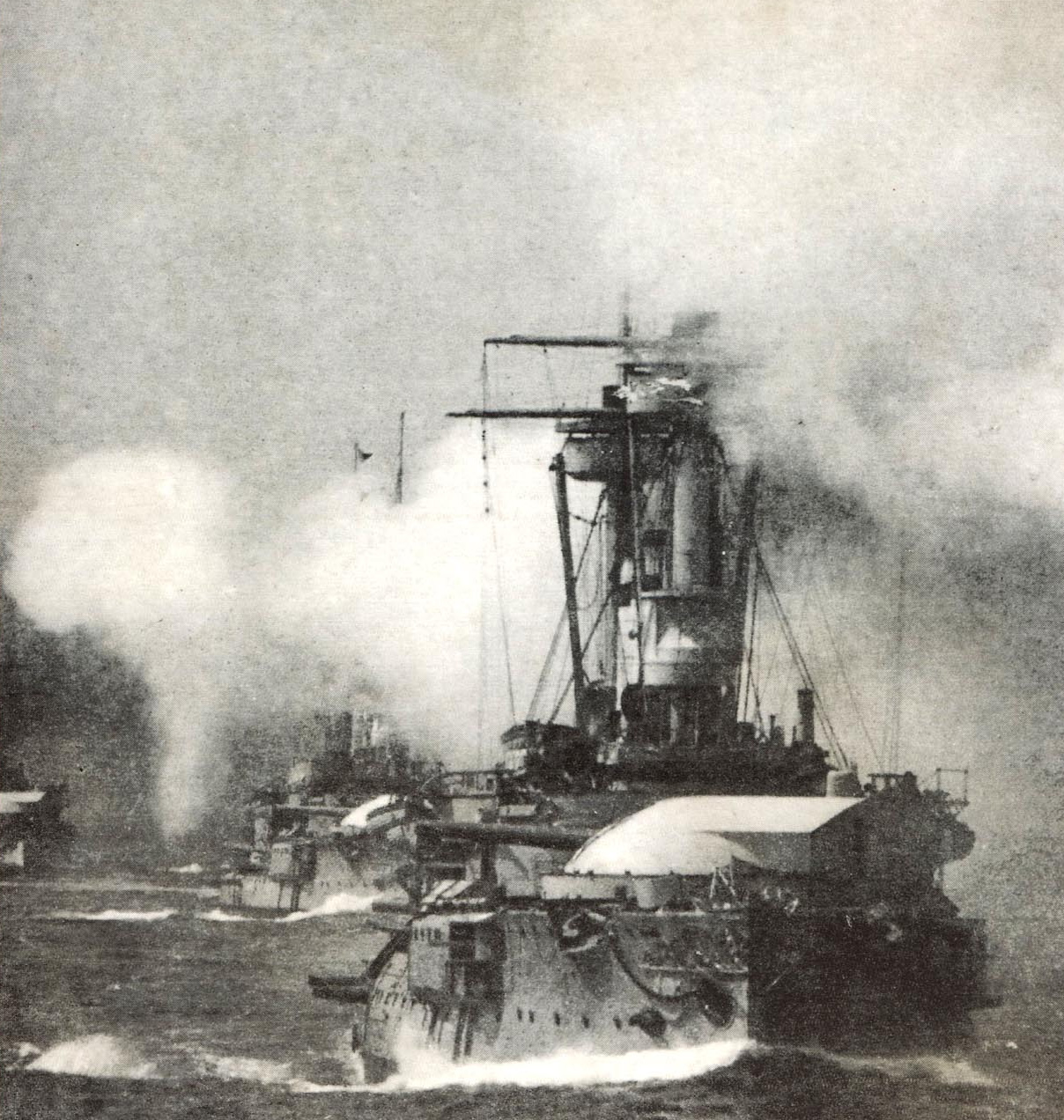
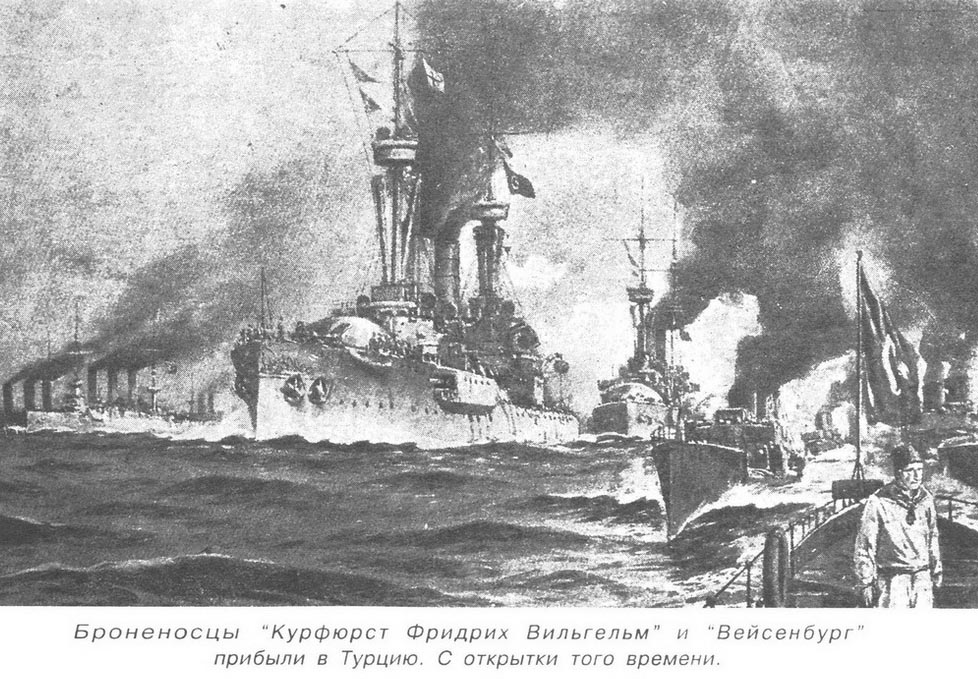
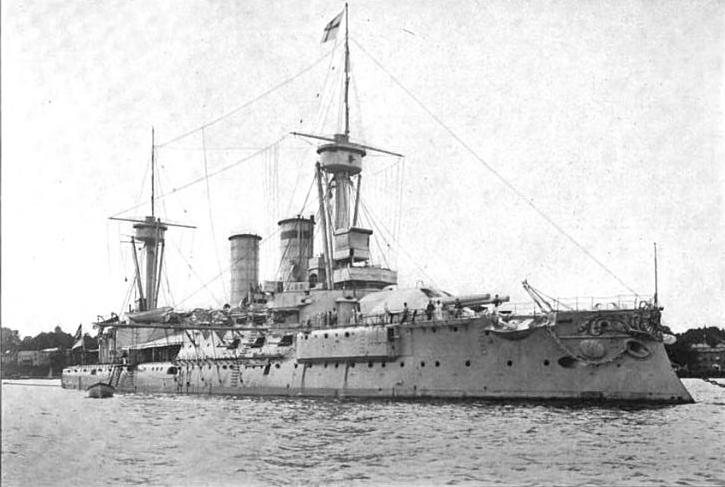
Certainly the oldest battleships of the German Navy in 1914, two were left (two others sold, see later) in active service. Originally the class was composed of Brandenburg, Kurfürst Friedrich Wilhelm, Weissenburg, and Wörth. They were approved in 1889, laid down at Vulcan, Germaniawerft, and Wilhelmshaven in 1890, launched in 1891-92 and completed in 1893-94 as first-line pre-dreadnoughts. They featured a unusual arrangement of three turrets of the main calibre. Most importantly, they were the first sea going modern battleships built by the new German Empire. Before that, the most recent were coastal battleships and the 1870s Sachsen class ironclad. The Brandenburg had an unusual design for pre-dreadnoughts, with three turrets instead of two, the central turret being given shorter guns to fit in amidship. Two were sold to Turkey in 1910 and the two others acted mostly as guardships in WWI.

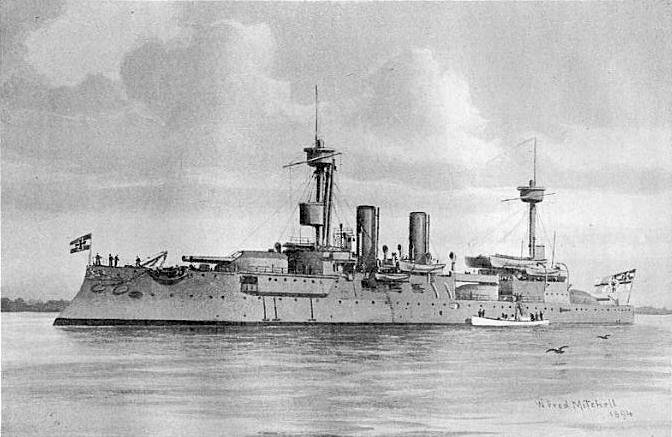
Lithography of SMS Brandenburg in service.
These 28 cm cannons were questionable when 12 inches or 30 cm was the norm in most battleships of the time, however most pre-dreadnoughts only had four of them (six for the Brandenburg). The secondary battery was quickly reinforced by two additional 10,5 cm, and 8,8 cm in casemates and open positions. Thick military masts in the French style were adopted, housing 4 Spandau heavy machine guns of questionable usefulness against torpedo boats. However, when refitted in 1900, they became the first Germans ships fitted with a radio. In general, they were considered as excellent seaboats, but by 1914 they were nicknamed by Royal Navy sailors by derision the “whalers” as they plowed heavily in the north sea, being very wet.
Development
The Kaiserliches Marine in 1883
For the development of the Kaiserliches Marine, on the path would lead to the world’s second most formidable Navy in August 1914, the Brandenburg are a very important class. They were indeed the first pre-dreadnought Battleships, or the first sea-going modern battleships of the German Navy at all, a crucial step ahead of the previous Siegfried-class coastal defence ships. To remind how it all started, the Kaiserliches Marine was still a small regional Navy in the 1880s, following the Franco-Prussian War. Despite the newly found financial resources of the young German Empire, some states still presented Berlin’s drive towards a larger Navy, largely inheritor of the Brandenburg’s Prussian fleet. So far, the priority had been to face another French blockade, or even the threat of a Swede or Danish blockade in a possible regional war.
The Navy in 1885 still possessed a number of ironclads, modernize dor about to be so, SMS Friedrich Karl, Kronprinz, König Wilhelm, Hansa, Fr. der Grosse and Preussen, Kaiser and Deutschland, the four Sachsen class. Oldenburg had been just completed in 1886 and the first of the Siegried class about to be laid down in 1888, for a series of eight ships to be completed for the last in 1896.
Gen. Leo Caprivi’s direction
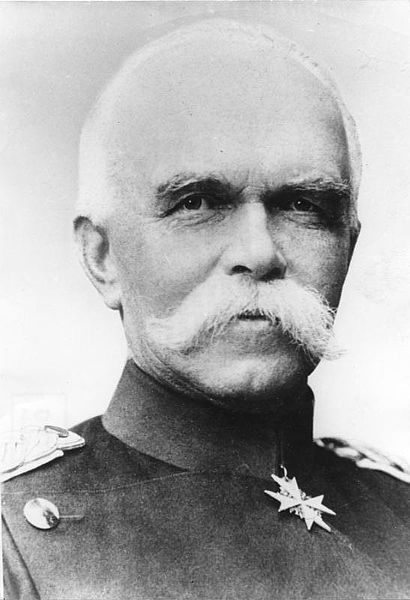 In this pre-Tirpitz era, the Navy was in the hand of a Prussian land general, Leo von Caprivi, since March 1883 when he was appointed Chef der Admiralität, following Albrecht von Stosch’s resignation. Caprivi submitted a memorandum to the Reichstag on his plans the next year, in March 1884. He confessed being inexperienced in naval matters and had a tendency to see, like his predecessor, the Navy as a simple auxiliary of a network of defensive fortifications to defend the Baltic coast. He had a council with senior naval officers on 16 January 1884 to plane future naval construction programs and a possible re-orientation of the Navy in accordance of new developments abroad.
At the time, he was still however constrained by the 1873 fleet plan crafted under Stosch’s direction, so just after the Franco-Prussian War, approved by the Reichstag. The plan called fourteen ocean-going ironclad warships, which reached its threshold with the Oldenburg in 1884. Its completion restrained Caprivi as the Reichstag in its majority only sought to reduce naval budgets, keeping enough to modernize and maintain older Ironclads, enabling them a thirty years career, into the mid-1890s. However, by 16 January 1884 at this council meeting, Caprivi raised awareness about some caution into venturing for new designs, as the Navy could not afford “the luxury of failed experiments” upon parliamentary refusal to authorize any further funding.

The Training armoured Frigate König Wilhelm, still the largest ship of the Kaiserliches Marine in 1883 (10,200t), modernized at great cost.
On the strategic level, there was still the concern of a two-front war against France and Russia, which further enhanced his belief into a strategy of coastal defence as that even a powerful battle fleet of sea-going ironclads would be still insufficient to face French fleet. A coastal defence strategy was far more affordable. He also pointed out that shell designers and armour manufacturers were in the race to out-do each others, not only spiralling costs but also rendering any new battleships practically obsolete at completion given the frantic pace of developments. He seems leaning on the French Young School belief also that the torpedo was a supremely effective weapon for coastal defence, making large warships a costly and risky endeavour.

Thus, Caprivi recommended the coast defence ships of the Siegfried class instead, as a “mobile extension of the fortifications”, having themselves heavy guns and torpedoes, well protected but small, slow and with a limited range. The plan also called for torpedo boats (Jeune Ecole again) to defend the coastline in case of war as a cheaper even complement. Yet, he still faced parliamentary objections over these spending. The irony was that the French Navy under, precisely the same Jeune École came to the same conclusions, making the threat of French capital ship domination irrelevant as both countries were now in a budget-restricted defensive policy only. The Royal Navy was left alone in its large battle fleet developments with few competitors, but Russia and perhaps a distant Japan.
1885 developments
However, the memorandum he presented did not reflect his full views as in the meantime he had discussions with his naval officers about the possibility of acquiring, long term, true sea-going battleships. KAdm—Rear Admiral Max von der Goltz notably, as the Director of the Admiralty’s Naval Department got involved and prepared list of 13 questions concerning the characteristics of a new capital ship, to be circulated among top brass to gather views regarding speed, range, draught, sailing rigs, numbers and type for the main battery, armor type and layout. Goltz met notably later with Hans von Koester, August von Thomsen, Hans Sack, Wilhelm Büchsel, Carl Barandon, Conrad von Bodenhausen, Gustav Schmidt, and Curt von Maltzahn, all on 20 October 1885, so almost two years after the 1884 reunion. In this new discussion, they settled on capital ship bearing four 30.5 cm (12 in) guns in a lozenge pattern very much like French capital ships as well as a thick armoured belt and deck, 5,000 nautical miles, with other points left unanswered.
Caprivi meanwhile also requested design proposals from the Naval Construction Office. Plans went from a 2,500 t (2,500-long-ton) coastal defence ship with just two 21 cm (8.3 in) guns to a 10,000 t (9,800-long-ton) ocean-going ship with seven 30.5 cm guns. The Reichstag at this point concentrating naval funding into the Kaiser Wilhelm Canal, connecting the Baltic to the Jade and North Sea to avoid the Skagerrak, a Pharaonic project that ate almost the entire budget for 1885 and 1886. Caprivi still was able to convince enough members that the canal entrances would remain vulnerable to attacks, so coastal defense ships were actually needed as a backup. The Reichstag in the end approved funds for ten of these, the first six being the Siegfried and the last two the Odin-class coastal defence ships, albeit their two sister ships were cancelled in 1893 as the situation in between changed greatly.
SMS Siegfried, was authorized for the 1887–1888 budgetary year and by early 1887, Kapitän zur See Friedrich von Hollmann, new Caprivi’s chief of staff, presented plans for the 1889–1890 budget year, attempting to present the Reichstag with a sea-going battleship project, the one eventually settled upon by Goltz’s committee. A second ship was also to be proposed for the 1892–1893 year. Caprivi still was weary this would never be approved by the Reichstag, and wanted instead a delay to test the type of armour to be adopted.
A Radical Change of Direction
 However, a major even was about to shatter all this initial reluctance: In 1888, Kaiser Wilhelm I died. His successor, the terminally ill Kaiser Friedrich III, was on the throne just 99 days and passed away, leaving the crown to the young Wilhelm II. The latter, impressed by the Royal Navy when he visited his royal cousins of the Victorian house, became an ardent supporter of the navy for Germany. One of his first moves was to ask Caprivi to retire and resign, to be replaced by an “in-house” man, Vizeadmiral Alexander von Monts in July.
By March 1889, an energetic Wilhelm II completely reorganized the naval command structure. He created the Reichsmarineamt (RMA) in control of naval construction and in general created many new offices, rejuvenated the whole structure. He then pushed to fund two battleships based on Hollmann’s projected budget, and then change his mind, asking instead for four of them as part of the 1889–1890 budget. German Chancellor Otto von Bismarck, one of his supports, then diligently secured funding for these through a larger army expansion bill that was still delayed by the Reichstag delayed. Eventually, only three ships of the new projected battleship class should be approved.
Design
Technical development

Initially, what the German Navy looked for was essentially its own version of the French Admiral Baudin. The Brandenburg class designed was prepared by Chief Constructor Alfred Dietrich, starting not from scratch, but from the 1884 Oldenburg. In his first memorandum, he noted the Oldenburg design was to be enlarged for a new, more powerful machinery and greater coal storage. He also wanted a better armour, on par or superior to the calibre that would be adopted. Initial displacement was brought from 10,000 to 8,500 t (8,400 long tons) and in his second memorandum on 8 August 1888, her wanted to increase the initially planned 24 cm (9.4 in) guns to 26 cm (10 in) after consulting Krupp’s chief engineer. Dietrich met with Monts on 15 August and eventually, they agreed that based to the latest Russian Battleship’s calibres, what they needed actually was four 28 cm (11 in) guns. That version was submitted to, and approved by, Wilhelm II on the 17th.
There were two major influences on the design. One was the latest Russian battleships of the Ekaterina II and the Imperator Aleksandr II which had main battery placed in order to maximize end-on fire. At some point he even studied the possibility of having two gun turrets forward like for the Ekaterina II design (in tandem) but the beam calculated was superior to existing German dry docks. One variant had six single-gun turrets, another two twin turrets, two single wing turrets and the displacement went up to 10,000 t (9,800 long tons), with some insurance it could even reach 11,400 t (11,200 long tons) as long as it remained compatible with existing infrastructure.

Dietrich also turned westwards and examined the French Amiral Baudin-class, sporting three main battery guns in individual barbette mounts on the centreline. This seemed the best compromise to maximize firepower in broadside, while keeping a moderate displacement. He proposed six heavy guns in three twin turrets, one amidship. End-on fire capability was sacrificed, given RMA’s remarks about the superiority of a broadside over making the best of the firing arcs ahead or astern. The battery was settled on six 28 cm MRK L/35 guns according to what Krupp prepared, but the latter were at this stage considering a 40-caliber version called the MRK L/40 and argued it would be available at the time of the ship’s completion. However, all turrets could not be so equipped. Indeed, the fore and aft turrets were to receive the L/40, but the centre turret after recalculation appeared to have no sufficient space to accommodate the same. They just did not fit, so as a compromise, she was given the L/35 instead. The main issue was potential blast damage to the aft superstructure, closer than anticipated.

In the end, the Brandenburg were game-changing. Their genesis was quite long, about ten years, but they truly became the German first ocean-going capital ships in over twenty years, all the way back to 1970s ironclads. In Russia, aligned on France at the time, it raised concerns, as they were no longer adequately equipped to face them in the Baltic Sea and this spurred the Tsar to order no less than ten new battleships for the Baltic Fleet, an unrealistic plan that was curtailed anyway. The Brandenburg class were a leap forward in capabilities that draw attention abroad, but they were seen still with confident contempt by Britain, as they were significantly smaller and less powerful than their Royal Sovereign class or the next Majestic class in construction. This was not the same music in Paris, where the contemporary Charles Martel class was closely matched. They also marked a departure of the strategic and tactical confusion of the 1880s, influenced by the Jeune École. Later, this breakthrough would lead to the Tirpitz era, which will run with this shiny new ocean-going battleship program.
Hull and general design

The Brandenburg class measured 108 m (354 ft 4 in) between perpendiculars, 113.9 m (373 ft 8 in) at the waterline, and 115.7 m (379 ft 7 in) overall for a beam of 19.5 m (64 ft), increased to 19.74 m (64 ft 9 in) with torpedo nets. The draft was 7.6 m (24 ft 11 in) forward, 7.9 m (25 ft 11 in) aft, still compatible with the new canal in construction and existing ports and waterways. Displacement set a new record at 10,013 t (9,855 long tons) as a designed weight, but 10,670 t (10,500 long tons) fully load. The last time Germany had possessed a capital ship of that scale was all the way back in British-built König Wilhelm (launched 1868) which displaced 10,591 tonnes as registered. So they also became the largest warships ever built in Germany.
 Their hulls mixed transverse and longitudinal steel frames, on which were riveted steel side plates. Internally, there were thirteen watertight compartments over a double bottom extended over 48% of hull length. The hull, also a French influence, had a tumble home shape above the main deck plus a ram bow and a raised forecastle deck extending to the aft funnel, then a lower main deck. What is striking about the design, was its ensemble of unique solutions, with a sloping extended to the secondary battery, sponsons-like structures forward, a relatively constant beam, minimal structures with two conning towers, forward and aft, and two moderate military masts.
The crew amounted to officers and 530 enlisted men and as squadron flagship an additional 9 officers and 54 men, making them the most “crowded” of all German warships so far. After refits, the crew even went up to 30 officers and 561 enlisted sailors plus 9 officers and 48 enlisted men when used as flagships. For these, they had a collection of small boats mostly packed on the aft structure which mast had a boom crane: Two picket boats, two launches, one pinnace, two cutters, two yawls, and two dinghies.

Powerplant
This was also a challenge, as no German warship even had to receive such as massive power plant. In the end it was chosen to fit two 3-cylinder triple-expansion engines provided with steam coming from twelve coal-fired boilers, all being of the transverse Scotch marine type. The engines were located in their own individual rooms. The output of 9,640 hp or 10,000 metric horsepower or PS (9,900 ihp) was transmitted to two 3-bladed fixed-pitch bronze screw propellers 5 m (16 ft) in diameter. The boilers were located in two separate boiler rooms, ducted into two straight equal size funnels. Electrical power came from three generators, but each ship received its own, either 72.6 to 96.5 kilowatts at 67 volts.
This output made for a top speed of 16.5 knots (30.6 km/h; 19.0 mph). However in trials, and service, they diverged in power and speed:
-Kurfürst Friedrich Wilhelm was rated for 9,686 PS (9,553 ihp.) but reached 16.9 knots (31.3 km/h; 19.4 mph)
-Wörth managed the largest output at 10,228 PS (10,088 ihp.) for the same top speed.
-Brandenburg was the slowest at 16.3 knots (30.2 km/h; 18.8 mph).
For range, the Brandenburg class carried 650 t (640 long tons) of coal in normal peacetime storage. But thanks to additional hull spaces the capacity in wartime of for long travels could reach 1,050 t (1,030 long tons) making for a cruising radius of 4,500 nautical miles (8,300 km; 5,200 mi) at 10 knots (19 km/h; 12 mph).
The Brandenburg class had a single rudder, and they were regarded as excellent sea-boats, with an easy motion. They were also responsive at the helm, with a moderate turning circle, but were also criticized as “wet” at high speeds, with severe pitching. When hard rudder, they bled 30% speed. The metacentric height was reasonable at 1.05 m (3 ft 5 in), with a maximum stability moment of 31.5 degrees before righting themselves up. All this made them good gun platforms with a gentle roll.

Both renditions are from pinterest, src unknown
Protection

Armour scheme – Brassey’s naval annual.
Armour composition
The first two, Brandenburg and Wörth had a compound armour, standard steel armour for the time, provided by Dillinger Hütte. Meanwhile, Krupp was experimenting with a new nickel-steel armour and made its case to provide the armour for Weissenburg and Kurfürst Friedrich Wilhelm. The compound armour was generated by welding hardened steel together with more flexible wrought iron plates, combining hardness in surface with greater flexibility to avoid shattering and better containing incoming shells.
Krupp’s nickel steel armour however used the US Harvey process, using enriched upper layers of steel with carbon. This process hardened the outer layer, but the softer steel below enabled greater flexibility at the back, making for a more resilient armour as it was in one piece originally, a single forging instead of multiple plates. The end result was a thinner, lighter plating yet offering the same level of protection, for a more comprehensive protection. In fact, a few were available enough to better protect parts of Brandenburg, like its barbettes forward and amidship. All ships however also add a teak backing behind the belt.
Full Lower and Upper belt
The side protection system used the “French principle” with a narrow and full-length armoured belt rather than a shorter citadel. It extended from 0.8 m (2 ft 7 in) above the waterline to 1.6 m (5 ft 3 in) below and extended further down at the bow to reinforce the ram. Above the waterline this belt amounted to 300 mm (11.8 in) forward while aft, it even reached 330 mm (13 in), then 380 mm (15 in), and then 400 mm (15.7 in) amidships over magazines and machinery spaces. Further aft, it was down to 350 mm (13.8 in), then 300 mm toward the stern.
Below the waterline, the armoured belt tapered towards both ends, with a basis 150 mm (5.9 in) at the bow, then 180 mm (7.1 in), 190 mm (7.5 in), 200 mm (7.9 in) thick amidships, the down 180 mm (7.1 in) at its aft end with a teak backing of 200 mm, bolted on with some framing.
Other details
-Armoured deck: 60 mm (2.4 in), connected to the belt’s upper edge
-Forward conning tower: 300 mm sides, 30 mm (1.2 in) roof.
-Barbettes 300 mm thick, backed with 210 mm (8.3 in) teak.
-Main battery turret-barbettes cupolas: 50 mm (2 in) roofs and sides (3x 40 mm (1.6 in) layers for 120 mm (4.7 in)).
-10.5 cm and 8.8 cm guns: Gun shields, 2 bolted plates 20 mm (0.79 in)/22 mm (0.87 in).
Armament
Main Battery: 28cm SK L/35/40
The Brandenburg-class had six 28 cm guns in twin turret-barbettes. The forward and aft turrets had 40-caliber guns, the amidships turret had 35-caliber guns for a better arc.
The turrets were composed of a rotating platform holding the guns, with sides protected by an armoured barbette, topped by a hemispheric hood. The curved forward shape made the best of its slops to deflect incoming shells, for a relatively low protection, but it necessitated large openings to raise and depress the guns. A lucky hit could enter through these. In fact, it happened on Barbaros Hayreddin (ex-Kurfürst Friedrich Wilhelm) in 1913.
These 35-caliber guns had a muzzle velocity of 685 m/s (2,250 ft/s) and the 40 calibre 715 m/s (2,350 ft/s) for varied ballistics and brown powder propellant charges. However, very much like the French, the Germans expected close quarter combat due to the primitive state of fire control at that stage. All three C/92 barbette mounts had a depression of −4 degrees and elevation to 25 degrees for a range of 11,450 m (37,570 ft) for the L/34 or 15,090 m (49,510 ft) for the L/40.
These turrets were hydraulically operated and reload was slow given they had each time to return to the centreline to reload, so three minutes per shot. This was unacceptable from 1903 so they had refits to enable all-round reload and thus, a shot per minute. In all, 352 shells were stored for all three, all shells being 240 kg (530 lb) plus their 56.6 kg (125 lb) bursting charge for 103 tonnes for the main ammunition alone when the magazines were fully loaded.
10.5 cm (4.1 in) SK L/35
The secondary armament initially comprised only six 10.5 cm (4.1 in) SK L/35 quick-firing guns in individual casemates below the forward superstructure, and they were recently adapted by Krupp from existing guns with a new loading system that was quick-firing. They used a C/91 pivot mount for a 30.3 degrees elevation, making for a range of 10,800 m (35,400 ft). The rate of fire was on paper 10 rounds per minute, 7.5 shots per minute in reality. Muzzle velocity was 600 m/s (2,000 ft/s). However, from the C/07 shells in 1907, this increased to 620 m/s (2,000 ft/s). Two more were latter added and ammunition storage went from 600 rounds to 1,184 shells, a mix of AP and HE rounds.
8.8 cm (3.5 in) SK L/30
For close quarter defence against torpedo boats, the Brandenburg class sported eight 8.8 cm (3.5 in) SK L/30 quick-firing guns mounted in casemates:
-Four in sponsons abreast the forward main battery turret
-Four in the rear superstructure.
All used the C/89 mounts elevating −10 to 20 degrees for a range of 7,300 m (24,000 ft). Muzzle velocity was 590 m/s (1,900 ft/s). In total 2,000 shells were carried, then in 1907 it was raised up to 2,384 rounds, C/83 common shells, then C/01 semi-armour-piercing (SAP) in 1901, and C/07 shells in 1907, either HE or SAP. Rate of fire was 14 shots theoretical, 10 practical.
Torpedo Tubes
Lastly, the German naval staff also embraced the idea of having torpedo tubes for close quarter combat, which was expected due to weak gunnery range. It was called upon to close down enough to bear secondary guns, that were believed to cause the most damage given their high rate of fire, provided the armour held on. If the range closed further, a la Lissa, torpedoes would be a premium. Thus, Germans naval tacticians assumed torpedoes hitting below the waterline belt could be a crippling and decisive weapon. While under construction, Hollman by February 1891 wanted more, arguing they needed also two torpedo tubes in the bow, below the waterline. However, there was no room here so they were fitted instead above-water mounts. Another change was swapping the older 35 cm (14 in) C/84 for the 45 cm C/91.
Thus, the end result was a configuration of six 45 cm torpedo tubes, four on the sides above-water, in swivel mounts, two above water in the bow, for a storage for 16 torpedoes.
45 cm C/91 Torpedo:
Warhead 87.5 kg (193 lb), top speed 32 knots (59 km/h; 37 mph), 400 m (1,300 ft) in 24 for a max range at 32 knots of 500 m (1,600 ft) or 800m (2,600 ft) when setup at 26 knots (48 km/h; 30 mph) instead.
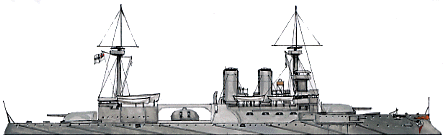
Author’s illustration of the Brandenburg in 1914
Brandenburg class specifications |
|
| Displacement | 10,013 t (9,855 long tons), 10,670 t (10,500 long tons) FL |
| Dimensions | 115,7 x 19,5 x 7,9 m (379 ft 7 in x 64 ft x 25 ft 11 in) |
| Propulsion | 2 shafts TE engines, 12 watertube boilers, 10,200 hp |
| Speed | 16.5 knots (31 km/h; 20 mph) |
| Range | 4,500 nmi (8,300 km; 5,200 mi) @10 knots (19 km/h; 12 mph) |
| Armament | 3×2 280 (3×2), 8x 10⁵, 8x 88 mm, 6x TT 450 mm |
| Armor | Turrets 380mm, belt 400mm, barbettes 305 mm |
| Crew | 568 (initially 530 enlisted +38 officers) |
Modifications
1894–1895 Refits: Funnels increased by 1.5 to 3 m (4 ft 11 in to 9 ft 10 in) for lesser smoke interference with the mainmast spotting top.
1896 refits: 3.7 cm (1.5 in) Maxim guns installed to deal with torpedo boat crews (33 rpm). Four installed in the fighting
1900: Before deployment to East Asia, wireless telegraphy sets were installed, a first.
1902-1904 Modernization
-Second conning tower installed in the aft superstructure + gangway, 120 mm (4.7 in) sides, 20 mm (0.79 in) roof.
-Coal storage capacity inscreased to 1050t+
-Two extra 10.5 cm guns installed under shields.
-Plans to replace the amidship 28 cm turret rejected as too expensive.
-Torpedo armament reduced: Single above-water tube in the stern, trainable mounting retained (5 torpedoes).
-Searchlight platforms removed from the masts.
-Displacement down from 500-700 t (490-690 long tons).
1913: Wörth received two searchlights on the roof of her foremast fighting to and the roof of her aft bridge.
1915: Wörth received an enclosed spotting top.
G. Galuppini’s take
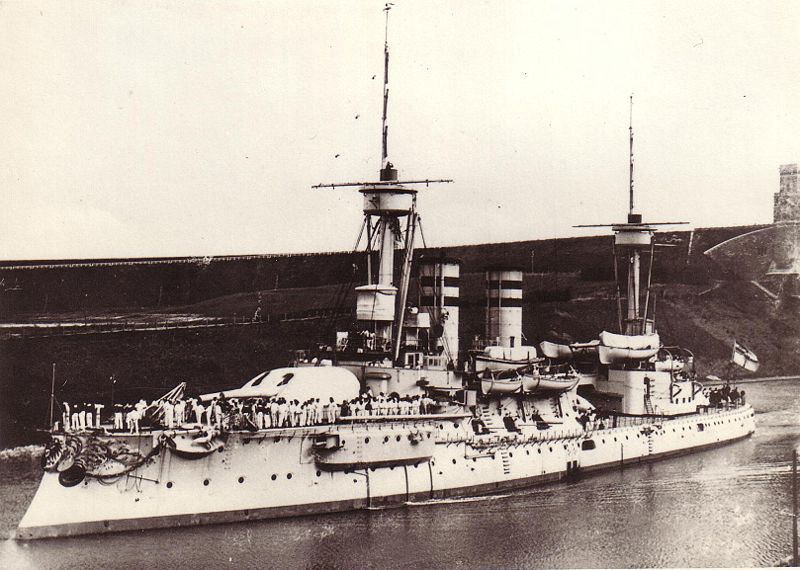
Battleship Wörth circa 1900
From “Guida all Corazzate dalle origini a oggi” – Mondadori 1981: The battleships Brandenburg, Weissenburg, Woert and Kurfürst Friedrich Wilhelm represent a singular class of units armed with three double turrets of high caliber, arranged as on the French Amiral Baudin before refit, that is to say one behind the other in the plane of symmetry, which allowed to fire with only two pieces in chase or retreat, but with six on each side.
The hull was entirely of steel with a powerful ram at the front. A long forecastle reached to the barbette of the central turret and a superstructure as high as the forecastle stood between the two other turrets, connected to the forecastle by a gangway spanning the roof of the central turret. Two masts supported two circular tops protected on the sides and the roof by light armor. The aft mast was, in addition, equipped with a derrick to lift the boats, installed on the roof of the aft superstructure.
Forward of the foremast was an operational command deck with 300 mm armor. The two funnels were located one behind the other forward of the central superstructure. The armor consisted of a belt of 400 mm plates in the center and 300 mm at the ends, plated on a 200 mm teak mattress. This belt was 2.40 m high, 90 cm of which was below the waterline. At the upper end of the belt was an armored deck extending the entire length of the ship; it was 60 mm in the center and 65 mm at the ends. The forward barbette did not reach the armored deck unlike the other two, because, being installed on the forecastle, it ended at the battery deck.
The thickness of the barbettes armor was 300 mm, that of the turrets’ orientable structures 120 mm. The forward superstructure supported a battery of 42 mm plate armored artillery behind the turret, containing six 105 mm guns. The main artillery, consisting of six 280 mm guns, was distributed between the three barbette turrets. The forward and aft double complexes had a field of fire of 270°, the central one having only 90° on each side, due to the presence of the two superstructures. In addition to the battery of six 105 mm guns under the castle, already mentioned, there were eight other 88 mm guns, two on the superstructure, on the sides of the forward turret; the others further aft.
The machine guns were on the deck and in the tops. The six torpedo tubes were surface-mounted and arranged three on each side. The power plant consisted of two triple-expansion, three-cylinder engines, fueled by eight coal-fired boilers. Machinery and boilers were installed in six symmetrical rooms, three by three, the boilers forward of the central turret and the engine rooms aft. The Brandenburg was part of the 1st Squadron from 1892 to 1900: during the summer of 1900, it was sent to China during the Boxer Rebellion: 1915 saw it assigned to coastal defense. It was struck off in 1920. The Kurfürst Friedrich Wilhelm and the Weissenburg were sold to Turkey and took the names Khaïir-ad-din and Türküt Rais.
In Turkish Ottoman Service
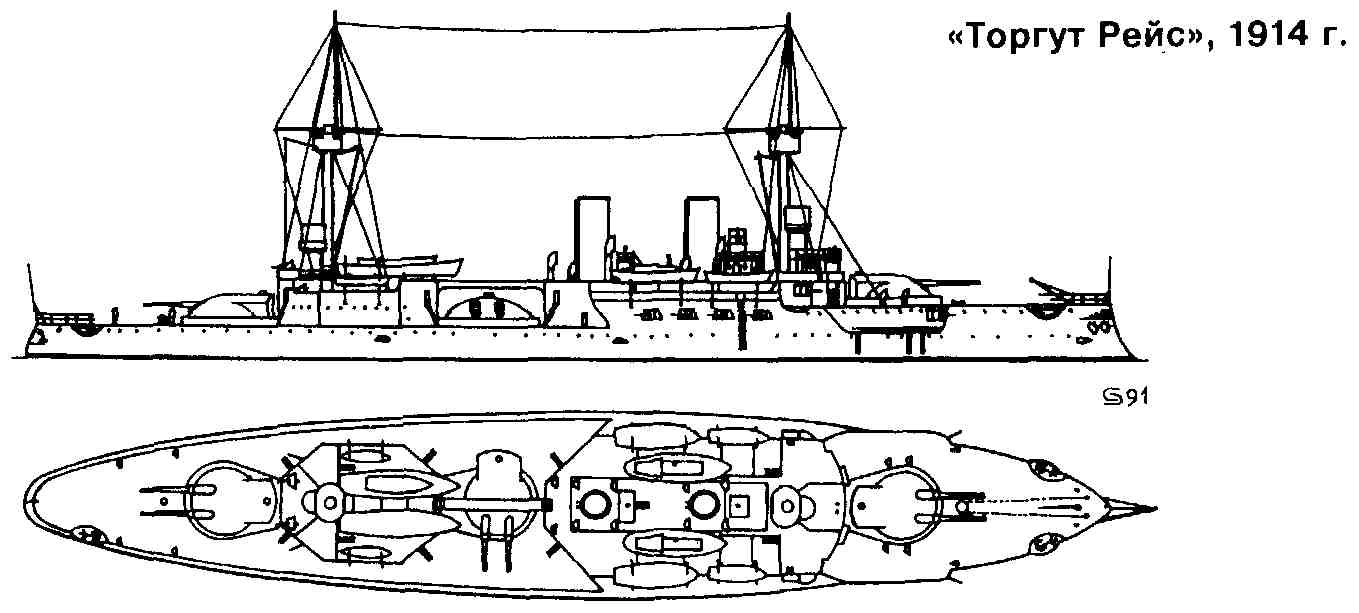
Drawing of the Torgud Reis
The Brandenburg class in service
In 1910, Turkey, out of a conflict in the Balkans and preparing for a new confrontation bought 2 battleships of this class, the Wilhelm and Weisenburg, renamed Heirredine Barbarossa and Torgud Reis. The Brandenburg and Wörth were still active in 1914 to bolster numbers, but the following year, they were switched to coastal defense (Küstepanzerschiff). In 1916, they were anchored definitely, used as tankers and depot ships wit sekeleton crews, until disarmed and BU in 1919.
 SMS Brandenburg
Brandenburg, bearing the name of the state and fleet that preceded the Prussian Navy, was ordered as “armoured ship A” when laid down at AG Vulcan, Stettin, by May 1890. Her hull was completed by September 1891, launched on the 21st in the grand ceremony where she was christened by the Kaiser, Wilhelm II. Fitting out work was completed without her guns by late September 1893, so two years later after launch, and then transferred to Kiel to have her artillery mounted. By 19 November she was at last commissioned into the fleet. Sea trials started four days later and on the first day, Wilhelm II and a delegation from the Brandenburg provincial government came aboard. On 27 December, she received a flag bearing the coat of arms of Brandenburg, flown on special occasions. Later she was formally assigned to II Division, Manoeuvre Squadron. Trials still went on into 1894, with forced draft tests in Strander Bucht, 16 February.
She however suffered the worst machinery accident in the history of the Kaiserliche Marine: One main steam valves from the starboard boilers exploded. The result was devastating. The blast travelled via opened doors and hatches the whole machinery section, killing 44 men in the boiler room alone, and injuring 17. The cause as inverstigated later, was a defect in the valve. Prince Henry was aboard the SMS Pelikan when it happened just aside, and immediately ordered her to come to Brandenburg’s aid, taking on board the dead and wounded men. The battleship entered the Wiker Bucht and was towed to the Kaiserliche Werft for repairs at Kiel. This caused a minor political incident. The press later indeed was outraged Wilhelm II failed to send Prince Henry to the funerals. There was also the controversial claim by VAdm Friedrich von Hollmann, State Secretary of the Reichsmarineamt at the Reichstag, that “such accidents could occur again and again”. This only fuelled parliamentary resistance to extra naval budgets and led to a rejection of the first armoured cruiser, Fürst Bismarck. Admirals Eduard von Knorr and Hans von Koester in turned fustiged Hollmann and forced to retract and publicly apologize. The latter referred to the lack of funds and shortcuts probably made in the manufacturing and choice of some suppliers only based on cost concerns.
Repairs were completed by 16 April, so Brandenburg was back on trials by August, cruising through the Kattegat and on the 21st she was versed to the II Division, with a reorganization seeing her re-transferred to I Division with three sister ships, based in Wilhelmshaven, North Sea. The entire squadron attended ceremonies for the Kaiser Wilhelm Canal on 3 December and started a winter training cruise in the Baltic, a first, instead of being deactivated for the winter. They notably visited Stockholm from 7 to 11 December for the 300th anniversary of the birth of Swedish king Gustavus Adolphus. King Oscar II held a reception for the German delegation. Further exercises in the Baltic were concluded by a return to home waters and maintenance.
1895 so normal training cruises to Heligoland and Bremerhaven, this time Wilhelm II being present on the flagship, Kurfürst Friedrich Wilhelm. He witnessed divisional training, and a trip on the northern North Sea, the first time leaving home waters. Brandenburg joined Kurfürst Friedrich Wilhelm, and they ended at Lerwick, Shetland on 16-23 March. The squadron was tested in heavy weather, and it was reported they “performed admirably” apart being a bit wet. In May, fleet manoeuvres resumed in the western Baltic, concluded by stop at Kirkwall, Orkney and back to Kiel in early June. Tactical exercises off Kiel Bay were completed by the canal opening ceremonies with foreign delegations and more exercises until 1 July, before a first sortie into the Atlantic, which had political motives, as at the same time the Navy sent the cruiser Kaiserin Augusta, coastal battleship Hagen, frigate Stosch—to for a demonstration off the Moroccan coast. The main fleet meanwhile would sail south for support in Spanish waters. Rough weather was the occasion to report again their excellent sea keeping. They departed Vigo and stopped in Queenstown, Ireland on their way back, and Wilhelm II sailed on this Yacht Hohenzollern to the Cowes Regatta and saluted the squadron off the Isle of Wight.
On 10 August, they were all back to Wilhelmshaven to prepare for the autumn manoeuvres, starting off Heligoland Bight on 25 August, then a passage through the Skagerrak and into the Baltic, with heavy storms causing significant damage. S41 capsized and sank, 3 men saved. The were back at Kiel after live-fire exercises in the Kattegat and Great Belt but on22 August, Brandenburg collided with the aviso Jagd, the latter badly damaged. On 7 September, they attended a scenario with a mock attack from Kiel toward the eastern Baltic. While in Kiel, Czar Nicholas II inspected Brandenburg. More manoeuvres followed off Pomerania and Danzig Bay and a fleet review for Wilhelm II off Jershöft on the 14th, then individual ship training until the fall.
1896 was a repeat. Refresher, individual training until April, squadron training in the North Sea until May (visits of Vlissingen and Nieuwediep) and in July in the North Sea, Norwegian waters (Bergen 11-18 July). Later the Kaiser invited the Chinese viceroy Li Hongzhang to observe the fleet review off Kiel. This was after the Sino-Japanese war and an attempt to re-equip the Beiyang fleet with German vessels. On 9 August, the squadron was in Wilhelmshaven for the annual autumn training.
That routine went on in 1897. It was interrupted in August for an official visit of Wilhelm II and Kaiserin Augusta to Russia, the yacht being escorted by both divisions of I Squadron to Kronstadt and Saint Petersburg. They were back to Neufahrwasser in Danzig on 15 August, followed by annual autumn manoeuvres. They were completely rewritten by the new State Secretary of the Reichsmarineamt, Konteradmiral Alfred von Tirpitz and a new commander for the I Squadron, VAdm August von Thomsen. New tactics stressed long range gunnery in line-ahead formations, until 22 September.
By early December 1897, the I Division trained again in the Kattegat and the Skagerrak, but already there were shortages in officers and men. While through the Great Belt, Brandenburg collided with the old battleship SMS Württemberg, damaging both. They were repaired at Kiel and completed at Wilhelmshaven, where she received a new ram bow, followed by the same training routine in 1898, including a trip to the British Isles and stop at Queenstown, Greenock, Kirkwall. The summer fleet drills included a blockade of the coast of Mecklenburg and pitched battle with an “Eastern Fleet” in the Danzig Bay. She was hit like her sqn. by a severe storm, sinking S58. They transited through the Kaiser Wilhelm Canal for more training in the North Sea until 17 September in Wilhelmshaven. In December, there were bad weather artillery and torpedo training in Eckernförde Bay, divisional training in the Kattegat/Skagerrak and a visit at Kungsbacka, Sweden (9-13 December) and back to Kiel for winter repairs.
A snowstorm on 22 March 1899 saw Oldenburg’s anchor chain breaking, and she drifted out, ran aground in Strander Bucht. Brandenburg and the steamer Norder towed her free, back to port. On 5 April she attended the celebrations of the 50th anniversary of the Battle of Eckernförde (1st Schleswig War) and in May, both Divisions and the Reserve Division made a grand demonstration in the Baltic followed b a major cruise into the Atlantic via Dover and Falmouth to recoal. Both reunited at Falmouth on 8 May to proceed to the Bay of Biscay, Lisbon on 12 May to meet the RN Channel Fleet (8 battleships, 4 armoured cruisers). They took part in the naval review of the 80th anniversary of Queen Victoria and were back to Kiel on 31 May.
In July, they were deployed in the North Sea, including defence exercises with soldiers from the X Corps and on 16 August, they were in Danzig Bay for annual autumn manoeuvres from 30 August via the Kattegat and Skagerrak, North Sea and German Bight until 7 September. They were back next in the Kattegat and Great Belt 8-26 September and back in port for annual winter maintenance. 1900 reproduced this usual routine with a major training cruise to the northern North Sea and stops at Shetland 12-15 May, Bergen 18-22 May but on 8 July, the ships of I Division were reassigned to II Division as the first was re-equipped with more modern battleships.
They were mobilized to depart to China for the Boxer Uprising as part of the seven Nations alliance and at the time, the men of the East Asia Squadron (Kaiserin Augusta, Hansa, and Hertha, Irene and Gefion, Jaguar and Iltis) were not enough to defeat the Boxers and relieved Peking’s besieged westerner legation. The Kaiser launched a massive expeditionary force led by Brandenburg and her three sisters, as well as six cruisers, ten freighters, three TBs and troopships with six regiments of marines under Generalfeldmarschall Alfred von Waldersee.
On 7 July, KAdm Richard von Geißler reported he was ready for operations, leaving two days later. They transited the Kaiser Wilhelm Canal, via Wilhelmshaven, to meet the rest of the expeditionary force. On 11 July they gathered in the Jade Bight and departed for China, recoaling at Gibraltar on 17–18 July, through the Suez Canal on 26–27 July, recoaling at Perim in the Red Sea, and by August reaching the Indian Ocean, recoaling at Colombo, crossing the Strait of Malacca and arriving at Singapore on 18 August, then Hong Kong on 28 August to gain on th 30th, the outer roadstead at Wusong, downriver from Shanghai. At the time, the siege of Beijing had already been lifted by the Eight-Nation Alliance.
Brandenburg still took up patrol duties at the mouth of the Yangtze River. In October she took part in the storming and occupation of the coastal fortifications of Shanhaiguan and Qinhuangdao. When the situation was completely settled she proceded to Hong Kong, then Nagasaki, and by early 1901 was in overhaul there. Brandenburg completed one refit at Hong Kong in January-February 1901 and sailed to Qingdao, German Jiaozhou Bay Leased Territory, for training exercises with the expeditionary force. On 26 May 1901 they were recalled back home, taking on supplies in Shanghai and steaming out on 1 June via Singapore (10-15 June), Colombo (22-26 June) but stopped due to the monsoon in Mahé, Seychelles, recoaling, then again at Aden and Port Said. On 1 August they reached Cadiz and proceeded back to Germany but both squadrons separated after reaching Helgoland and on 11 August Brandenburg was in the Jade roadstead to land the expeditionary force until dissolved. This expedition was estimated worth 100 million marks.
Brandenburg and sisters were reassigned to I Squadron and started their annual fleet maneuver with a stop on 11 September as Nicholas II visited the fleet and performing a naval review at Putziger Wiek. For the remainder of the maneuvers, the navy cooperated with the German Army in joint exercises in West Prussia that included the ships’ Seebataillon (marines), and I Corps and XVII Corps. Brandenburg took part in the winter cruise, followed b maintenance at Wilhelmshaven. 1902 reproduced the previous training routine with stops to Norway and Scotland and crossing the English Channel. Brandenburg was decommissioned on 23 October with the crews reassigned to the newly commissioned SMS Zähringen in the I Squadron.
The four Brandenburgs were taken in hands for a thorough modernization at the Kaiserliche Werft, Wilhelmshaven. Brandenburg was modernized between 1903 and 1904, with a second conning tower in the aft superstructure and gangway, new boilers and the hamper amidships reduced. She was recommissioned on 4 April 1905, assigned to II Squadron of the “Active Battlefleet” and took part in the routine of training in 1905, 1906, and 1907, then decommissioned again on 30 September 1907. The only incident included a minor grounding outside Stockholm. In this second decommissioning, her crew was assigned to a new battleship, SMS Hannover of the last German pre-dreadnought class (Deutschland). Brandenburg ended in the Reserve of the North Sea. In 1910, with the first dreadnought entering service, he class was considered obsolescent. She briefly saw service with the service with III Squadron for the annual fleet manoeuvres until back in the Reserve Division, North Sea, still seeing more training. In mid-1911, she was transferred to the Training and Experimental Ships Unit in the Baltic, interrupted by a temporarily III Squadron assignation for the fleet manoeuvres in the summer and by October until decommissioned. In 1912, she was allocated to the Marinestation der Ostsee, staying inactive for two years.
In August 1914, Brandenburg was reactivated, assigned to V Squadron with her sisters for coastal defence duties, North Sea. By mid-September, her Squadron was transferred to the Baltic, under command of Prince Henry. She was to cover a major amphibious assault on Windau, but it was cancelled. V Squadron was to carry in the end the landing force themselves, but this was cancelled after Heinrich received false reports of British warships in the Baltic on 25 September. She was in Kiel to disembark the landing force and return to the North Sea for guard ship duties, and then re-transferred to the Baltic under Prince Henry for a sortie to Gotland. On 26 December she met the Baltic cruiser division in the Bay of Pomerania and two days later showed the flag there until back in Kiel by 30 December and then back to the North Sea for guard duties, until withdrawn from front-line by February 1915. Shortages of crews and the risks posed by mines and submarines ended their career and Brandenburg and her remaining sisters saw the deactivation of the V Squadron. She remained with a skeleton crew in Kiel, briefly assigned to the reserve division, Baltic and July-December saw her under maintenance, after which she was sent to Libau. On 20 December, she was decommissioned and used as a water distillation and barracks ship with her guns removed and sent as a gift to the Ottoman Empire, as reported. Brandenburg was then sent to Danzig to be operated as a target ship, a work still ongoing by November 1918. After a lull where she remained in un-cared reserve, she was stricken on 13 May 1919, sold for scrapping by the Norddeutsche Tiefbaugesellschaft (Berlin) and towed to Danzig.
SMS Wörth

SMS Wörth was ordered as “armoured ship B”, laid down at Germaniawerft Kiel on 3 March 1890 but construction proceeded at a slow pace as she was not launched until 6 August 1892, eight months after the other three and was christened by Princess Viktoria, sister of Kaiser Wilhelm II with fitting-out work done quickly she could be commissioned on 31 October 1893, first to enter active duty, completely making for the previous delays. She entered sea trials until April 1894 and she was briefly assigned to the manoeuvre squadron, Heimatflotte in place of Brandenburg, badly damaged by a boiler pipe explosion. On 1 August 1894 she became flagship of the German fleet for the annual autumn drills under the command of Admiral Max von der Goltz which came aboard on 19 August with his staff inc. Kapitän zur See Alfred von Tirpitz. She was also visited Kaiser Wilhelm II and took part in her first fleet parade on 21 September.
Wörth was commanded by Prince Heinrich, younger brother of Wilhelm II with, as senior watch officer from 1894, Franz von Hipper. On 1 November after Czar Alexander III died, Wilhelm II initially planned to send his brother to St. Petersburg to represent Germany at the funeral on the flagship but General Bernhard Franz Wilhelm von Werder suggested it would antagonize the French delegation after the just recently signed Franco-Russian Alliance. She was replaced as flagship by Kurfürst Friedrich Wilhelm and entered the I Division, I Squadron.
Wörth attended ceremonies for the Wilhelm Canal at Kiel on 3 December 1894 and started a winter training cruise in the Baltic. From there, look for the details of training operations year by year with Brandenburg. I will just be flying over these this time.
On 25 November 1899, Wörth while in gunnery training in Eckernförde Bay struck an uncharted rock, tearing a 22 ft (6.7 m) wide hole in her hull, flooding three watertight compartments. She managed to sail back to Wilhelmshaven for repair, starting by pumping out water and removed 500 t (490 long tons) of coal to lighten her up. Temporary steel plates were riveted, patching her starboard side and hull plates on the port side were re-riveted, from December 1899 until February 1900.
She however was mobilized to take part in the expedition to relieve the siege of Peking on 7 July, under Konteradmiral Richard von Geißler. Again, i will not detail the long trip to China, the fact she arrive too late as the siege already ended and was content to show the flag for Germany to obtain more concessions. She was overhauled either in Hong Kong or Nagasaki in 1900-1901 but was present at Wusong on 27 December, until 18 February 1901, then Tsingtau for division exercises, gunnery drills and then Shanghai in April-May.
On 26 May her unit was recalled home. On 11 August she entered the Jade roadstead, visited by Koester, new Inspector General of the Navy.
Next she was drydocked at the Kaiserliche Werft, Wilhelmshaven for a short refit on 14-17 August and took part in the autumn manoeuvres, being in the meantime re-transferred to II Division, I Squadron and on 24 November, decommissioned for a major reconstruction at Kaiserliche Werft, first in class to be modernized, until December 1903 (see above for details). Back in full service by 27 September 1904 she was reassigned to II Squadron, replacing the old coastal defense ship Beowulf and flagship of KAdm Alfred Breusing in September-December, then relieved by Braunschweig. On 16 February 1905 she ran aground in the Kieler Förde, pulled free two days later after unloading coal and ammunition (coal was thrown overboard). She steamed into Kiel for some dry-docking, but her bottom was only slightly dented. On 5 July, S 124 ran across her bow in manoeuvres, and she rammed her, badly damaging the boat which had a boiler room flooded and a rush of steam badly burning three men.
On 4 July 1906, Wörth was transferred to the Reserve Formation, North Sea as flagship. From 1 October she was replaced by Kurfürst Friedrich Wilhelm, decommissioned, her crew reduced to maintenance, and she remained in that state for eight years, reactivated twice (2 August-13 September 1910, 31 July-15 September 1911) for the annual autumn manoeuvres and with the III Squadron, notably as flagship, second command admiral KAdm Heinrich Sass. She had maintenance at Kaiserliche Werft for future service.
On 5 September 1914, Wörth was assigned to V Battle Squadron (VAdm Max von Grapow) for coastal defense, North Sea. 19-26 September saw her sailing in the eastern Baltic hoping to draw away and destroyer Russian forces. Back to the North Sea she resumed guard duties. She was in the VI Battle Squadron (16 January to 25 February 1915) to guard the Jade Bight and mouth of the Weser. by 5 March she was back in Kiel with a skeleton crew, then re-crewed and sent to Libau as flagship of KAdm Alfred Begas, V Squadron, as guard ship. With Brandenburg she was moored outside the harbour until cleared of wrecks. She expected attack by the new Russian Gangut-class battleships, being both outmatched, but this never materialized. On 12 July, her crew was reduced and by 15 January 1916, her unit was disbanded, she left Libau on 7 March for Neufahrwasser and on 10 March was decommissioned in Danzig with some of her main guns converted into “Kurfürst” railroad guns operational by early 1918. She became a barracks ship in Danzig until November 1918, struck on 13 May 1919, sold for BU to Norddeutsche Tiefbaugesellschaft, albeit it was planned to convert as a freighter, which never materialize and she ended BU as planned in Danzig.
SMS Weissenburg

SMS Weissenburg was third in class to be ordered, named for the Battle of Weissenburg of 1870, as armoured ship “C”, laid down at AG Vulcan in Stettin in May 1890 (construction number 199), third to be launched on 30 June 1891, informally commissioned for sea trials on 28 August 1894 until 24 September, formally 10 October, under command of Kapitän zur See Wilhelm Büchsel with Korvettenkapitän Eduard von Capelle as XO. She saw more trials until 12 January 1895, then she was assigned to I Division, Manoeuvre Squadron, and in individual training. Her early peacetime career was the same as her two sisters, so check above for details. All four had about the same training routine.
Under the new commander of I Squadron, VAdm August von Thomse, Weissenburg won the Kaiser’s Schießpreis for excellent accuracy for her unit, the I Squadron. On 21–22 August, the TB D1 accidentally rammed and sank one of her barges, killing two og her men. On 20-28 February 1898 she served as the divisional flagship. Weissenburg again won the Kaiser’s Schießpreis in this year’s manoeuvres. She was also mobilized for the expeditionary force of the Boxer Uprising to China in 1900, under KAdm Richard von Geißler, expeditionary force commander. Weissenburg was overhauled at Hong Kong from 6 December 1900 to 3 January 1901. From 8 February to 23 March she was at Tsingtau, the recently acquired German colony, notably for gunnery training. On 26 May she was recalled to Germany, arriving on 11 August to the Jade roadstead and refitted at Kaiserliche Werft. In August 1902, she had her ram bow damaged and needed wooden reinforcement beams installed. She was decommissioned on 29 September, replaced by the new SMS Wettin in the division.
She had a major reconstruction until recommissioned on 27 September 1904, replacing the old coastal defence ship Hildebrand in II. Squadron. She saw training cruise into the Baltic and training routing in 1905 without incident for Weissenburg. Weissenburg had her crew reduced on 28 September 1905, transferred to the Reserve, North Sea. She still took part in the 1907 fleet manoeuvres, decommissioned on 27 September, still in Reserve Formation but reactivated on 2 August 1910 for the annual manoeuvres with III Squadron. Her sale, with her sister Kurfürst Friedrich Wilhelm to the Ottoman Empire was announced a few days later. On 6 August, she left for Wilhelmshaven to be prepared for a long trip, and departed on the 14th with Kurfürst Friedrich Wilhelm to a crossing of the Mediterranean, and she arrived in the Ottoman Empire on 1 September. See the career of the Hayredin Barbarossa class for more.
Long story short, she took part in the Battle of Elli, Battle of Lemnos (as Turgut Reis) and World War I operations, like the Dardanelles Campaign and several limited operations until October 1918, refitted at Gölcük from 1924 to 1925, stationary training ship, disarmed, and barracks ship for dockyard workers until 1950, BU 1956-1957.
SMS Kurfürst Friedrich Wilhelm

Kurfürst Friedrich Wilhelm was the fourth and final ship of her class, ordered as armoured ship D and laid down at Kaiserliche Werft of Wilhelmshaven by March 1890. First ship to be launched, on 30 June 1891 in a ceremony attended by Kaiser Wilhelm II and Augusta Victoria, she was commissioned on 29 April 1894, same day as Brandenburg. On sea trials, she suffered from propulsion issues (one of these issues badly damaged her sister) so she was decommissioned for repairs and recommissioned on 1 November 1894, resuming trials. Construction cos was estimated 11.23 million marks. She was assigned to Ist Division, Ist Battle Squadron like her sisters, replacing the old ironclad Bayern as Squadron flagship from 16 November, under command of VAdm Hans von Koester, for six years. The four Sachsen-class ironclads were now in the II Division and by 1901–1902, replaced by the Kaiser Friedrich III-class battleships. SMS Kurfürst Friedrich Wilhelm was crewed by later famous men like Reinhard Scheer and Franz von Hipper which served as navigation officers in 1897-1899.
Kurfürst Friedrich Wilhelm and her squadron attended ceremonies for the Kaiser Wilhelm Canal on 3 December 1894. From there, service records are the same as for all four sisters ships, so check details with Brandenburg. In 1894 dockyard period, Kurfürst Friedrich Wilhelm had her funnels stretched up to deal with smoke.
On 28 June, she experienced an explosion one of her steam pinnaces, killing 7 crewmen, badly injuring future VAdm Wilhelm Starke. Kurfürst Friedrich Wilhelm went into drydock for maintenance on 1 October 1895, replaced temporarily by Baden as flagship until 20 October. In later manoeuvres she operated with Sachsen and Württemberg plus the aviso Pfeil. On 9 December, she swapped flagship duty with Württemberg while entering drydock for an overhaul.In 1896 this repeated as Kurfürst Friedrich Wilhelm again went into drydock maintenance, Koester transferred his flag to Sachsen from 16 September to 3 October 1896.
At Lisbon on 12 May 1899 after meeting the British Channel Fleet she was visited by the Portuguese king, Carlos I as flagship.
Like her sisters she also took part in the Boxer Rebellion’s expeditionary force under KAdm Richard von Geißler, reaching Hong Kong on 28 August and Wusong, downriver from Shanghai on the 30th. Wörth was detached to cover the assault on the Taku Forts, Kurfürst Friedrich Wilhelm and her other two sister ships joined the blockade of the Yangtze River. The siege of Beijing had been lifted so by early September, Kurfürst Friedrich Wilhelm sailed to the Yellow Sea under Waldersee, planning more actions against harbours of northern China, notably Shanhaiguan and Qinhuangdao. Kurfürst Friedrich Wilhelm sailed to Shanhaiguan, sending a landing party of 100 men ashore with her torpedo crew clearing the Chinese minefields. She was later back to the Wusong roads and was overhauled at Nagasaki in 1901 for overhaul (4-23 January) and sent by March, to Qingdao for gunnery and tactical exercises, until recalled for home on 26 May, back on 11 August.
She had a short refit at Kiel and on 14 August KAdm Fischel raised his flag aboard, taking the head of the I Squadron as second command flagship for the autumn manoeuvres. Fischel was replaced by KAdm Curt von Prittwitz, und Gaffron on 24 October. Nothing of note for 1901 and 1902 and after Kurfürst Friedrich Wilhelm took part in the annual autumn manoeuvres, she was decommissioned, and Wittelsbach took her place as second command flagship. She had her major reconstruction at Kaiserliche Werft shipyard, completed by 14 December 1905.
From 1 January 1906 she entered the II Squadron as flagship, KAdm Henning von Holtzendorff, and later KAdm Adolf Paschen. She became second command flagship in I Squadron when the High Seas Fleet was created, and by late 1906 removed from active duty, replaced by Pommern.
From 1 October 1907, Kurfürst Friedrich Wilhelm was assigned to the Reserve Squadron, North Sea, created to train new crews. She still took part in many squadron manoeuvres.
After her winter overhaul, she was versed to the Reserve Squadron from January 1909. Later she was transferred to the VII Division, Reserve Squadron until early 1910 and was to take part in the autumn manoeuvres, when she and Weissenburg were announced to be sold to the Ottoman Empire.
She headed for Constantinople and was there renamed like her sister after a 16th-century Ottoman admiral, Hayrredin Barbarossa with a formal transfer ceremony on 1 September 1910 in Constantinople. However, still the Navy had some difficulty equipping her, having to pull trained enlisted men from the rest of the fleet, and she suffered from condenser troubles due to poor maintenance, being limited to a top speed of 8-10 knots (15 to 19 km/h; 9 to 12 mph). By September 1911, Italy declared war on the Ottoman Empire and after a summer cruise with the old Mesudiye she was prepared for the war, moored at Beirut. No engagement was looked after against the Italians, and instead she remained in port for the duration of the war. Later in 1912 she was estimated in very poor condition. Yet still she took part in the Balkan Wars, taking part in the battle of Varna and later to the Battle of Elli, the Battle of Lemnos and the Dardanelles Campaign until placed in reserve at Constantinople from March 1915, still taking part in the Gallipoli Campaign but loosing a gun barrel in her center turret. Later she was loaded with a large quantity of ammunition to resupply the 5th Army but was ambushed underway by HMS E11 off Bolayır in the Sea of Marmara and sunk with a single torpedo, capsizing in seven minutes, bringing to the bottom 21 officers and 237 men.
MORE
Books
Conway’s all the world fighting ships 1860-1907.
Brandenburg-class battleships. Germany’s first squadron battleships. Valery Muzenikov
Links
Brandenburg class on wikipedia
worldnavalships.com brandenburg.htm
en.wikipedia.org randenburg-class
warhistory.org/ the-brandenburg-class
historyofwar.org/ brandenburg
https://daviddoylebooks.com/nonus-ships/the-brandenburg-class-battleships-1890-1918-super-drawings-in-3d-16072
https://web.archive.org/web/20220308053131/https://www.navypedia.org/ships/germany/ger_bb_brandenburg.htm
alternatehistory.com brandenburg-class-layout-as…
battleships-cruisers.co.uk/
laststandonzombieisland.com/
mail.maritimequest.com brandenburg_class_overview.htm
commons.wikimedia.org Brandenburg
3D/Model Kits
rzm.com/ the-brandenburg-class-battleships
turbosquid.com/ 3d-models
www.3d-fame.de sms-brandenburg/
on scalemates.com/
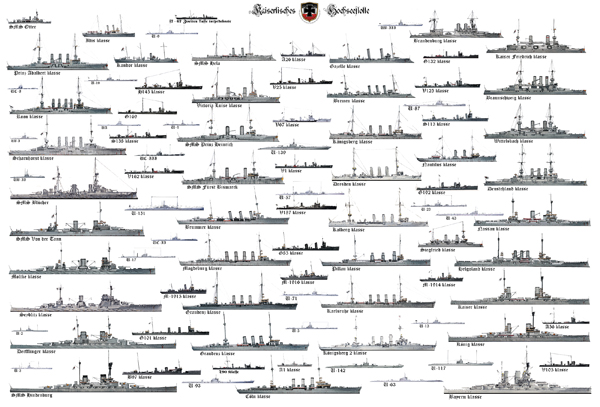
Gallery
.jpg)