
 c80 ships 1800-1990
The Mexican Navy was probably the oldest in North America, created in 1800. Now 226 years old, the Armada de México still have to monitor 3,149,920 km2 (1,216,190 sq mi)) of coastline (11,122 km (6,911 mi)) between the Carribean and Pacific, with 189 ships and 87500 personel today. It is a blue-green water navy with a full array of service, including special forces, Marines and naval aviation, missile frigates (5 ships, 7 in construction), 2 FACs, and 35 OPV and 44 CPVs, 50 counter-nartocics interceptors, 5 logistic/amphibious ships, 6 minehunters, 3 auxiliary/trainers. Its cadet flagship and ambassador round the world’s tall ships reunions is B.E.Cuauhtémoc. Some ships are now 80 years old like the Valle class OPVs (ww2 AUK class), others quite recent as the Dutch-Mex 2005 Reformador class frigates, replacing the four Garcia class still in service. Full list below.
Origin of the Mexican Navy (1800)
A bit of History
Mexico was an intregral part of Pre-Columbian Civilizations, some says even a regional superpower, home to advanced civilizations of the Olmecs (c. 1200–400 BCE), said by many historians to be the “mother culture” of Mesoamerica and known for its iconic, colossal stone heads that sparked a lot of debates of a phoenician connection. Then was the mighty Mayan civilization (c. 2000 BCE–1500 CE) famous for its ground, breaking advances in mathematics, astronomy, writing, and world famous ancient cities like Chichén Itzá. The came the Aztec Empire (1325–1521) which was the Dominant power in central Mexico from its fantastic “Venice of America”, its capital Tenochtitlan, which later became the capital. The Aztec developed even more Complex calendars, Agricultural systems, Trade networks and large, modern cities in many ways.
The Spanish Conquest (1519–1521) sparked a global disaster for this civilization. In 1519, Spanish explorer Hernán Cortés arrived and with indigenous allies, this small group managed to defeat the Aztecs, boasting an army that outnumbered them by 10,000. The Fall of Tenochtitlan (1521) marked the collapse of the Aztec Empire and was followed by a waidespread epidemic that wiped out such large part of the natuves, that even in minority, Spanish Colonials managed to rule the entire area, creating “New Spain” from 1521 to Mexican Independence in 1821.
It was a Viceroyalty controlling politics, land, and trade, rusling through Peninsulares (Spanish-born elites), Criollos (Spanish descent born in Mexico), Indigenous peoples, Africans (brought through slavery), the Spread of Catholicism, a growing Mining economy (especially silver) and some cultural mixing (mestizo population).
However Great Power Competition was a hard game on the European Chess, an Spain lost gradually its Empire, starting with independence movements in the wake of the Bolivarian revolution, but started earlier, and led, surprisingly enough, by Mexican elites. The Mexican Independence was a long struggle still, in 1810–1821, the first of the falling dominos of the Spanish Empire, despite the presence and support of the formidable Spanish Armada, which also had a local, Mexican fleet, the distant ancestor of the 1800 Navy. Grito de Dolores, led by priest Miguel Hidalgo y Costilla and José María Morelos, Vicente Guerrero all were insturmental in this first independence movement, achieved in 1821 with a War ending with Mexico separating from Spain. 1821 was long displayed on the flag, green-white-red, each colour represented one of the guarantees underpinning independence: religion, independence, and unity. The National coat of arms recalls ironically the “dont tread on me” serpent image of US independence, in that case symbolizing the Spanish rule trampled by a Northern crested caracara (Golden Eagle), in its beak and talons, standing on a prickly pear cactus that grows from a rock shaped as an Aztec symbol, the god Huitzilopochtli on an island in Lake Texcoco that became Tenochtitlán.
Creation of the Armada de Mexico
Despite being formed in 1800, the Navy struggled to acquire ships, as essentially a “rebel navy” made of defecting crews. It was only formalized with the Ministry of War in 1821. It was joint to the Mexican army until 1939 and its budgets and capoabilities were closely linked to the latter, with relative independence. It was not helped by a tumultuous internal situation. Let’s cite the 1821-28 Attempts by Spain to reconquer Mexico, the first French intervention in Mexico (1838-39 ‘Pastry War’), in which the entire Armada was captured at Veracruz, the Texan Independence (1836–1845), Yucatán Independence (1841–1848), Mexican–American War (1846–1848), Second French Intervention (1862–1867), and Mexican Revolution (1910–1919), Second invasion by the United States (1914).
It must be stressed that the Mexican–American War was a national catastrophe as Mexico lost large territories in California, Texas, among others (in which the Fort Alamo epic registers) to the United States. French Intervention in Mexico, when France’s Napoleon III decided to install Emperor Maximilian I on the throne in Mexico, was mighty unpopular mostly with the Peones and he later overthrown by Mexican republicans led by Benito Juárez. This even saw the US almost poised to intervene against French Imperialism, after the late 1790s quasi-war.

The early armada comprised the Schooner Anáhuac and Iguala and the Cutters Campechana, Chalco, Chapala, Orizaba, Texcoco, Zumpango, Papaloapan, Tampico, Tlaxcalteca, Tuxpan, the somewhat frigate size Congreso Mexicano (ex-San Jerónimo), the Brigantines Constante and Vicente Guerrero. Later were added the Steamer paddle frigate Guadalupe, Montezuma and the first of many gunboats: The Libertad and Independencia flatiron gunboats (1874), the Demócrata and Mexico (1875) and the presidential Steam yacht Orizaba.
To the Libertad and Democrata were added later the corvette or 3rd rate cruiser (French built) Zaragosa in 1892 (discarded 1924), gunboat Plan de Guadalupe (1892, 824 tons) stricken 1924, Tampico class gunboats (1902, 980 tons) stricken 1924, Nicholas Bravo class (1903, 1227 tons) stricken 1925. During the interwar, the 1932 naval plan, enabled a large coast defence ship purchased in 1924 to Brazil, three destroyer-size patrol sloops (Spanish built), two gunboat-transports (also Spanish built), and ten gunboats (Basque-built on British plans). The government chose to support the Spanish Republicans in 1931 and still during the civil war.
Detailed articles list
- Cruiser Zatagosa (1891)
- GB Plan de Guadalupe (1892)
- Tampico class GB (1902)
- N. Bravo class GB (1903)
The Mexican Navy in WWI
Prior to WWI, Mexican political life was stable because of the dictator Porfirio Diaz’s iron fist who had been in office for almost 40 years. Economic life took advantage of this armed peace, until 1911. A revolt and a coup changed the game, but the revolution lasted almost until 1920 and saw troubles on land, leaving the navy undisturbed but lacking manpower and resources at times. This was the Porfirio Díaz Era (1876–1911) which saw Economic modernization (railways, industry), a stability that favored foreign investment but also of huge inequality and repression leading to revolution, led bt key figures such as Francisco I. Madero, Pancho Villa, and Emiliano Zapata. The End of Díaz dictatorship led to a new constitution in 1917.
The navy remained relatively neutral during this period, which was guaranteed by a US naval base at Vera Cruz in April 1914. The US Navy was also very present to safeguard local American interests. By far the most important of Central American Fleets, the Mexican navy included in 1914, a cruiser (dating from 1891), the Zaragosa, completely rebuilt in 1910, the four gunboats of the classes Independencia (1874) and Democrata (1875), the Plan de Guadalupe (1892), and the 2 class Tampico (1902), and the 2 class Nicholas Bravo (1903), as well as the Progreso (1907). It also implemented the armed transport General Guerrero (1908).
Although one of the wealthiest country in Latin America, Mexico never invested in a substantial Navy however, focusing on shore protection.
In 1918, the Mexican Navy inherited a large collection of ships dating back 1892 to 1903 (the country stayed neutral, rocked by a revolution):
-The old cruiser Zaragosa (1891), discarded in 1924
-Independecia class gunboats (Independencia, Libertad, 1874, 480 tons) discarded in the early 1920s
-The Plan de Guadalupe (1892, 824 tons) stricken in 1924
-The Tampico class gunboats (1902, 980 tons) stricken 1924
-The Nicholas Bravo class (1903, 1227 tons) stricken 1925
During the interwar, it was made of a relatively modern fleet inherited from the 1932 naval plan, and in addition to a large coast defence ship purchased in 1924 to Brazil, the Mexican feet was reinforced by three destroyer-size patrol sloops (Spanish built), two gunboat-transports (also Spanish built), and ten gunboats (Basque-built on British plans). The government chose to support the Spanish Republicans in 1931 and still during the civil war.
The Mexican Navy in the interwar and WW2
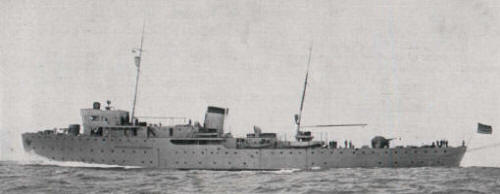
Mexico during the interwar:
We will not dwelve in detail in these events, but internal political history of Mexico is perhaps one of the factors which contributed to limit the country’s naval ambitions. The only goal of the navy in these troubled times was to protect the coast, fishery areas, carry and support troops in internal police operations.
The first period was called the Obregón presidency, 1920–1924 a General that suppressed Huerta’s rebellion with US help, followed by Calles presidency, 1924–1928, elected after a popular campaign and it was marked by anticlerical measures and the repression of a fierce counter-revolution called the Cristero War (1926–1929).
It was followed by the Maximato and the Formation of the ruling party, and three presidents held office, Emilio Portes Gil, Pascual Ortiz Rubio, and Abelardo L. Rodríguez. This was followed by the revitalization of the revolution under President Lázaro Cárdenas, which at the eve of World War II (1934–1940), its administration was just stabilizing and consolidating control over Mexico. Since 1936, Mexicans interpreted the civil war in Spain as a major struggle between the communists and fascists seen through their unique revolutionary lens.
Mexico during WW2:
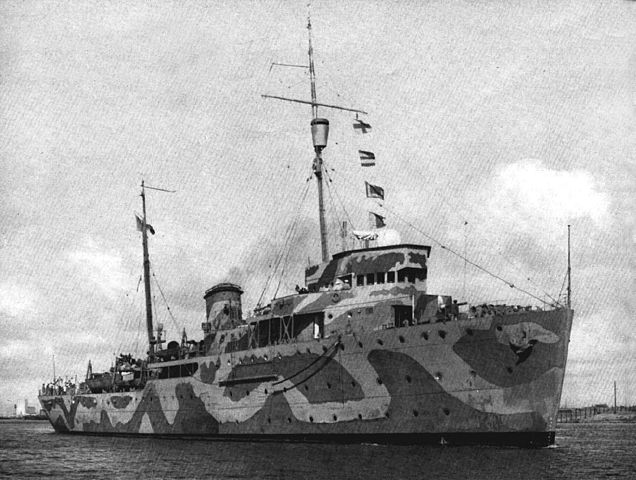
Durango circa 1942
One of the largest vessels acquired was the 1,850 tons transport cruiser General Guerrero (1908) and then the 1590t Italian built Gunboat Progreso (1907), Spanish 1300t Guanajuato class patrol sloops (1934), Spanish built 1600t Durango class transport gunboats (1934), Spanish built G class gunboats (1934). The previous Gunboats were fitted for troop transport.

The gunboat Guanajuato after the war (src shipspotting.com)
Mexico position towards the United States was unclear and the country remained neutral. However, Nazi propagandist Arthur Dietrich and his agents in Mexico successfully manipulated editorials covering the European war via bribings, leading major oil companies to boycot Mexican oil following Lázaro Cárdenas’ nationalization of the domestic oil industry, and expropriation of all oil properties in 1938. Mexico’s started to sell its oil to Germany and Italy as a result.
Manuel Ávila Camacho, Cárdenas’s successor, moved away from nationalistic autarchy and proposed to create a better climate for international investment. This move was started decades before under Madero. The new president’s regime regime froze wages, repressed strikes, and instituted the “crime of social dissolution” to lower dissidence. The PRI shifted away from radical nationalism under Cárdena. The country played a relatively minor role in World War Two. Relations warmed already under U.S. President Franklin Delano Roosevelt with the “Good Neighbor Policy” toward Latin America, and Mexico aligned with the United States in 1940, but under a “belligerent neutrality” prior to the Pearl Harbor attack in December 1941.
Mexico went as far as sacnctioning businesses identified by U.S. intelligence as suppoting the Axis and in August 1941 already, Mexico broke off economic relations with Germany. This was followed by staged massive rallies in support of the government and after December 1941, Mexico took a war footing.
Its biggest contributions was to transport war materiel and labor (Bracero Program) and many Mexican were found in European and Pacific theaters transport fleets. The first trained in Los Angeles in 1942. The Good Neighbor Policy was confirmed by the Douglas-Weichers Agreement in June 1941 securing Mexican oil exclusive for the US, and a generous Settlement in November 1941. This political move led other Latin American countries to be more lenient on their support the Allies.
Naval losses were few: Two tankers in the Gulf of Mexico under Mexican flag, the Potrero del Llano and Faja de Oro, sunk by U-564 and U-106 respectively. This was enough for the Mexican to declare war on all Axis powers on May 30, 1942. however the Navy’s duty was mainly escorting ships in the gulf of mexico and traditional patrols on the west and east coast.
The Escuadrón 201 Aztec Eagles was perhaps the best known contribution of the Mexicans, 300 volunteers trained in the United States as pilots and deployed in the pacific. The Escuadrón 201 fought during the liberation of the Philippines as part of the Fifth Air Force in 1945. In addition the Bracero Program sent 290,000 Mexicans to work temporarily on American farms, especially in Texas.
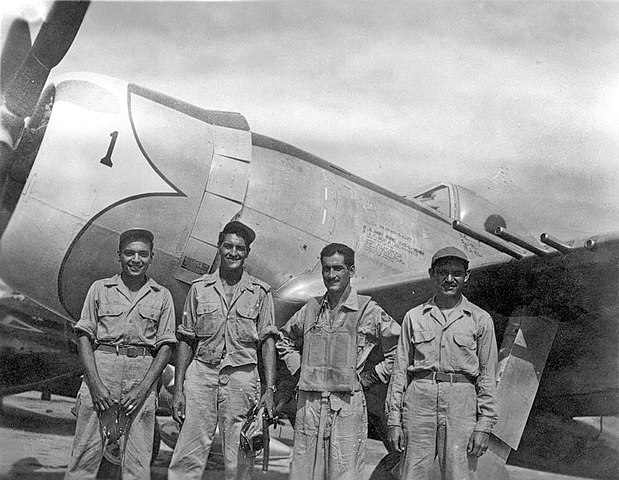
Mexican air force Capt. Radames Gaxiola Andrade stands in front of his P-47D with his maintenance team after he returned from a combat mission. Captain Andrade was assigned to the Mexican air force’s Escuadrón 201. Members of the Escuadrón 201 fought alongside U.S. forces during World War II.(Courtesy photo)
-The Mexican Marines, or “Naval Infantry Corps”, Cuerpo de Infantería de Marina was founded as far as 1922, during the independence war, and the Secretariat of the Admiralty headed by Don Agustín de Iturbide, assigned the first units of the Mexican Army, consisting of four battalions. Two of them were classified as “Marina” stationed in San Blas and Veracruz.
-The Mexican Naval Aviation was created in 1919. A Mexican-made float biplane was successfully tested by Carlos Santa Ana at the Port of Veracruz that year. In 1926, a squadron of floatplanes designed and made for the Mexican Navy was created and Carlos Castillo Breton, became the first Naval pilot in 1927, training in The U.S. and Mexico. Until 1943, some aircraft were acquired with seven naval officers qualified as pilots, some joining the Mexican Air Force. The Naval Aviation school was created in 1943 at Las Bajadas, Veracruz. They used ex-FAM aircraft to patrol the Gulf of Mexico in search for German submarines and training in 1945.
The navy as considerably augmented after WW2 with transfers from the US Navy, notably Tacoma class frigates and APD class fast personnel transports.
The Cold War
The Mexican Navy in 1947 and evolution
The Armada de Mexico remained relatively small up to that point, albeit taking part in operations with the allies:
The oldest ship still around was the Progreso (1907), discarded in 1947, followed by three 1934 Patrol sloops (Guanajuato) whioch survived until 1975 (The first was preserved), Durango (1935) until the late 1990s, and the nine G20 class patrol gunboats until 1953-56. First acquisitions the same year were four ex-Tacoma class frigates (California class) and five PCE sub-chasers as well as eight PC type sub-chasers.
It was reconstituted from there to become the firth largest navy in Latin America, behind Argentina, Brazil, Chile and Peru but unliked these, lacked the “big boys”, aircraft carriers, cruisers or even submarines in its inventory. Acquisition were made from US WW2 stocks under MDAP still to create the largest fleet the country ever had in its history, taking part of the communist containment strategy in these waters (and play its part in counter nartocics in the 1980s).
There was another wave of acquisitions in 1962 with 19 Admirable class minesweepers (DM-1 to DM-19) and 1963-67 with six Crosley class destroyer escorts (California class).
But by far the largest aqcquisition plan was in the 1970s:
-2 destroyers, Fletcher class (Cuathemoc class) in 1970
-1 Frigate, Manuel Azueta Ex-Edsall class in 1973
-2 LSTs Panuco class (Panuco, Manzanilla) 1972
-19 Minesweeper class AUK in 1973, ids IG-01 to 19, reclassified as corvettes (ASW gear removed), now OPVs, still active.
-31 1974-76 “Azteca” class Patrol Boats (P 01 to P31), see below.
The third wave was in the 1980s:
-2 Quetzacoalt class destroyers (Gearing FRAM I) in 1982
-6 Halcon class Corvettes (Spanish built, comp. 1982) see later
The last wave was in the 1990s:
-2 Bronstein class frigates (Bravo class) in 1993
-4 Aguila class corvettes (1991-93) Mexican built
-2 Point class OPVs (Punta Morro) 1991
-3 Cape class OPVs (Cabo class) 1990
-4 Isla Coronado class FAC P41-54 made by Equitable Shipyards 1994 (52t, 3 diesels 16,200 hp, 50 kts, 1x 0.5 in HMG, 2 LMGs, 9 crew)
To be more precise:
Ex-US ‘Point’ class patrol craft: Punta Morro (P 60, ex-US Point Vende) and Punta Mastun (P 61, ex-P 46, ex-US Point Herron) built in the early 1960s and acquired 1991.
Ex-US ‘Cape’ class patrol craft: Cabo Corrientes (P 42, ex-Jalisco, ex1S Cape Carter), Cabo Corzo (P 43, ex-Nayarit, ex-US Cape Hedge) and Cabe Catoche (P 44, ex-US Cape Hatteras) built between 1953 59 and acquired 1990-91.
Four Isla Coronado class fast attack craft: Built by Equitable Shipyards 1994 (52t full load, 3 diesels, 16,200bhp = 50kts, 1-12.7mm MG, 2~7.62mm MG, 9 crew): Isla Coronado (P 51), Isla Lobos (P 52), Ista Guadalupe (P 53), Iva Cozumel (P 54).

Vincente Guerrero, Crosley class (California class DDs)
The bulk of the Armada reflected its main role, patrolling fishing grounds as poaching was frequent and brushes with Guatemala on this topic. Later in the 1980s discovery of oil fields offshore became another point of national interest and security for which the fleet was deployed. This was reflcted in the budget, which rose from 567 millions dollars in 1979 to 1150 millions in 1981. The navy was organized into a Pacific and Gulf commands, sub-divided each into areas of patrol.
Organization and Main bases
President: Commander in chief of all military forces, then the Navy Secretary for daily management, but no joint force command structure with the army.
General Headquarters, three naval forces, eight regions: 4 Pacific coast, 3 Mexican Gulf coast and Región Naval Central in Mexico City, with the 7th Naval Infantry Brigade, Central Special Operations Group, Air Transport Squadron between 13 zones, 14 naval sectors.
Naval Infantry

The Mexican Naval Infantry Corps was reorganized in 2007–2009 in 30 Battalions (Batallones de Infantería de Marina) and included a paratroop battalion, Presidential Guard Brigade, two Fast Reaction Forces (6 battalions each), 3 Special Forces groups. Tasks are port security, protection of the coastal (10 km) waters and major waterways.
The National Service obligation for Mexicans is also applicable to the Marines.
The corps was founded in 1822 and swa plenty of action. Today their training methods are very much based on USMC methods.

Its ground assets includes a large array of vehicles:
Armoured:
-3 (20+) APC-70s, Mod BTR-60s turret-less based on the civilian variant without firing ports, periscopes but with bulletproof windows. HK21 or FN MAG-58 LMG/Mk 19 GL.
-15 MACK Sherpa Scout 4×4 APCs (2014). Also used by the Unidad de Operaciones Especiaes.
Softskin:
Ural-4320, Unimog U-4000, freightliner M2, Mini Comando Ford/Dodge, G-class, Land Rover, Dodge Ram, F-150, Chevy Cheyenne.
There are organic artillery units using the OTO Melara Mod 56 105 mm, Bofors 40 mm, 51 mm FIROS MLRS, 60 mm and 81 mm mortars.
Naval Aviation

Created in 1918 it is probably one of the oldest in Latin America. The Fuerza AeroNaval had in 1926 a squadron of float-planes, training was done in the US. In World War II was created the Naval Aviation school in 1943 at Las Bajadas, Veracruz and assets patrolled the Gulf of Mexico for German submarines. In the cold war it was assigned the support of ground and sea naval units in Search & Rescue, coastal patrol and assistance in disaster relief. Its procurement was very diverse, including soviet models.
Gulf of Mexico Naval Air Force (HQ in Tuxpan, Veracruz) comprised the Tampico Naval Air Base, Las Bajadas Naval Air Base in Veracruz, Campeche Naval Air Base, and Chetumal Naval Air Base.
Pacific Naval Air Force HQ Manzanillo, Colima: Guaymas Naval Air Base, La Paz Naval Air Base, Lázaro Cárdenas Naval Air Base, Mexico City Naval Air Base, Acapulco Naval Air Base, Salina Cruz Naval Air Base and Tapachula Naval Air Base.

090426-N-4879G-393
MAYPORT, Florida.,-(April 26, 2009) is participating in the 50th iteration of the multi-national UNITAS exercise involving the nations of Argentina, Brazil, Canada, Chile, Colombia, Ecuador, Germany, Mexico, Peru, Mexico, Germany, Canada and the United States Ecuador. The two week exercise includes realistic scenario-driven training opportunities such as live-fire exercises, shipboard operations, maritime interdiction operations and special warfare. (U.S. Navy photo by Mass Communication Specialist Seaman Patrick Grieco/RELEASED)
Today’s assets comprises:
-17 Patrol aircraft (5 King Air 350, 7 CASA C-212 and 6 CASA CN-235)
-20 Transporters (cessna, Casa, Dash 8, Learjet…)
-52 helicopters (22 Mil-17, 5 MD explorer, 8 UH-60, 17 Eurocopter models)
-51 trainers (Zlin 42-43, T6 texan, S-333)
SAR units

Maritime Search and Rescue branch was created in 2008, allocated in strategic ports in the Pacific and Gulf of Mexico to provide assistance. It used Coast Guard Defender class ships, two per station, and one 47-Foot Motor Lifeboat coast guard vessel per station.
Port Protection (UNAPROP)
There is also a port protection component, Port Protection Naval Units (Unidades Navales de Protección Portuaria: UNAPROP) including Marines, created in 2014. These are responsible for surveillance and inspection of vessels in and out of the port.
Training

The barque cadet ship Cauhtemoc
Heroica Escuela Naval Militar (officers, General Corps after completing high school)
Naval Medical School (Mexico City)
Naval Engineering School (Mata Grape and Anton Lizardo, Veracruz)
Naval Nursing School at the Naval Medical Center.
Naval Aviation School, La Paz, Baja California Sur.
Search, Rescue and Diving School (Acapulco), also trains state police officers and firefighters. More below.
The Mexican Navy Today

Ex-SAAR FACs commissioned in Mexico, ceremony
Composition
High Command, assisted by the General Staff, Senior Commands in Chief (Headquarters, 2 Naval Forces, and 7 Naval Regions), Senior Commands (13 Naval Zones), and Subordinate Commands (13 naval sectors, 20 Flotillas and Squadrons for Surface Units plus air and naval specialists plus the Marine Corps). High Command HQ Mexico City. Geographic Organization:
Gulf of Mexico, inc. Caribbean Sea
- 1st Naval Zone & Flotilla, HQ Ciudad Madero, Tamaulipas.
- 3rd Naval Zone/Flotilla HQ Coatzacoalcos, Veracruz.
- 1st Sqn. Veracruz, under the 3rd Naval Zone.
- 5th Naval Zone/3rd Sqn Frontera, Tabasco.
- 7th Naval Zone/5th Sqn. Ciudad del Carmen, Campeche.
- 9th Naval Zone/5fth Flotilla Yukalpetén, Yucatán.
- 11th Naval Zone/7th Sqn Chetumal, Quintana Roo.
- 9th Sqn Cozumel, Quintana Roo.
1st Naval Region HQ Veracruz:
3rd Naval Region/7th Sqon Lerma, Campeche:
5th Naval Region, Isla Mujeres, Quintana Roo:
Pacific Naval Force
- 2nd Naval Zone/4th Sqn. La Paz, Baja
- Naval Sector, 2nd Sqn. HQ Puerto Cortés, Baja
- 4th Naval Zone, 6th Flotilla HQ Mazatlán, Sinaloa
- 6th Naval Zone HQ San Blas, Nayarit.
- 8th Naval Zone, 6th Sqn. HQ Puerto Vallarta
- 10th Naval Zone/Flotilla HQ Lázaro Cárdenas, Michoacán.
- 12th Naval Zone/14th Flotilla HQ Salina Cruz, Oaxaca.
- 14th Naval Zone/8th Squadron HQ Puerto Chiapas, Chiapas
2nd Naval Region/Flotilla, HQ Ensenada, Baja, California
4th Naval Region, 4th Flotilla HQ Guaymas, Sonora:
6th Naval Region, 8th Flotilla HQ Manzanillo, Colima
8th Naval Region, 12th Flotilla HQ Acapulco, Guerrero:
Organization
The Mexican Navy is composed of units organized dedicated to naval, amphibious, and air operations, made up of Corps and Services. The Corps’s primary mission is combat, executed by each servive to combine arms and movement, and defines their operational methods. Services are components meeting the needs of daily operation through administrative and logistical support and tasked of maintaining trained and equipped units ready for any assignment at a moment’s notice.
General Corps
Marine Corps
Naval Aviation
Services
Naval Administration and Supply, Communications, Environmental aspects, Training, Logistics, Engineering, Justice, Meteorology, Musicians, Medical Corps, Social Work (so far).
Mexican Naval Construction
The Mexican Navy has five designated shipyards for the construction and repair of assets from the Mexican Navy vessels:
Gulf of Mexico: Naval Shipyard 1 (ASTIMAR 1) in Tampico, Tamaulipas, ASTIMAR 3 in Coatzacoalcos, Veracruz.
Pacific Coast: ASTIMAR 6 in Guaymas, Sonora, ASTIMAR 18 in Acapulco, Guerrero, ASTIMAR 20 in Salina Cruz, Oaxaca.
Other Facilities: Naval Repair Center (NRC) 5 in Frontera, Tabasco, NRC 7 in Ciudad del Carmen, Campeche, NRC 11 in Chetumal, Quintana Roo, NRC 14 in Manzanillo, Colima. All could provided maintenance and repaiurs services to small ships provided they have available dockyards.
National Arsenal Number 3: In San Juan de Ulúa, Veracruz, tasked of ammunitions only (ships in deployment in and out of decommission for overhauls goes there).
Mexican Naval Academy
The Naval Education System comprised academic course and general or specialized training, and their associated specialized institutions, administered by the Mexican Navy. It was tasked to disseminate training, science and naval arts, meeting the needs of service, the engineers, medical personnel, among others. This was outside the core training of naval technique and tactics. It is under responsibility of the Secretariat of the Navy, through the Rector’s Office of the Naval University, heading colleges, schools, study centers, and specialized courses.
Center for Higher Naval Studies (CESNAV)
This develops advanced naval, scientific, and general maritime knowledge, offering a doctoral program in National Security and master programs on Information Security, and diploma program for General Staff officers, specializations in Naval Command but also in Weapons Systems, Electronics, Operations Analysis and Naval Communications or Naval Logistics, with a campus in Mexico, the “Heroic Naval Military School”. It comprise a General Corps for Naval Systems Engineering, a Marine Corps for Hydrographic Engineering and a Pilot branch, for Naval Aeronautical Engineering. It offers training for Mechanical Engineers, naval Electronics and Communications Engineers and logistics Engineers. Student can entered after high school at the rank of midshipman and have to pass a professional examination to reach the rank of lieutenant commander in an engineering degree, held at Antón Lizardo southeast of Veracruz.
Naval Medical School
Offers a degree in naval surgery, and could train officers in prevention and care of naval personnel’s health. Graduates receive the rank there of lieutenant commander. It is located in Mexico City.
Mexican Navy Training and Education Center
Located in Antón Lizardo, 32 km southeast of Veracruz, it comprises a Nursing School for a Bachelor’s Degree in Naval Nursing over eight semesters, to assist medical personnel in the care of patients in hospitals, sanatoriums, clinics, shore-based medical units, aboard ships, and at the Naval Medical Center.
Naval Supply School
Technical officers are trained for the Naval Administration and Supply Service, with knowledge of administration, accounting, and auxiliary functions in naval logistics.
Naval Electronics School
Technical officers in maintenance of electronic and systems on ships and Navy shore installations.
Aviation Mechanics School
Technical officers for operation and maintenance of engines for the Mexican Naval Air Branch’s aircraft and helicopters, located at Las Bajadas, Veracruz.
Naval Machinery Mechanics School
Technical officers for the operation and maintenance of naval powerplants, diesels, gaz turbines and others. Located in Lázaro Cárdenas, Michoacán.
Naval Aviation School
Trains pilots for the Mexican Navy, and personnel from the Federal Preventive Police as well as members of various Central American countries. Located in La Paz, Baja California Sur.
Search, Rescue, and Diving School
Located in Acapulco, trains Navy personnel for search and rescue as well as diving specialties, and trains police officers and firefighters.
Naval National Military Service
The training provided by the Mexican Navy for the National Military Service prioritizes instilling civic and moral values in young Mexicans of conscription age, enabling their better integration into society, fostering nationalism, and promoting respect for national symbols. National Military Service Marine Infantry Training Centers:
CAIMSMN 1 Ciudad Madero, Tamaulipas
CAIMSMN 2 Ensenada, Baja California
CAIMSMN 3 Veracruz, Veracruz
CAIMSMN 4 Guaymas, Sonora
CAIMSMN 5 Ciudad del Carmen, Campeche
CAIMSMN 6 Lázaro Cárdenas, Michoacán
CAIMSMN 7 Isla Mujeres, Quintana Roo
CAIMSMN 8 Acapulco, Guerrero
CAIMSMN 9 Tuxpan, Veracruz
CAIMSMN 10 Salina Cruz, Oaxaca
CAIMSMN 11 Coatzacoalcos, Veracruz
CAIMSMN 12 Mazatlán, Sinaloa
CAIMSMN 14 Puerto Vallarta, Jalisco
CAIMSMN 15 Lerma, Campeche
CAIMSMN 16 Manzanillo, Colima
CAIMSMN 17 Yukalpetén, Yucatán
CAIMSMN 18 Puerto Chiapas, Chiapas
CAIMSMN 19 Chetumal, Quintana Roo
CAIMSMN 20 Puerto Peñasco, Sonora
CAIMSMN 21 Matamoros, Tamaulipas
CAIMSMN 22 La Paz, Baja California Sur
1st Regiment Mexico City
Nomenclature of Mexican Ships
The Early Navy comprised the following: Schooners Anáhuac and Iguala, Cutters Campechana, Chalco, Chapala, Orizaba, Texcoco, Zumpango, Papaloapan, Tampico, Tlaxcalteca, Tuxpan. Congreso Mexicano (previously Asia and San Jerónimo), Brigantines Constante, Vicente Guerrero, Steamer paddle frigates Guadalupe, Montezuma and Steamer gunboat Libertad, Independencia, Guerra Demócrata and Steam yacht Orizaba. Info is lacking on many of them.
 Steamer gunboat Libertad
 Frigate laid down and built at Laird. She had a tonnage of 480t,was 38.10 x 732 x 2.67, 425 ihp/10 kts, one 100 pdr, 4×20 pdr and schooner rigged, but classed as a Frigate, second of the name. She was hulked in 1914, but later used as troop transport until BU 1920. There is very little information on her. She was classed as Frigate, but quite small to international standards.
 The previous “Libertad” was a merchant schooner built on the west coast of Mexico for merchant service to Baja in California and along the coast of Mexico. The Mexican–American War, saw her captured at Loreto along with the schooner Fortuna on 1 October 1846 by the US sloop-of-war USS Cyane (Samuel Francis Du Pont). She was later used as a tender armed with one 9-pounder gun and worked with Commodore Robert F. Stockton’s Pacific Squadron by 1847 but was sold for BU in February 1848.
Democrata class ()
Rennie built, 3 masts schooner rigged mixed construction, 445t, 42.7 x 7.6 x 3.4m, 600 ihp 11 kts, 2x 100 pdr, 2x 20pdr, TS 1914.
gunboat Nicholas Bravo
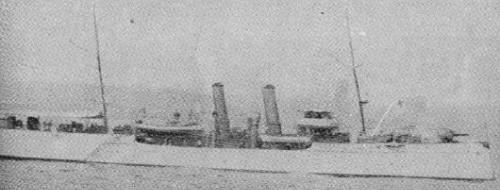
Transport cruiser General Guerrero (1908)
A British-built vessel from Vickers, Barrow this was more a transport than a cruiser with her light armament, and despite having tailored accomodations for 550 troops, 45 horses and field guns, she was still relatively narrow. Her guns were installed on the forecastle (one), the remainder on the poop deck. Also names Vicente Guerrero she commemorated the leader of the war of independence and third Mexican president in 1829. She was stricken in 1924, quite early, for reasons unknown.
Specs:
-1850 tons, 74.6 x 13.2 x 5.3 m
-1 shaft VTE 1500 shp 12 knots
-Armed with 6 x 4-in (102 mm), crew 300
The fleet also operated the coast defence ship Anahuac, purchased in Brazil in 1924, not modernized and discarded in 1938.
Gunboat Progreso (1907)
A 1,590 tonnes vessel built in Italy at Odero, Sestri Ponente NyD. This went back to odd circumstances: The Italian Progreso in February 1915 was blown-up accidentally while lying in the port of the same name in Yucatan. Ten were killed, as this two-masted, on funneled vessel was sent to support the forced of General Carranza, then legitimate president. She was raised by the Mexicans, repaired, and returned to service, and discarded in 1947.
Specs:
-1590 tons, 70.1 x 10.3 x 3 m
-1 shaft VTE 1400 shp 13 knots, coal 209 tons
-Armed with 4 -6pdr (57 mm), crew 140
Interwar and WW2
Guanajuato class patrol sloops (1934)
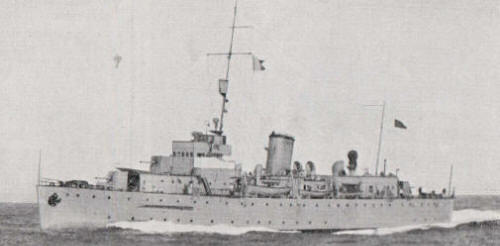
Ordered in Spain in 1932, built at the Societa Espanol in Ferrol, entered service in 1935. First Mexican warships with Turbines, they were as fast as destroyers, but with light guns and no TTs, but a substantial anti-aircraft battery. The class comprised three ships: Guanajuato, Queretaro and Potosi. Design was based on the Canovas del Castillo gunboat. By lowering armament, space was available to take onboard 230 infantry and 40 horses in special accommodation in the aft superstructure. During WW2, all three were modernized in US shipyards in California. They served until 1975.
Specs:
-1300 tons, 77.92 x 10.51 x 3.05 m
-2 shaft Parsons geared turbines 5000 shp 29 knots
-Armed with 3x 4-in (102 mm), 2x2x 25 mm AA, 2x2x 13 mm AA.
-Crew 140
Durango class transport gunboats (1934)
Durango circa 1942
Ordered in Spain in 1932 to replace the transport cruiser Vicente Guerrero. They could carry 490 troops and 80 horses, and horse-drawn field artillery. Durango was built at Levante Yard of Vaencia and Zacatecas at the Echevarria & Larrinaga NyD in Cadiz. As political tensions rose, Zacatecas was seized by the Republican Government and served during the civil war. Mexico never received the latter while Durango was active until the late 1970s.
Specs:
-1600 tons, 85.95 x 12.19 x 3.05 m
-2 shaft Parsons geared turbines, Yarrow boilers, 6500 shp 20 knots
-Armed with 2x 4-in (102 mm), 2x2x 25 mm AA, 2x2x 13 mm AA.
-Crew 141
G class gunboats (1935)
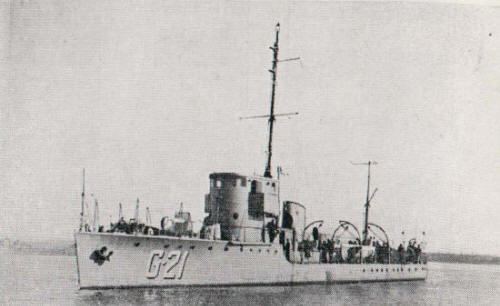
These small coastal vessels were the most important class resulting of the 1932 naval program. They were numbered G20 to G29, built in Basque country at Euskalduna NyD in Bilbao on a British design, with German powerplants and French guns. A truly European affair. This class was split between flotillas of the Pacific ocean and Caribbean. They served until the 1950-60s. The first was discarded in 1945, others in 1954 and the remainder in 1963, modernized.
Specs:
-130 St./180 tons FL, 44.96 wl, 46.63 oa x 5.03 x 1.59 m
-2 shaft MAN diesels, 3000 shp 26 knots
-Armed with 2x 25 mm AA, 4x 13 mm AA
-Crew 21
The Cold War
Ex-US PCE type submarine chasers:
Blas Godinez (ex-PCE 844, discarded 1965), David Porter (ex-PCE 847, discarded 1965), Pedro Sainz de Baranda (ex-PCE 868, discarded 1965), Tomas 7 Mann (ex-PCE 871, discarded 1972), Virgilio Unbe (ex-PCE 875, discarded 1965). Purchased 1947, armed with a 3-in, 640mm, 4-20mm, 4 DCT. Unbe had no DCT, Godinez 3-40mm, 5 20mm.
Ex-US PC type submarine chasers:
CG 30 (ex-PC 820, discarded 1966), CG 31 (ex-PC 608, discarded 1964), CG 32 (ex-PC 614, discarded 1964), CG 33 (ex-PC 813, discarded 1966), CG 34 (ex-PC 794, discarded 1964), CG 35 (ex-PC 824, discarded 1966), CG 36 (ex-PC 1224, discarded 1964), CG 37 (ex-PC 819, discarded 1966), CG 38 (ex-PC 1210, discarded 1971)
All units purchased 1947. Many were not armed while in Mexican service.
Ex-US AUK class minesweepers (corvettes)
Leandro Valle (IG 01, ex-Pioneer), Guillermo Prieto (IG 02, ex-Symbol), Mariano Escobedo (IG 04, ex-Champion), Ponciano Amaga (IG 03, ex-Competent), Manuel Doblado IG 05, ex-Defense), Sebastian Leido de Tejada (IG 06, ex-Devastator), Santos Degollado (IG 07, ex-Gladiator), Ignacio de la Llave (IG 08, ex-Spear), Fuan N Alvarez (IG 09, ex-Ardent), Melchior Ocampo (AG 10, ex-Roselle), Valentin G Farias (IG 11, ex-Stariing), Ignacio Altamirano (IG 12, ex-Sway), Francisco Zarco (IG 13, ex-Threat), Ignacio L Vallana (IG 14, ex-Velocity), Fesus G Ortega (IG 15, ex-Chief), Gunerriez Zamora (1G 16, ex-Seater), Juan Aldarnna (IG 18, ex-Pilot), Hermenegildo Galeana (IG 19, ex-Sage). All units transferred 1973. Reclassified as corvettes after minesweeping and ASW gear removed. Still active 1991: P102 Juan de la Barrera, Mariano Escobedo, Manuel Doblado, Santos Degollado, Juan N. Álvarez, Manuel Gutiérrez Zamora, Valentín Gómez Farías, Francisco Zarco, Ignacio L. Vallarta, Jesús González Ortega, Mariano Matamoros. Now all discarded.
Ex-US ADMIRABLE class minesweepers (corvettes)
DM 01 (D 01, ex-Fubdant), DM 02 UD 02, ex-Huarity), DM 03 (ID 03, ex-Execute), DM 04 (ID 04, ex-Specter), DM 05 AD 05, ex-Scuffle), DM 06 (ID 06, ex-Eager), DM 10 ID 10, ex-Jnstill), DM 11 (ID 11, ex-Device), DM 12 GD 12, ex-Ransom), DM 13 (ID 13, ex-Knave), DM 14 (ID 14, ex-Rebel), DM 15 (ID 15, ex-Crag), DM 16 (ID 16, ex-Dour), DM 17 (ID 17, ex-Diploma), DM 18 (ID 18, ex-Jnvade), DM 19 (ID 19, ex-Intrigue). All units transferred 1 October 1962, except DM 04, February 1973. Reclassified as corvettes after minesweeping and ASW gear removed. DM 02, 06, 10 and 16 deleted 1986.
Halcon class Corvettes (1982)

Class: All built at Bazan, Cadiz: GH 01 CADETE VIRGILIO 2.6.82, URIBE GH 02 TENIENTE JOSE 30.8.82, AZUETA GH 03 CAPITAN DE FREGATA 30.10.82, PEDRO SAINZ DE BARANDA, GH 04 COMODORO CARLOS 4.11.82, CASTILLO BRETON. GH 05 VICEALMIRANTE 16.11.82 Extant 1995 OTHON BLANCO GH 06 CONTRAALMIRANTE 17.12.82, ANGEL MORTIZ MONASTERIO. Ordered 1980. Generally similar to the ships built for Argentina. Contracts for further eight have been shelved. Delivery of GH 04 delayed by accident. GH 05 and GH 06 reportedly delivered only on 24 February 1983 and 24 March 1983. According to some reports main engines of 20V 956 TB 91 type capable of 13,300bhp for speed of 22—32kts. Large landing deck and hangar for helicopter. Used for EEZ patrol. Pennant nos. changed to C 11-C 16.

Specs:
Displacement: 767t normal; 910t full load
Dimensions: 220ft oa, 206ft 9in x 34ft 6in «x 1O0ft 67.0m, 63.0m x 10.5m x 3.08m
Machinery: 2 shafts, 2 MTU-Bazan 16V 956 TB91 diesels, 7500bhp = 2lkts. Range 5000nm at 18kts
Armament: 140mm Breda, 1 MBB BO 105C helicopter
Sensors: Radar Decca AC 1226, Tacan, optronic director CSEE Naja
Complement: 52 (10 officers)
Aguila class Corvettes (1993)

Class: GA01 UXMAL (Tampico NSY) Nov 1991, GA02 MITLA (Veracruz NSY) 1992, GA 03 PETEN (Tampico NSY) 1993, GA04 ANAHUAC (Veracruz NSY) 1993.
Originally one ship ordered each from Tampico NSY and Veracruz. Improved version of Halcon class. Fitted with hangar and landing deck for helicopter. Programme slowed down considerably due to financial problems. The first unit renamed on completion Sebastian José Holzinger (C01) and the others, respectively, Capitan de Navio Blas Godinez Brito (C02), Brigadier Jose Maria de la Vega Gonzalez (C03), General Filipe B Berriozabal (C04). On completion, C01 and C02 were temporarily armed with a 40mm gun. To be used for EEZ patrol duties.
Specs:
Displacement: 910t normal; 1175t full load Dimensions: 244ft x 34ft din = 8ft 4:n 74.41 x 10.5 x 2.502
Machinery: 2 shafts, 2 MTU 20V 956 TB92 diesels, 11,700bhp = 22kts. Range 3820nm at 18kts
Armament: 1 57mm/70 Bofors Mk 2, 1 helicopter MBB BO 105C
Sensors: Radar Raytheon SPS 64 (V), fire control Elsag NA 18 optronic director
Complement: 75 (11 officers)
Azteca class OPVs (1975)

Class: Andres Quintana Roo (P 01), Matias de Cordova (P 02), Miguel Ramos Arizpe (P 03), José Mana Izazago (P 04), Juan Baunsta Morales (P 05), Ignacio Lopez Rayon (P 06), Manuel Crescencio Rejon (P 07), Antonio de la Fuente (P 08), Leon Guzman (P 09), Ignacio Ramirez (P 10), Ignacio Mariscal (P 11), Heriberto Jara Corona (P 12), Fosé Maria Mata (P 13), Feliz Romero (P 14), Fernando Lizard (P 15), Francisco y Mujica (P 16), Pastor Rouaix Fosé Maria (P 17), Fosé Mana del Castillo Velasco (P 18), Luis Manuel Rojas (P 19), fosé Natividad Macias (P 20), Esteban Baca Calderon (P 21), Ignacio Zaragoza (P 22), Tamaulipas (P 23), Yucatan (P 24), Tabasco (P 25), Veracruz (P 26), Campeche (P 27), Puebla (P 28), Margarita Maza de Juarez (P 29), Leona Vicario (P 30), Josefa Orniz Dominiquez (P 31)
Designed by a British agency and ordered from Associated British Machine Tool Makers which sub-contracted the construction of the first twenty-one (from 1974 onwards) and assisted with the building in Mexico of a further ten (at Vera Cruz and Salina Crus). They are not entirely satisfactory in service, being subject to maintenance problems. PC202-231 still active.

Specs:
Displacement: 148t full load, Dimensions: 111 ft 10in, 101 ft 4in pp x 28ft 3in x 6ft 6in 34.(30.9m x 8.6m x 2m)
Machinery: 2 shafts, 2 Ruston Paxman Ventura diesels, 3600bhp = 24kts. Range 2400nm at 12kts
Armament: 140mm, 1-20mm, 2 MG, Complement: 24
Allende class Frigates (1998)

Class: F211 Ignacio Allende, F212 Mariano Abasolo, F213 Guadalupe Victoria, F214 Francisco Javier Mina, ex-USN Knox-class acquired in 1998. Decommissioned 2016-2022.
Reformador class (2018)

DAMEN Sigma-class design, Multipurpose Frigates, Netherlands design built partly in Mexico. 8 ships planned as part of fleet modernisation: F101 Benito Juárez of the 10514 POLA type was built from 2017, completed 2020. RGM-84L Harpoon Block II, RIM-162 ESSM (MK 56 VLS launcher), MK 54 Mod 0 lightweight torpedoes (2×3 MK 32 SVTT), Block II Rolling RAM missiles, Bofors 57 mm gun.
Huracán class FAC/M (2004)

Class: A301 Huracán, A302 Tormenta, ex-IDF Sa’ar 4.5-class missile boat, Gabriel SSMs, 30 mm CIWS and helideck/hangar aft. Ex INS Aliya and INS Geula.
Oaxaca class (2003)

Mex-built 1680t OPVs: P161 Oaxaca, P162 Baja California, P163 Independencia, P164 Revolución, P165 Chiapas, P166 Hidalgo, P167 Jalisco, P168 Tabasco
OTO Melara 76/57, 12.7mm and 30 mm cannons, Eurocopter Panther helicopter.
Durango class OPVs (2000)

Class: 1,300t P151 Durango, P152 Sonora, P153 Guanajuato, P154 Veracruz. Mex-built (SEMAR). Bofors 57 mm/70 Mk 3, 1 medium helicopter
Sierra class Corvette/OPVs (1998)

Mex built 1366t P141 Sierra, P142 Juarez (burnt 2003, sunk 2007), P143 Prieto, P144 Romero. Bofors 57mm, Helicopter.
Holzinger class OPVs (1991)
Mex. built 1022t; Bofors 40mm, Bo 105 Helicopter. P131 Holzinger, P132 Godínez, P133 De la Vega, P134 Berriozabal
Uribe class OPVs (1982)

Spanish Built 1982, see Halcon class above), ARM Uribe (Sunk artificial reef), ARM Azueta, Baranda, Bretón, Blanco, Monasterio.
Tenochtitlan class Coastal patrollers (2011)

Mex. built Damen Stan Patrol 4207: PC331 Tenochtitlan, Teotihuacan, Palenque, Mitla, Uxmal, Tajin, Tulum, Monte Albán, Bonampak, Chichen Iztzá.
Polaris class Interceptors

44 Polaris I (Built Sweden), 6(+17 construction Mex).
Amphibious ships still active:

The Papaloapan, a Mexican Navy ship, sits off the coast of Mississippi on September 9, 2005 as she sends a group of her Sailors ashore to assist with Hurricane Katrina relief efforts, along with USS Bataan (LHD5). Bataan’s involvement in the humanitarian assistance operations is an effort led by the Department of Defense in conjunction with the Federal Emergency Management Agency. Bataan has been the Maritime Disaster Relief Coordinator for the Navy’s role in the relief efforts. (US Navy photo by PHAN Jeremy L. Grisham)
-Papaloapan class Tank landing ships, A411 Papaloapan, A412 Usumacinta ex-USN Newport-class purchased 2001
-Panuco class Tank landing ship A402 Manzanillo, ex USS Clearwater County, transferred 1972
-Montes Azules class Landing ship: BAL01 Montes Azules, BAL02 Libertador (Mex built 2012)
-TBD class Supply ship Isla Madre Launched (2016=: Damen Stan 5009 Fast Crew Supplier.
Misc. vessels:
-Banderas class Minesweepers: Banderas, Magdalena, Kino, Yavaros, Chamela, Tepoca, US transferred.
-Huasteco class Multipurpose logistics vessels: AMP01 Huasteco, AMP02 Zapoteco (Mex built)
-Maya class Multipurpose vessels: ATR01 Maya, ATR02 Tarasco (Mex built)
-B.E.Cuauhtémoc cadets three-masted barque sail training ship.
Sources
web.archive.org/ primerojunio.htm
web.archive.org/ gob.mx/semar/ la-secretaria-de-marina-armada-de-mexico…
excelsior.com.mx
web.archive.org/ crea marina unidades navales proteccion portuaria
navyrecognition.com
web.archive.org/ navyrecognition.com/ stan patrol mex
web.archive.org/ navyrecognition.com/ mex patrollers
web.archive.org mx black-hawk-helicopters
en.wikipedia.org Mexican_Navy
en.wikipedia.org Naval_Infantry_Corps
en.wikipedia.org/ Mexican_Naval_Aviation