
Indian Navy today
 Circa 165 ships, 40 in contruction 1990-today
The Indian Navy Today
The current Indian Navy fleet in 2025 is a mix of new stealth platforms and modern submarines, reflecting the Navy’s growing blue-water capabilities.
New Inductions Strengthen Combat Capability
INS Nilgiri (Project 17A stealth frigate), INS Surat (Visakhapatnam-class destroyer), and INS Vagsheer (the 6th and final Kalvari/Scorpene-class submarine) were commissioned early 2025—marking a major leap in surface and subsurface strength.
INS Tushil (Russian-built stealth frigate) joined in late 2024; its sister ship INS Tamal is due on 1 July 2025.
INS Arnala, a homegrown Anti-Submarine Warfare Shallow Water Craft, was commissioned in June 2025, showcasing India’s growing indigenization in naval design and production.
Fleet Modernization & Growth
The Navy currently fields over 130 ships, targeting to reach 155–160 vessels by 2030 and 175–200 by 2035.
A robust pipeline of 17 warships and 9 submarines, valued at ₹2.4 lakh crore, is in various approval stages to further boost naval assets.
The acquisition of eleven Next-Generation Offshore Patrol Vessels (NGOPVs) is underway, although first deliveries start from 2026.
Undersea Fleet & AIP Challenges
The Kalvari-class submarine fleet stands at six units, with plans for more under Project-75. However, integration of Air-Independent Propulsion (AIP) has been delayed due to developmental setbacks—hindering operational endurance improvements. A new €5 billion deal (with Germany’s ThyssenKrupp and Mazagon Dock) for six AIP-capable submarines is under negotiation.
Indigenous Drive & Strategic Outreach

Naval production is increasingly domestic, evidenced by ships like Nilgiri, Arnala, Himgiri, and others under construction. Indian Navy’s operational reach continues to expand; for instance, INS Delhi, Shakti, and Kiltan took part in joint maritime exercises near the South China Sea. The Western Fleet’s strength has risen by 72% over the past 26 years, reflecting a sustained modernization drive.
Notable Developments in 2025:
Surface Ships: INS Nilgiri, INS Surat, INS Tushil, INS Tamal
Submarines: INS Vagsheer (final Scorpene), AIP deal in progress
Coastal Operations: Indigenous ASW craft INS Arnala
Indigenization: Strong domestic shipbuilding and weapons systems
Strategic Reach Enhanced regional deployments, Western Fleet growth
Future Targets: Fleet expansion towards 200 ships by 2035
Overall, the Indian Navy in 2025 is transitioning from Cold War legacy assets to a modern, indigenous, blue-water force, with growing surface fleets, emerging subsurface capabilities, expanding coastal defense vessels, and strengthened regional engagement.
Inheritance of the cold war fleet 1990

In 1990, the Indian Navy was very much a product of Cold War–era geopolitics and procurement patterns, and its fleet composition reflected the legacy of both Soviet and Western influence from earlier decades. Here’s a detailed breakdown of what “inheritance of the Cold War fleet” meant for the Indian Navy around that time:
Strategic Context: Cold War Alignments. While India was officially non-aligned, its relationship with the USSR from the late 1960s onward led to a navy heavily equipped with Soviet hardware by 1990. Regional Role – The Navy’s mission in 1990 was centered on coastal defense, sea control in the Indian Ocean, and deterrence against Pakistan, with a secondary capability to counterbalance growing Chinese naval presence. End of Cold War Transition – By 1990, the collapse of the Soviet Union was imminent, which meant uncertainty about spare parts and future procurement for the Soviet-origin fleet.
Main Components of the Fleet in 1990:
INS Vikrant (R11): British-built (Majestic-class), commissioned in 1961, still in service in 1990 but largely operating as a helicopter and ASW platform due to limits on fixed-wing operations. Kashin-class Destroyers: Soviet-built (Rajput-class in Indian service). Modern missile destroyers with SS-N-2D Styx anti-ship missiles. Foxtrot-class: Soviet conventional diesel-electric submarines, commissioned from 1967 onwards. Magar-class LSTs: Indian-built landing ships for amphibious operations. -Anti-Ship Warfare – Heavy reliance on Soviet Styx missile systems. Aging Platforms – Many ships and aircraft dated back to the 1960s and 70s. The 1990 fleet was essentially a Cold War hybrid navy: (To come) (To come) (To come) (To come) (To come) Sagarika SLBM (Dhanush) (To come) BrahMos supersonic cruise missile is becoming the primary anti-ship missile of the Indian Navy. Derby missile VL-SRSAM Varunastra advanced heavyweight torpedo of the Indian Navy. A-190(E) 100mm AK-630 six-barreled 30 mm Gatling gun RBU-6000
INS Viraat (R22): Former HMS Hermes, a Centaur-class carrier acquired from the UK in 1987, serving as the main fixed-wing carrier with Sea Harrier fighters.Surface Combatants
R-class Destroyers: Older British-built ships from WWII era, mostly used in secondary roles by 1990.
Leander-class Frigates: Built in India and the UK, forming the backbone of the fleet in the 1970s–80s.
Godavari-class Frigates: Indian-designed derivative of the Leanders, incorporating Soviet and Western systems.
Petya-class Frigates: Soviet-built anti-submarine corvettes.Submarine Arm
Kilo-class (Sindhughosh-class): Modern Soviet submarines, first inducted in 1986, greatly enhancing underwater capability.Amphibious & Support Fleet
Various tankers and supply ships to support blue-water operations.Key Capabilities
-ASW (Anti-Submarine Warfare) – Carriers, helicopters (Sea King, Ka-25), and corvettes.
-Fleet Air Arm – Sea Harriers for air defense, fixed-wing strike, and reconnaissance.
-Subsurface Threat – Improved with Kilo-class acquisition.Challenges in 1990
Dependence on Soviet Logistics – Risk of spare parts shortage as the USSR approached collapse.
Limited Area Air Defense – Reliance on short- to medium-range systems, with no Aegis-style long-range fleet defense.
Budget Constraints – India faced economic challenges, limiting modernization pace.Legacy
Built on British carrier doctrine from the 1960s. Transitioned into a Soviet missile-heavy surface fleet in the 1970s–80s. By the early 1990s, poised for a shift toward indigenous shipbuilding and more balanced blue-water capabilities.The 2000s expansion Program
New Challenges
Current Organization
Indian Marines
Indian Naval Air Force
Weapons Systems
Submarine-launched ballistic missiles:
K4 SLBM (deployed on Arihant-class submarine for trials)
K-5 SLBM (Under development)
K-6 SLBM (Under development)Ship launched ballistic missiles:
Cruise/anti-ship missiles
BrahMos Hypersonic Cruise Missile (Under development)
BrahMos Supersonic Cruise Missile
3M-54E/3M-14E Klub Anti-Ship/Land Attack Cruise Missile (SS-N-27 Sizzler)
Kh-35 (SS-N-25 SwitchBlade)
P-20 (SS-N-2D Styx)
Sea Eagle missile
Harpoon (missile)
Exocet missile (Used by Kalvari class)
NASM-SR(Under development)Air to air missiles
R-73 missile
R-77 missile
AstraSurface to air missiles
Barak 1 – Being replaced by VL-SRSAM missile.
Barak 8
SA-N-12 (SA-17 Grizzly)
SA-N-11 (SA-19 Grison)
SA-N-7 (SA-11 Gadfly)
SA-N-5
SA-N-4 (OSA-M)
SA-N-1 (S-125M)
SA-16 (Igla MANPAD)
VL-SRSAMTorpedoes:
Whitehead A244-S anti-submarine torpedo
APR-3E torpedo
CET-65E torpedo
Type 53-65KE torpedo (passive wake homing)
TEST 71/76 anti-submarine, active and passive homing torpedo
AEG-SUT Mod-1 wire-guided, active/passive homing torpedo
DM2A4 Seahake torpedo
Advanced Light Torpedo Shyena
Varunastra
Takshak (under development)Main guns:
100mm AK-100 naval gun
AK-176-M 76mm gun
AK-76/62 76mm gun
Twin mount gun (76mm)
OTO Melara Otobreda 76 mm gun
Mk.6 Vickers 114mm gun
Bofors 40mm/57mm/60mm guns
Oerlikon 20 mm cannon (for patrol boats)
CRN-91 30 mm cannon (for patrol boats)Air defence guns:
AK-230 twin 30 mm gun
CADS-N-1 KashtanASW rocket launchers:
RBU-6000 (RPK-8)
RBU-12000 (UDAV-1)
RBU-1000
GSh-30-1
Nomenclature of the modern Indian Navy
Capital Ships
INS Vikramaditya (2008)

INS Vikramaditya is the Indian Navy’s current flagship aircraft carrier and one of its most visible symbols of blue-water capability. She is a modified Kiev-class aircraft carrier, the Ukrainian-built (Nikolaiev) Baku, then Admiral Gorshkov, commissioned 1987 in the Soviet Navy. Purchased from Russia in 2004, extensively refitted at Sevmash shipyard, and commissioned into the Indian Navy on 16 November 2013. Homeport: Karwar Naval Base (INS Kadamba)
Displacement: ~45,000 tonnes full load, 284 meters long, 30 knots with Steam turbines, 8 boilers, 16 diesels.
Crew: 1,600 (ship + air wing)
MiG-29K/KUB multirole fighters (primary fixed-wing strike and air defense), Kamov Ka-31 airborne early warning helicopters, Kamov Ka-28 or Sea King Mk 42B ASW helicopters, ALH Dhruv naval variant for utility and SAR roles
Weapons & Sensors: AK-630 Gatling CIWS, 4x VLS Barak-1 and 8 SAMs VLS.
She Serves as centerpiece of Carrier Battle Group-1 (CBG-1), escorting destroyers, frigates, and replenishment ships. She has taken part in Malabar exercises (with US & Japan), and deployments in the Indian Ocean, Arabian Sea, and Western Pacific. She undergoes periodic refits at Cochin Shipyard for hull, machinery, and aviation systems upkeep. The challenges include high operational costs and dependence on Russia for certain spare parts.
INS Vikrant (2013)
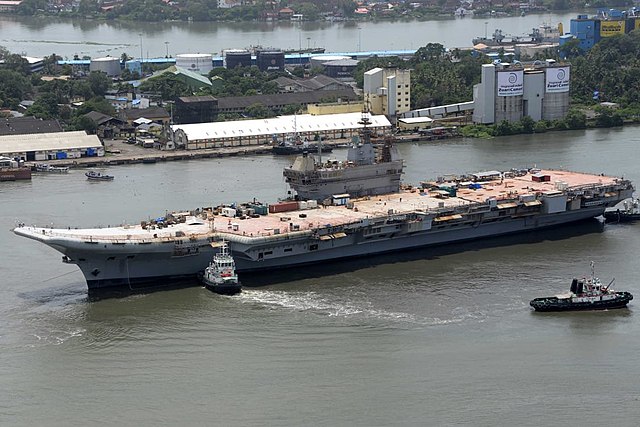
INS Vikrant (IAC-1) is the replacement for R11, the original Majestic-class aircraft carrier Hermes, commissioned on 4 March 1961, decommissioned on 31 January 1997, preserved as a museum ship in Mumbai until 2012, scrapped in 2014. The new Vikrant is the first Indian-designed and built aircraft carrier, quite an achievement. She was launched on 12 August 2013 (Cochin Shipyard, Kochi) and commissioned on 2 September 2022, displacing c43,000 tonnes so less than the Vikramaditya, for a length of 262 m.
She is powered by four General Electric LM2500 gas turbines, 30+ knots max speed.
The Air Wing comprised MiG-29K fighters, Kamov Ka-31 AEW helicopters, MH-60R Seahawks, ALH Dhruv
She is filling the eastern fleet part of the two-carrier fleet plan.
Key Difference from Vikramaditya. Not Soviet-built & refurbished, not a STOBAR-modified Kiev-class but a clean-slate STOBAR design tailored for Indian needs.
Planned future CV (2035)
(In reserach)
Submarines
Ahirant class SSBNs (2016)
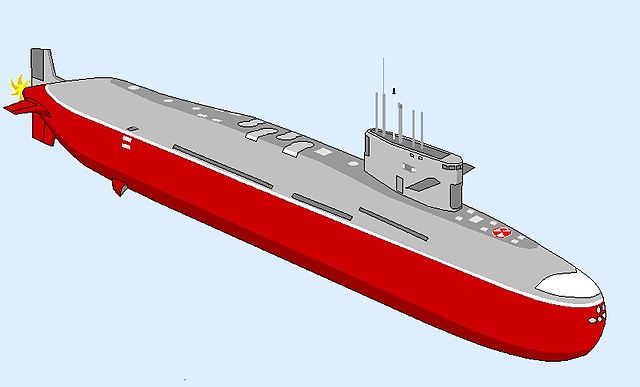
Kalvari class SSNs (2014)
Sindhughosh class SSKs (1986)
Shishumar class SSKs (1986)
Destroyers
Visakhapatnam class
Kolkata class
Delhi class
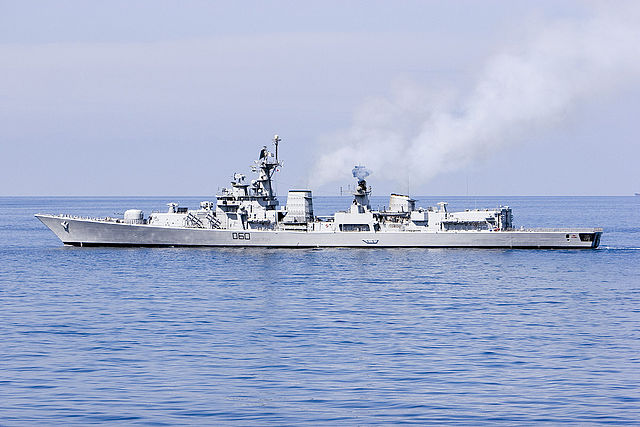
Rajput class
Frigates
Shivalik class
Talwar class
Brahmaputra class
Corvettes
Kamorta class
Kora class
Khukri class
Veer class
Abhay class ()
OPVs/PVs
Saryu class
Sukanya class
Car Nicobar class
Bangaram class
Trinkar class
Immediate Support Vessel
Super Dvora class
Solas Marine crafts
Amphibious/Assault Forces
INS Jalashwa (L41)
Magar class ()
Shardul class ()
Kumbhir class ()
Mk. IV LCU
Planned Assault Ship
Auxiliaries
Indian Oilers
Deepak class Replenishment oiler INS Deepak (A50) Italy 27,500 tonnes : INS Shakti (A57)
Aditya class INS Aditya Replenishment oiler & Repair ship INS Aditya (A59) India 24,612 tonnes
Jyoti class INS Jyoti Replenishment oiler INS Jyoti (A58) Russia 35,900 tonnes
Ambika class High sulphur diesel oiler INS Ambika India 1,000 tonnes
Indian Research ships
Research, survey and tracking vessels: Active (10). Anvesh class Missile range instrumentation vessel/ Floating Test Range INS Anvesh (A41) India 11,300 tonnes Serves as a sea-based platform for Indian Ballistic.
Missile Defence Programme vessels:
Dhruv class Missile range instrumentation vessel INS Dhruv (A40) India 15,000 tonnes
Sagardhwani class Research vessel INS Sagardhwani (A74) India 2,050 tonnes
Sandhayak class Survey vessel INS Nirupak (J20) India 1,800 tonnes Nirdeshak and Sandhayak decommissioned in 2014 and 2021 respectively.
Class: INS Investigator (J15), INS Jamuna (J16), INS Sutlej (J17), INS Darshak (J21), INS Sarvekshak (J22)
Makar class: INS Makar Survey vessel INS Makar (J31) India 500 tonnes
Support ships
Active (7):
Nicobar class Troopship INS Andamans Poland 19,000 tonnes: INS Nicobar
Nireekshak class Diving support vessel INS Nireekshak (A15) India 2,160 tonnes
Astradharani class Torpedo recovery vessel INS Astradharani (A61) India 650 tonnes
Dredger 1 class Dredging vessel Dredger 1 India Ship built by Tebma Shipyard Limited and inducted on 25 March 2015.
DSAR class Deep-submergence rescue vehicle. Class: DSAR 1, 2. United Kingdom 25 tonnes
Training vessels
Active (6):
Tir class Training vessel INS Tir (A86) India 3,200 tonnes
Tarangini class INS Tarangini Training vessel (sail) INS Tarangini (A75) India 500 tonnes: INS Sudarshini (A77)
Varuna class: Training vessel (sail): INS Varuna India 110 tonnes
Mhadei class Training boat (sail): INSV Mhadei (A76) India 23 tonnes. Has been used for solo, unassisted, non-stop circumnavigation under sail two times.
INSV Tarini.
Indian Fleet Tugboats
Active (24)
Gaj class Ocean-going tugboat INS Gaj India 560 tonnes
IRS class Ocean-going tugboat INS Himmat India 472 tonnes 50 tonne bollard pull tugs. Class: INS Dhiraj, Sahas, Veeran
Madan Singh class Tugboats: INS Madan Singh, Shambhu Singh. India 382 tonnes
Bhim class Tugboat: INS Bhim, Balshil, Ajral. India 373 tonnes
Nakul class Tugboat: INS Nakul, Arjun. India 373 tonnes
B.C. Dutt class Tugboat INS B. C. Dutt, Tarafdar India 355 tonnes
Arga class Tugboat INS Arga, Bali, Anup India 239 tonnes
Balram class Tugboat: INS Balram, Bajrang. India 216 tonnes
Bahadur class Tugboat: INS Bahadur. India 100 tonnes
Anand class Tugboat: INS Anand. India 100 tonnes
Buland class Tugboat: INS Balwan, Sahayak, Buland. India 25 tonne bollard pull tugs
Sarthi class Tugboat: INS Sarthi India 25 tonne bollard pull tugs
Miscellaneous
Manoram class Small ferryboat: INS Manoram, Vihar, Ankola India 578 tonnes
Shalimar class Small ferryboat: INS Neelam, Mohini. India 218 tonnes
GSL class Small ferryboat: INS Manohar, Modak, Mangal, Madhur, Manorama, Manjula. India 175 tonnes
Hooghly class Fuel carrier (barge): India 1,700 tonnes
Modest class Fuel carrier (barge): INS Purak, Puran. India 731 tonnes
Poshak class Fuel carrier (barge): INS Poshak India 671 tonnes
Vipul class Water carrier (barge): INS Pamba, Pulakesin-1, Ambuda India 598 tonnes
Corporated class Sullage (barge) INS SB-II, V, VII India 220 tonnes
-Floating Dock Navy 1 (FDN-1) (Japan) Lifting capacity of 11,500 tonnes.
-Floating Dock Navy 2 (FDN-2) Floating dock (India) Lifting capacity 8,000 tonnes.
Src/read More
indiannavy.nic.in/
joinindiannavy.gov.in/
Future_of_the_Indian_Navy
List_of_active_Indian_Navy_ships
Weapon_systems_of_the_Indian_Navy
List_of_active_Indian_Navy_ships