
Naval Aviation’s Latest Posts
Why this Naval Aviation Section ?
Naval Aviation is a quite important topic in naval history. Although a recent addition to the panoply (Submarines introduced an underwater, or “sub-surface” dimension in 1914-18) the same conflict also saw the emergence of aviation not only as a major calculation in all army staffs (it was still uncertain in 1914, but quite evident in 1918), and the naval staff as well. In 1914 The Imperial Japanese Navy already operated a seaplane carrier, IJN Wakamiya during the siege of Tsingtao. Soon seaplane and airships roamed the skies and became the new eyes of the fleet. In 1918 the RN deployed its first aircraft carrier, HMS Furious, in the first ever naval air raid (Raid on Trondern). In the Altantic, the entente powers deployed hundreds of seaplanes and floatplanes to patrol in search of surfaced German U-Boats.

A reconnaissance land plane (Ki-76) on the world’s first assault carrier, IJN Akitsumaru in 1944
Naval aviation developed in a spectacular way in the interwar, but revealed itself as a major asset in WW2, especially in the Pacific where it was absolutely vital, and proved decisive. In fact it’s naval aviation that secured the “pax americana” of the cold war, besides its nuclear deterrence, there as the conventional deterrence of its supercarrier-based task forces. Something the USSR was never able to catch up. Today naval helicopters are an integral part of surface actions, present on cruisers, destroyers and frigates, whereas hybrid ships were tailored for them, not even including the development of assault ships, combining flight decks, hangars and dock for landing crafts. The air threat was also serious enough to push navies to replace the gun for the missile, and largely contributed to completely change the nature of sea warfare as well. Naval Planes and Helicopters also among the deadliest sub-hunters, at least until the latest SSNs were able to be super discreet and dive deeper than ever.
Future will tell who wins, if any.
LATEST SALTY BIRDS
✈ 10/03/2026
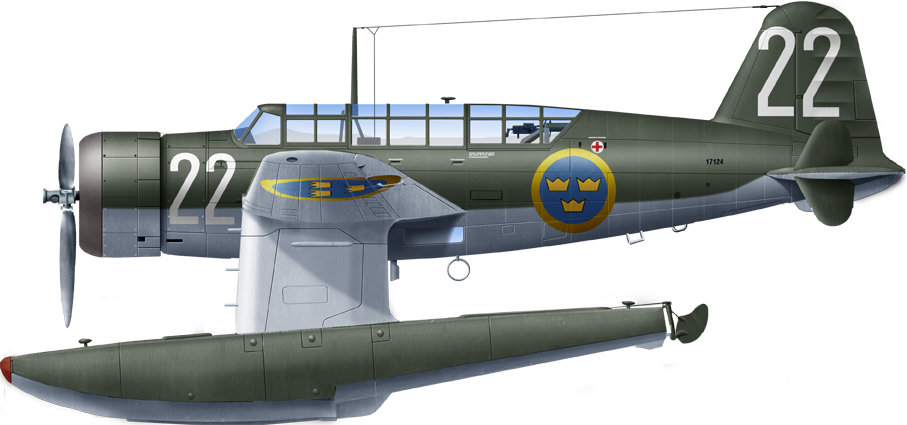
 SAAB 17BS (1943)
The SAAB 17, former ASJA L10, essentially a locally made Northrop 8-A 1, was the first SAAB model, a land-based dive bomber and multirole cantilever all-metal model, to make Sweden independent from imports. A floatplane version called SAAB 17 BS was decided upon in 1942 as a replacement for the 1926 Svenska Aero S 5, licence-made Heinkel HE 5. Like the 17 B version it was powered by a licenced NOHAB Pegasus XXIV rated for 980 hp. Performances were not stellar, and it needed extra stabilization, but it proved extremely robust and 38 were manufactured in 1943-44 for the needs of the Svenska Marinen, active with F 2 Hägernäs naval support unit, until 1948. It was not replaced.
✈ 01/03/2026
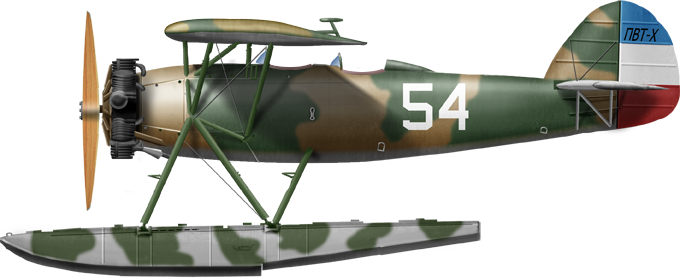
 Rogožarski PVT-H (1939)
The Royal Yugoslavian Navy was modest and its naval air branch was not independent but attached to the Royal Yugoslavian Air Force, however it expressed the need for an armed observation seaplane in 1938. Soon before the war in 1939, four floatplanes were derived from the successful 1936 Rogožarski PVT parasol advanced fighter trainer. The conversion was helped by fitting off-the-shelff floats from the US company Edo (Float Model 38). They were used for reconnaissance for the fleet in 1939 but could do little to prevent the German offensive in 1941.
✈ 20/02/2026
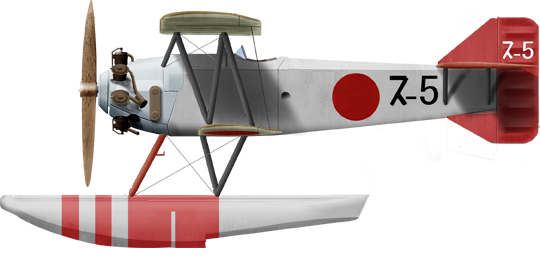
 Yokosuka-E6Y (1930)
The Mitsubishi E6Y or Yokosho 2-Go was the first dedicated production seaplane of the Imperial Japanese Navy, made to be carried and depliyed for observatio from submarines. It was stored in a small hangar. The first was deployed from I-51 in 1929-33, notably with a catapult, on the Yokosho 2-Go Kai. It remained confidential with only ten made in 1929-1934, still around in 1943. She was also deployed from the submarine I-5, and in general subs of the JS-II and III classes. They followed their carrier subs I-5 and I-6 in China in 1937-38 as per the 3rd fleet operations, but the model was superseded by the Watanabe E9W and relegated to training.
✈ 10/02/2026
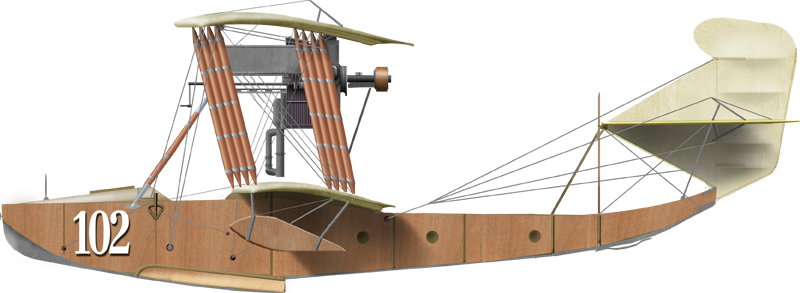
 Grigorovich M-9 (1916)
The Grigorovich M9 was the largest and most produced Russian flying boat of WWI, an evolution in 1916 of the M5 with a more powerful salmson engine, and used in a large variety of roles both in the Baltic and Black sea fleets, notably from seaplane carriers, where it took even more sense. A Polish pilot managed with it the first loop ever performed by a flying boat…
✈ 30/01/2026
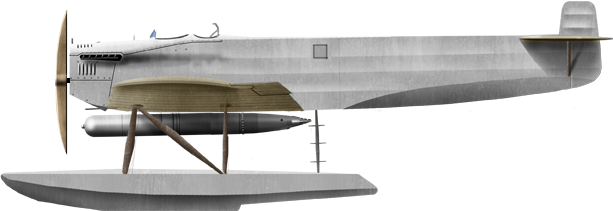
 Fokker T.II (1922)
The Fokker T.II was a Dutch early prototype of torpedo carrying floatplane. It was designed from the paper-only T.I for European navies in 1920, and was ready in 1921, to compete in a USN open contest for its first dedicated torpedo-bomber. In all, only three T.II were made, tested in the US, but Fokker lost to the Douglas DT. Powered like the others by the Liberty V12 engine it proved too large and could not even take off with a torpedo. Tests were made however by the USN until 1927 and one ended as a civilian transport in 1928-31. A forgotten page in the history of Fokker…

✈ 20/01/2026
 Short Type S.38 (1912)
The Short S.38 or Admiralty Type 3 was originally a modified Short S.27 for production tested on a flying-off platform on the battleship HMS London. The remains of this experimental biplane were returned to Short, and it was rebuilt with extensive modifications, ending as a S.38 type, featung the the same basic layout. It carried a pilot and observer, but also existed as twin commands trainer and was used by the RNAS as a patrol coastal aircraft from 1912 to 1918. Production ended in 1916, when it was used as a trainer.
✈ 10/01/2026
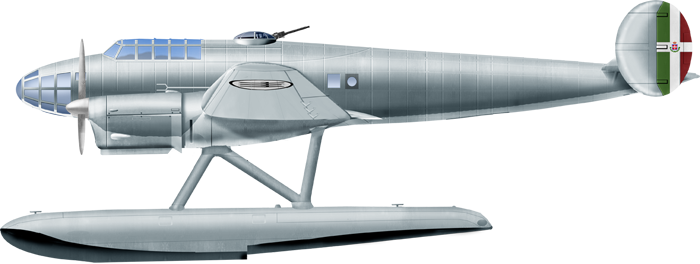
 CANT Z.515 (1939)
The Z.515 was another CANT CRDA project ruined by bad timing. This Zapatta’s reycling of its Z.514 Leone bomber, rejected by the Regia Aeronautica, was a modified floatplane variant with inline engines. It answered a 1937 specification for a replacement to the obsolescent Z.501 Gabbiano. It was ready by 1939 but its first flight was delayed until 1940 when it competed against Fiat with its own CR.14. The latter won by a slight margin and was adopted for production. But after delivery in 1941, its issues prompted the Regia Aeronautica to turn back to CANT and asked to resume production after the order for 100 was cancelled. Only two of the 15 ordered again at Montfalcone were delivered (under German control after September 1943), with the factory destroyed in 1944 by three RAF raids. The Z.515 never was operational, but it was an interesting model, albeit unusual for its air-cooled inline engines.
✈ 30/12/2025
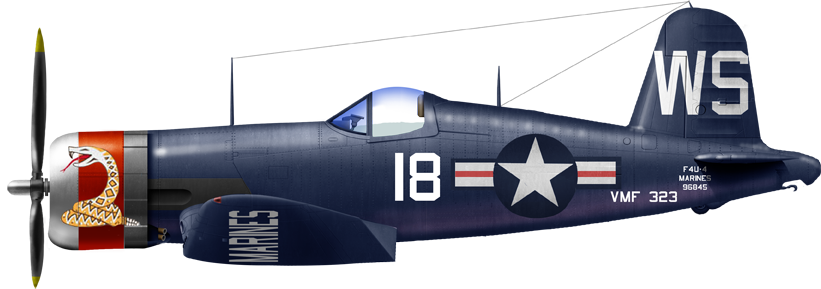
 Vought F4U-4/5 and other Corsairs (1944-52)
Final entry in this trilogy about the F4U Corsair, one of the most important naval aircraft in history, by its characteristics and longevity, and paradoxically banned for carrier decks for years. This part completes the picture, with the full story of all operators, late WW2 operations, late variants F4U-4 and F4U-5 and the sub-variants, late Goodyear models like the F2G “super corsair”, postwar F4U-7, USMC AU-1, night and photo-recce variants, high altitude variants, the Korean War, foreign operators like the Aeronavale (Indochina, Suez, Algeria, Tunisia), Argentina, and the infamous 1969 “Futbol War” between Honduras and El Salvador with Corsairs on both sides…
✈ 20/12/2025
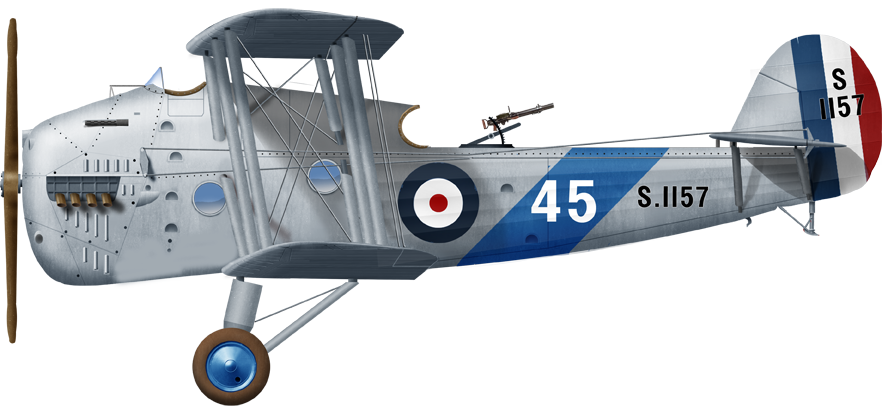
Blackburn Blackburn
Another forgotten naval warbird, and arguably renown for its… interesting looks, was the most Blackburn of all, inventively named after the company. Answering the Specification 3/21 of 1921, this was to be solely a carrier-based reconnaissance and spotting aircraft. The company designed a fuselage optimized for that mission while wing and tail came from the Blackburn Dart. Three prototypes flown in 1922, leading to 12 R1 to be produced (Blackburn I) delivered in April 1923. The 18 more were built in 1923–1924 entering the No. 422 Fleet Spotter Flight on HMS Eagle in the Med. A further 29 Blackburns with the Napier Lion V Blackburn R2 were ordered and active until 1931, replaced by the Fairey IIIF.

✈ 10/12/2025
 Albatros W.8 (1918)
The Albatros W.8 was a German biplane fighter floatplane of the late First World War, on patrol in the latter half of 1918. It was classic in its approach with a wooden fuselage wrapped in canvas similar to most designs of that period, as well as the wings and tails, but a pair of wooden flattened floats. The W.8 was unique for its aft T style tail unit, and in that it was powered by water-cooled Benz Bz.IIIb eight-cylinder engine. More classically it was fitted with a fixed two-bladed wooden propeller. The W.8 was a two-seater fighter/reconnaissance model and merely a late war prototype, albeit three were still manufactured. A rarity worth investigating…
✈ 30/11/2025
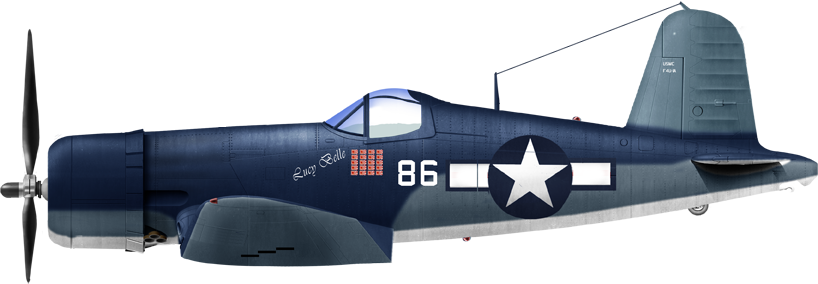
Vought F4U-1A/C/D Corsair (1943)
Second entry on the most famous naval fighter of WW2 and beyond, the F4U-1A, C and D, successors of the Birdcage (F4U-1) developed in 1942. They introduced the trademark bubble canopy improving visibility among others, and way more were produced (a combined 3,941 between 1943 and 1944) than the F4U-1A (758) and really cemented the final look of the Crorsair, which most fampus version evolved into the F4U-4. Brewster, lambasted for its disastrous handling of the Buffalo and especially Buccaneer was forced to accept its share in production of the Corsair with the F3A-1 and F3A-1D, and Goodyear as well with the FG-1 and FG-1D. It was also massively used by the FAA (510 Mark II from Vought, 430 Mark III from Brewster). It marked the transition from land-based only to carier-barsed operations for the USN as pioneered by the FAA, and really bore the brunt of 1944-45 operations in the Pacific.
✈ 20/11/2025
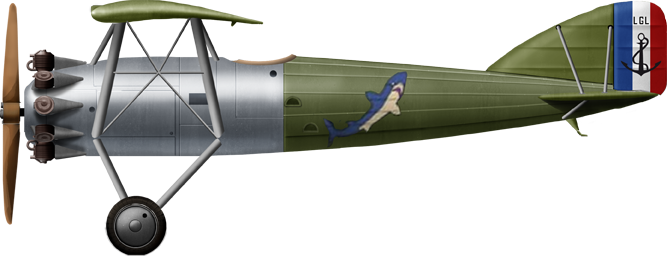
 Loire Gourdou-Lesseure LGL-32 C1
From 1925, Gourdou-Leseurre was absorbed by Loire shipyard and the fighter LGL.32 was the only one pushed for serial contruction, primarily for the Armée de l’Air, exported and declined into a multitude of variants. Powered by Gnrome-Rhone 9Ady engine with two synchronized 7.7 mm nose MGs and flying first in 1925, the naval aviation received 15 C.1 versions intended for for the Aircraft Carrier Béarn, just completed. By 1935, new models tested dive bombing for the Navy with a “V” landing gearand fourch, with six made. They were maintained on the Béarn until replaced by the Dewoitine D373, another parasol fighter.
✈ 10/11/2025
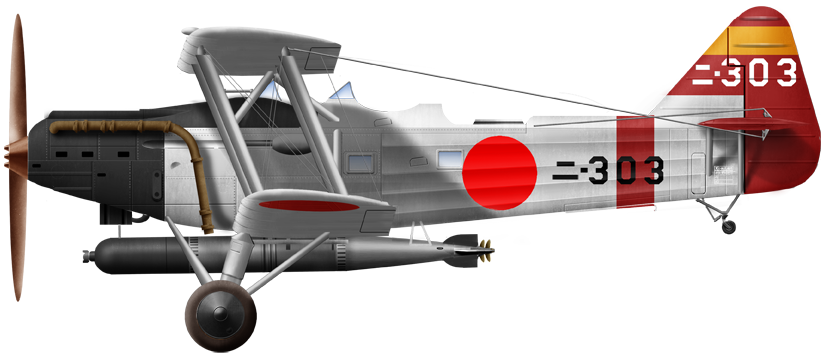
Mitsubishi B2M (1934)
The Mitsubishi B2M was a Japanese carrier-based torpedo bomber developed from 1930. It was built by Mitsubishi to a design by Blackburn Aircraft of Britain and was operated by the Imperial Japanese Navy from 1934. After the failure of the B4M in 1934, Mitsubishi would ony produce the 2-engine land based G3M torpedo-bomber and concentrated on fighters. Th B2M1 was a carrier based model that pioneered new ship attack techniques from Hosho, Kaga and Akagi, and the B2M2 was used for bombing at high and low-level against China during the early phases of the Second Sino-Japanese War (1937). The B2M was replaced by the Nakajima B5N “Nate” monoplane.

✈ 30/10/2025
Blackburn Shark (1934)
The Shark was the last of Blackburn’s torpedo-bombers, largely eclipsed in WW2 by the Fairey Swordfish, but still active from the Channel to Malaya until 1942. It first flew in 1933, as the Blackburn T.9 B6 to answer the Air Ministry Specification S.15/33 for a combined torpedo-(naval artillery) spotter-reconnaissance aircraft or “TSR”, to which Fairey answered with the TSR-1, future Swordfish. The Shark Mark I was approved in 1934 with 16 aircraft, followed by the Mark II for the specs. 13/35. and 13/38 and the Mark III entering service in 1935 with 820 NAS. It was also declined as a floatplane for HMS Warspite and HMS Repulse, and saw servove from some carriers, but gradually replaced by the swordfish from 1937. The last were used in Malaya in 1942 and the Canadian Shark III until 1944 as floatplane trainers.
✈ 20/10/2025
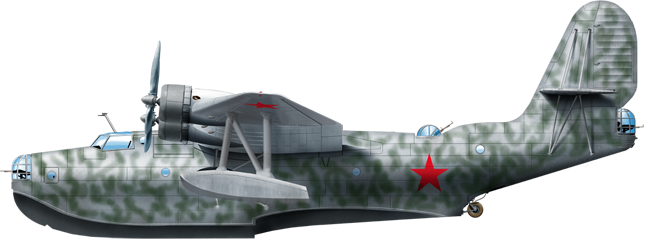
 Tupolev MTB-2 (1937)
The Tupolev MTB2 heavy bomber (ANT44) was a four-engined flying boat designed in 1935. The first of two prototypes flew on April 19, 1937. In 1938, the four initial Gnome Rhône Mistral Major were replaced by 840-hp Tumansky M-87S and the next prototype ANT44bis had 950-hp M-87A engines, set several world records in class. However the option of land based bombers was preferred and the program cancelled so after the first prototype crashed, the second from the summer 1941 flew in the Black Sea until 1943, as bomber and transport until it was shot down by Me-109s.
✈ 10/10/2025
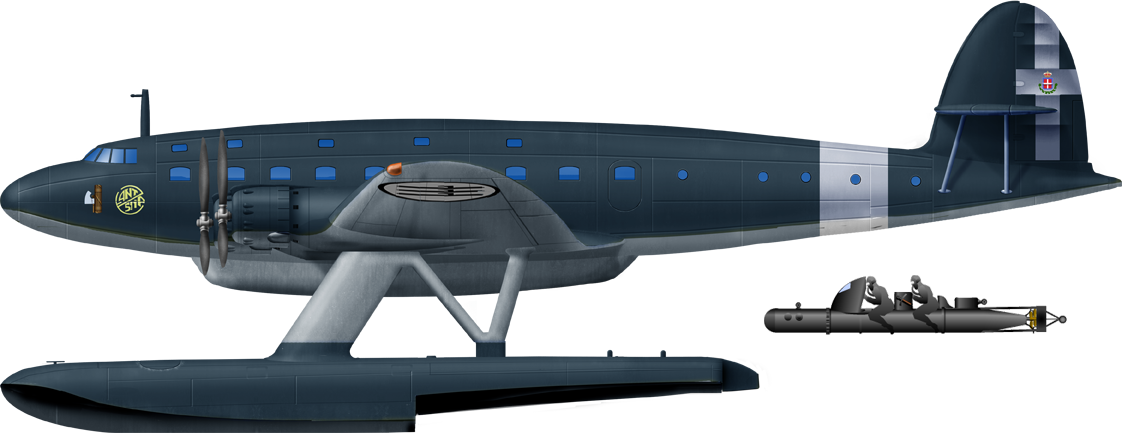
CANT Z.511 Idrogigante (1942)
The CANT Z.511 was a four-engine long-range seaplane designed by Filippo Zappata of the “Cantieri Riuniti dell’Adriatico” (CRDA) company. Originally designed for the Central and South Atlantic passenger routes, it was later adapted as a military transport and special raider with plans to convert it as a long range bomber with up to 4t (8,800 lb) of bombs or fout 450 mm (17.9 in) air-launched torpedoes in antiship role, or special operations with “Maiale” manned torpedoes or midget submarines. In 1943 however the first prototyppe was still without purpose, endlessely evaluated until damaged by the RAF on Lake Trasimeno and scuttled after September 1943 at the Vigna di Valle seaplane base, then blasted out by explosives in June 1944. A sad end for the world’s largest floatplane ever built.
✈ 30/09/2025
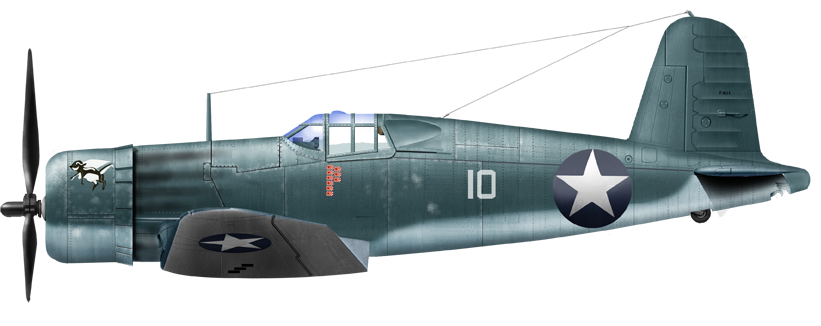
Vought F4U1 Corsair
Probably the most famous fighter ever designed for any Navy, arguably, was the Vought F4U Corsair. Not only for its production went further than the Hellcat, but it outlived all for a very long active service. The very last in action were 19 Honduran F4U in the 1969 “soccer war” versus El Salvador, retired in 1976, for 36 years of service. Now this post is Part I, about the genesis of the model and the F4U-1 “Birdcage”.
✈ 20/09/2025
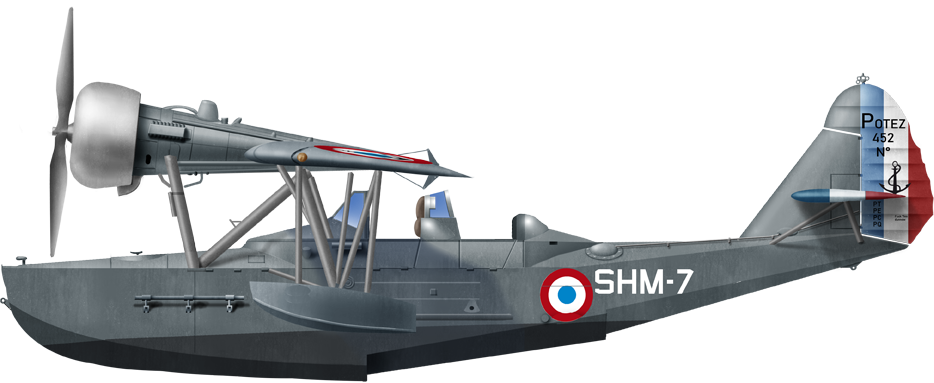
Potez 452 (1935)
The Potez 452 was designed as a shipboard flying boat for observation on board cruisers and battleships of the Marine Nationale, in service from 1936 to 1944 in the Marine Nationale, notably to replace the loire-Gourdou Lesseure floaplanes of the 1920s. It saw service frontline until 1938-39 and was even developed as a single-seat fighter variant. However it was replaced by the Loire 130 before the war started, but continued operations until 1944.

✈ 01/09/2025
Nakajima E2N (1927)
The Nakajima E2N (Type 15) was an IJN interwar reconnaissance, single-engine, two-seat, sesquiplane with two floats. Developed as a short range reconnaissance floatplane for catapult launch from cruisers and battleships it was ordered to replace the Hansa-Brandenburg inspired Aichi and Yokosuka monoplanes. It was selected in instead of Aichi’s Type 15 in 1927. The E2N2 was a training version made in 1928-1929 and in all c80 were produced until 1929, inc. a few by Kawanishi, and 2-3 used by the civilian fishery patrol. Replaced in 1932-1933 by the E4N, they lingered in training or were sold to civil buyers. The last trainer was retired from Kasamigaura Kōkūtai in 1936.
✈ 30/08/2025
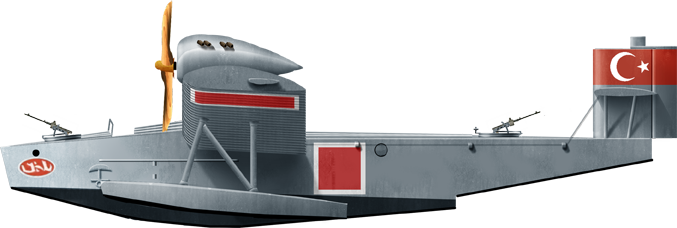
 Rohrbach R.III (1924)
The Rohrbach Ro III was a twin-engined, all-metal flying boat built in Germany in the mid-1920s. A development of the Ro II, it could be configured either as an airliner or a reconnaissance aircraft. It was developed into the similar but more powerful Ro IIIa Rodra (Ro + dr(ei) + a), intended only as a military reconnaissance/bomber. Four Ro IIIs were bought by Japan and two Rodras by Turkey.
✈ 23/08/2025
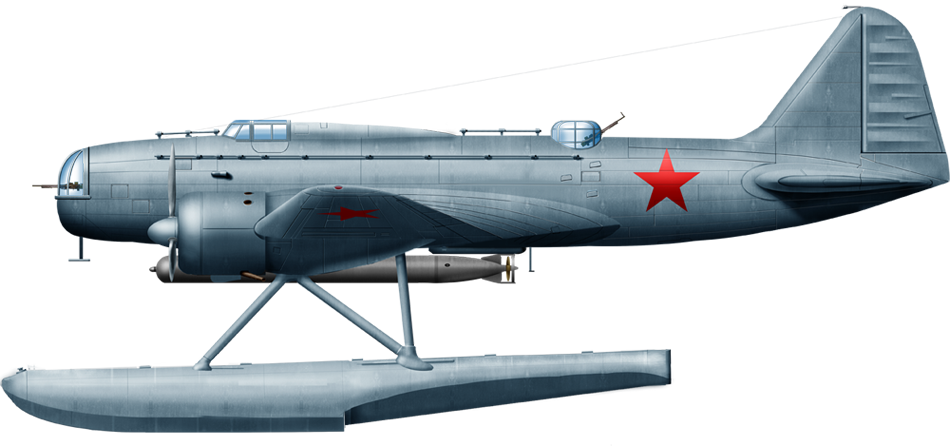
Illuchine DB-3T (1936)
The DB-3T (torpedonosyets) was introduced in 1937, based on the Ilyushin DB-3 long-range bomber. It was adapted for Soviet Naval Aviation with minimal modifications with externals torpedo sling mounts as well as gear for naval mines or bombs. It was specifically configured for maritime operations with the 940kg 45/36/AN or /AV torpedo and either M.86 (195 kW / 950 hp) or M.87A radial engines. Torpedoes were dropped under 30m at 320km/h. In 1938, Ilyushin developed the floatplane DB-3TP (torpedonosyets poplavkovyi) using T-1P floats for sea-based operations with a structural reinforcement to the wings and center-section and stil capable of 343 km/h. It had limitations with operational complexity, maintenance, and logistics so there was a very limited production of the TP variant.
✈ 10/08/2025
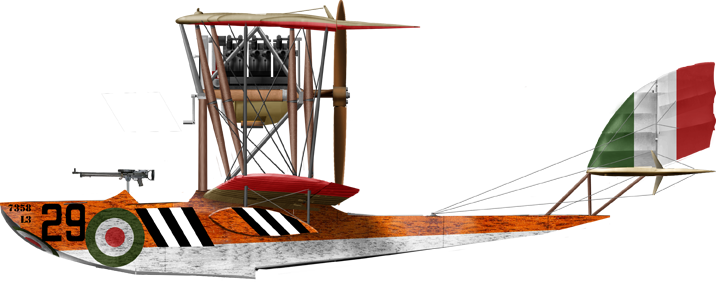
 Macchi M3 (1916)
The Macchi M3 The Macchi M.3 (originally designated L.3, renamed M.3 in 1917) was an Italian biplane flying boat use by the Regia Marina. Developed from the earlier L.2 inspired by the Austrian Lohner, it retained only the unequal-span biplane wings combined with a new refined hull and tailplane structure, powered by a single Isotta Fraschini V.4B pusher, and armed with a single trainable machine gun and four light bombs. One set a world altitude record for seaplanes. Over 200 examples were built for patrol, bombing, reconnaissance, escort, succeeded by the M5 but sill around for training in 1924 and later in civilian hands.
✈ 30/07/2025
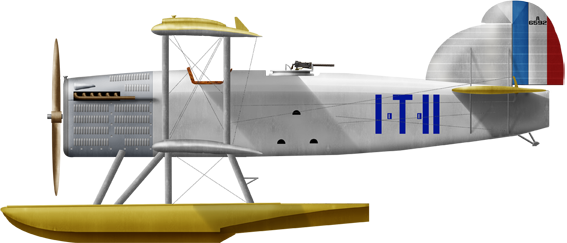
Douglas DT (1921)
The Douglas DT-2 was the first dedicated USN torpedo-bomber and first Douglas Aircraft Company’s military contract. It was a modern, yet ungainly beast with an all-welded-steel fuselage wrapped in aluminum as well as wood and fabric rudder, tails and wings. The DT-1 preserie first flew in November 1921 followed by a gradual production until 1924 of the DT-2. Variations designated DT-4, DT-5, DT-6, and DTB and export models to Norway and Peru added to the 90 delivered overall. They performed the first torpedo attacks from USS Langley or NAS Pensacola and even from Lexington and Saratoga in 1928, when retired. They opened a completely new chapter for the US. The type became also the basis for the USAAF record-setter Douglas World Cruiser.
✈ 20/07/2025
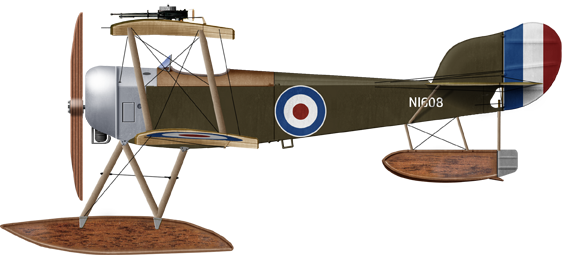
Sopwith Baby (1915)
The Sopwith Baby was an observation seaplane developed from the Sopwith Schneider, the latter derived from a 1913 sports seaplane. The latter also had a land-based equivalent, the Tabloid. This was the first major success of Sopwith. The Baby had a better engine, a single seat, and was later improved by Blakckburn and Fairey, as well as Parnall, with 386 built total for the RNAS for all versions. Its other name was “Admiralty 8200 Type”. It was active until 1918, used by Australia, France, Norway, and was also licenced to Italy for the Aviazione della Regia Marina.
✈ 10/07/2025
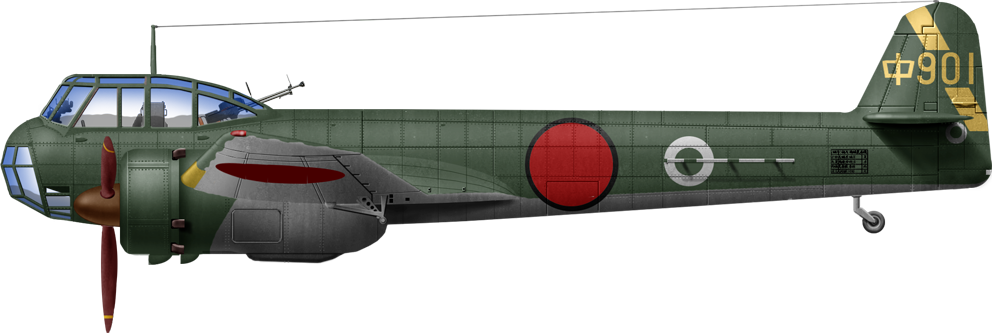
Kyushu Q1W Tōkai “Lorna” (1944)
The Kyūshū Q1W Tōkai (“Eastern Sea”) was the first Imperial Japanese Navy (or world’s first) dedicated anti-submarine patrol aircraft (Allied name “Lorna”). Although superficially similar to the German Junkers Ju 88 it owe little to it in technical terms, being made deliberately slow and underpowered as well as much smaller, but for dive attacks still. But beyond its technical specs, it embodied the realization by late 1942 by the Imperial Japanese Navy staff that US submarines at large could pose a serious threat to its communication lines in its recently acquired Empire. Something that will haunt the IJN for the next years. Development of the Kyūshū Q1W as the “Navy Experimental 17-Shi Patrol Plane” started indeed all the way back to September 1942, but it only first flew a year later in September 1943, and worst still, only entered service by October 1944. The core spec was not speed but visibility, electronic detection, and ability to fly low and slow for long period of time. The all-wooden Q3W1 Nankai (South Sea) was a successor developed alongside but went nowhere. Only 153 were delivered, and they arrived way too late to make a difference.
✈ 30/06/2025
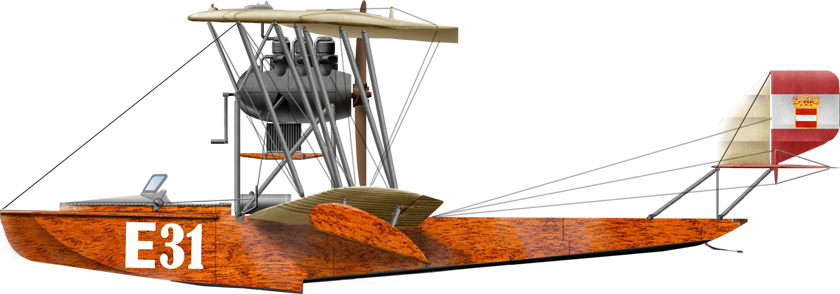
✠ Lohner E
The Lohner E was an Austro-Hungarian reconnaissance flying boat of World War I. It was the first engaged in 1914, with “E” standing for Igo Etrich, one of Lohner’s engineers in charge of the project. This conventional design featured slight sweepback, pusher engine in the interplane gap and crew of two seated side by side in the open cockpit, one pilot and one observer. The aircraft was unarmed, lacked speed and agility, and was soon recoignized as underpowered, but it was rugged and agile. After 40 were made, Lohner moved towards the far more powerful model L, copied by the Italians.
✈ 20/06/2025
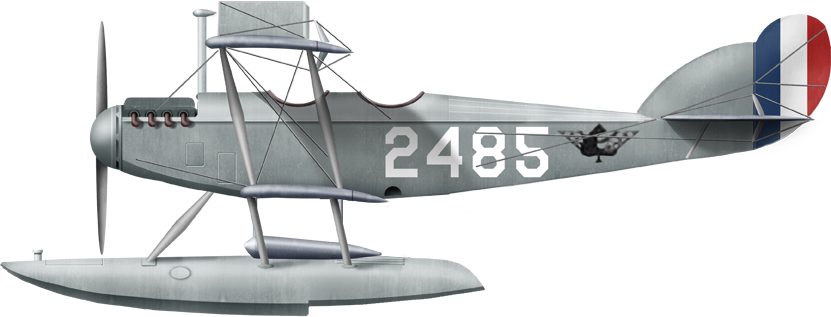
 Curtiss Model N
The Curtiss Model N was an early American trainer aircraft developed in the 1910s by the Curtiss Aeroplane and Motor Company, primarily used by the U.S. Navy. It played a significant role in the evolution of naval aviation training just before and during the early part of World War I. This single-engine biplane had a two-seat tandem cockpit, with space for both student and instructor with several versions (N-8, N-9, N-9H Floatplane. It was the first successful seaplane trainer for the U.S. Navy, pioneering naval aviation training methods and techniques in carrier and water takeoff and landing training. One example can be found at institutions like the National Naval Aviation Museum in Pensacola, Florida.
✈ 10/06/2025
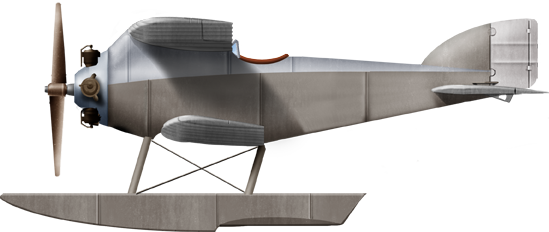
Caspar U.1 (1922)
The Caspar U.1 (in some publications Caspar-Heinkel U.1) was a 1922 German patrol seaplane tailored for use on board a submarine. It was the world’s first of its kind, tailor designed by Ernst Heinkel and built by Caspar-Werke. The U.1 was indeed designed to fit inside a cylindrical container carried and then launched from a submarine to solve the issue of reconnaissance. A U-boat standed quite low over the water and often had its visual horizon quite limited. A seaplane was for this an excellent spotted. The idea was alredy tested in WWI on many U-Boat with a regular seaplane simply carried on deck and launched when needed. To fit stringent requirements, the Caspar U1 was a really small aircraft, unarmed and compact enough, when dismounted, to fit inside a 1.70 m diameter tube. Tests were performed on a mock submarine built on the coast (as the Reichsmarine was forbidden to have submarines), but tests remained negative. The USN was interested as it looked for its own cruiser submarine to have up to seven seaplanes, and one was tested as NAS Anacostia in 1922. Overall, the concept was not resurrected by the Kriegsmarine, but tested by UK, France and in particular Japan, which developed a whole family around the idea in the interwar and WW2. U-Boats however had a more practical Fa 330 kite, used by U-177, U-181, and U-852.
✈ 30/05/2022
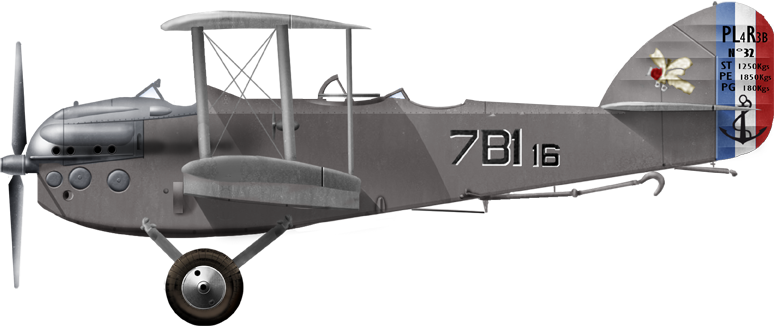
✈ Levasseur PL.4 (1926)
The Levasseur PL.4 was a carrier-based reconnaissance aircraft and conventional, single-bay biplane witha a crew of three in tandem open cockpits. The Aéronavale purchased 40 to operate the aircraft carrier Béarn, which conversion was just completed. It incorporated several safety features with a boat-like watertight fuselage, small floats underwing, jettisonable undercarriage and tailskid. It was rather mediocre however, slow and suggish to commands, with a poor range. The PL.7 torpedo bomber was developed a year later as well as the PL.8 “oiseau blanc” of Nungesser and Coli for their attempted Atlantic crossing before Lindbergh.
✈ 20/05/2025
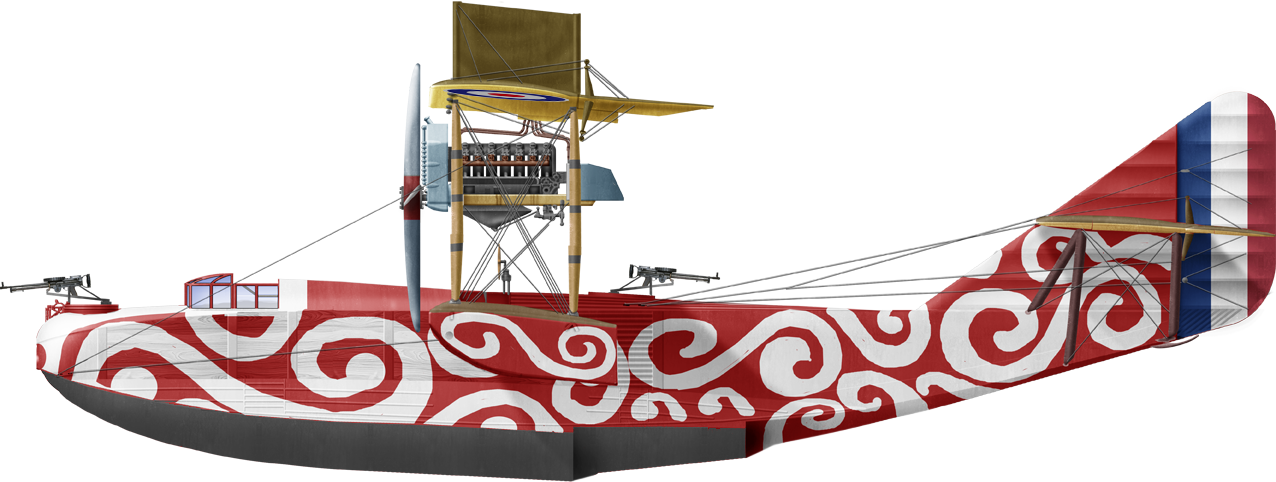
Felixtowe F.2 (1917)
The Felixstowe F.2 was a 1917 British flying boat class designed and developed by Lieutenant Commander John Cyril Porte RN at the naval air station, Felixstowe during the First World War adapting a larger version of his superior Felixstowe F.1 hull design married with the larger Curtiss H-12 flying boat. The Felixstowe hull had superior water contacting attributes and became a key base technology in most seaplane designs thereafter.

✈ 10/05/2025
Polikarpov I-16 in naval service (1936-45)
The famous I-16, nicknamed “rata”, “moska”, “mule”, was a very modern low wing canatilever all metal retractable landing undercarriage fighter model developed by Nikolai Polikarpov in 1933, and world’s first deployed in operation by 1934, before the Hurricane, Spitfire and Me-109 or Curtiss P-36. More than 10,000 in 9 versions were cranked up until production stopped in the summer of 1941. Of these, 778 were assigned to squadrons defending the Baltic, Northern, Black Sea and Pacific Fleets of the Soviet Navy in world war two. This is a not well known chapter or soviet naval aviation, covered here in detail along the Black sea fleet’s only Zveno “flying Aircraft carriers” successful operations in 1941.
✈ 05/05/2025
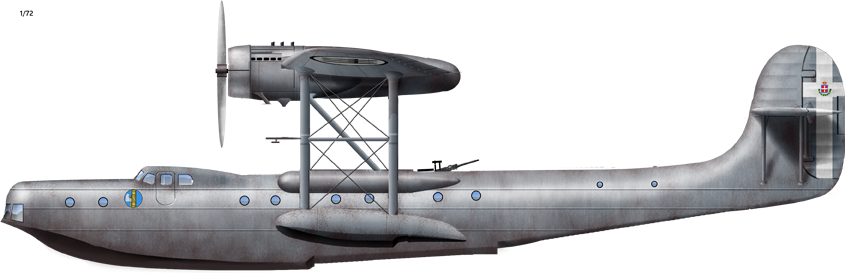
CANT Z508 (1936)
The CANT Z.508 was a three-engine Italian flying boat developed from the CANT Z.501 for use as a heavy bomber, designed as a scaled-up three-engine version of the single-engine Z.501 for use as a heavy bomber. The aircraft was not put into production although the prototype set several world records for its class, including the lifting of a 1,000 kg (2,200 lb) load.
✈ 30/04/2024
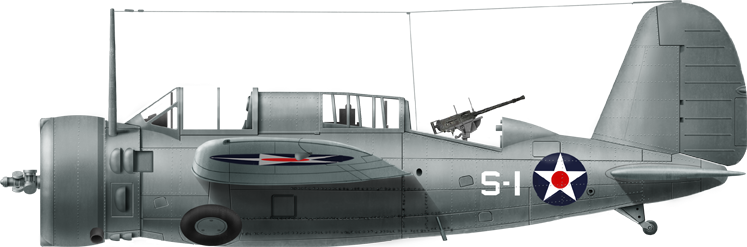
Brewster SBN (1941)
The N.A.F. SBN (initially Brewster SBA-1) was the first model of the infamous company that signed the Buffalo and Buccaneer. This three-seat mid-wing monoplane which first flew in 1936 as XSBA-1 was designed as a scout bomber/torpedo aircraft, to be built later under license by the Naval Aircraft Factory in Philadelphia, Pennsylvania. Its landing gear was similar to that on the Brewster F2A Buffalo fighter but it had non-folding wings with perforated flaps. NAF delivered 30 SBN in 1940, which only saw service on USS Saratoga (CV-3). Already obsolete, they were assigned to VT-8 and passed on for use as trainers aboard USS Hornet (CV-8), and due to the lack of spares, retired in August 1942.

✈ 20/04/2025
Albatros W.4 (1916)
The W.4 was a military floatplane designed and produced by Albatros Flugzeugwerke. This was a floatplane derivative of the famous Albatros D.I land-based fighter aircraft, with a modified wing and tail, greater span but the same 120 kW (160 hp) Mercedes D.III engine and fuselage. The first were armed with one lMG08 7.92 mm (.312 in) machine gun, two later. Three prototypes were produced in 1916, first combat seen in September 1916 in the North Sea and Baltic and last of 118 delivered in December 1917, supposed to be replaced by the W.8 in 1918 (only prototype).
✈ 10/04/2024
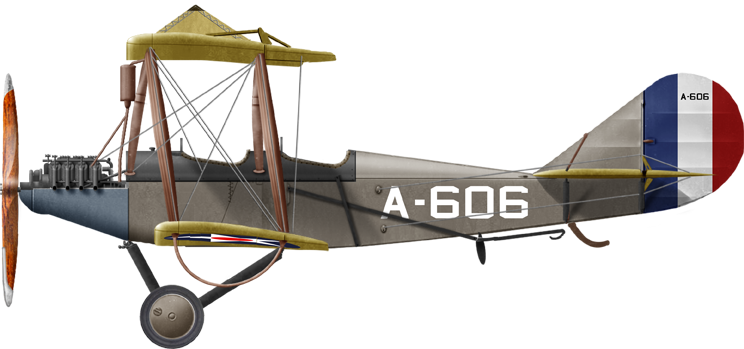
 Aeromarine 39
The Aeromarine 39 was an American two-seat training seaplane ordered by the US Navy in 1917 and built by the Aeromarine Plane and Motor Company of Keyport, New Jersey. Of conventional biplane configuration and construction, the aircraft was designed so that its pontoons could be speedily detached and replaced with wheeled undercarriage for shore operations.
✈ 01/04/2025
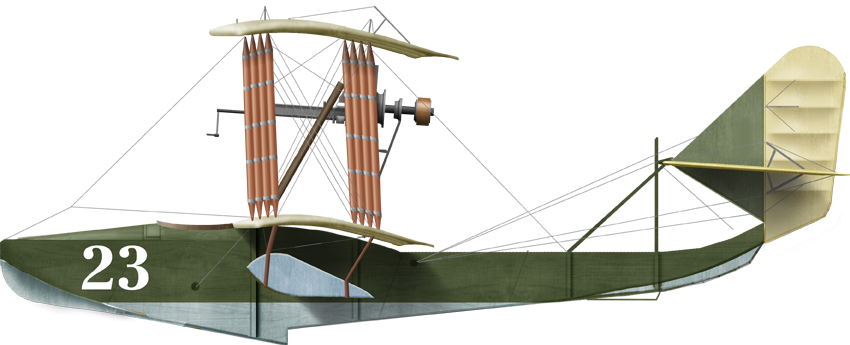
Grigorovich M-5 (1915)
The Grigorovich M-5 (Or Shchetinin M-5) was the best Russian World War I seaplane by far. It led to a mass production with multiple variants, for a lineage that lived on until the late 1920s, and later lost to Beriev. The Grigorovitch M5, which followed two prewar prototypes and unbuilt projects was a sturdy and dependable two-bay unequal-span biplane flying boat with a single step hull. This was the first mass production flying boat built in Russia, a name synonimous with “seaplane” in tha era.
✈ 20/03/2025
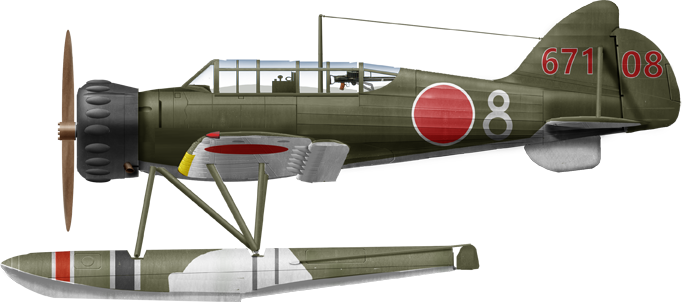
Kugisho (Yokosuka) E14Y “Glen” (1941)
The Kugisho (Later produced by Yokosuka) E14Y “Glen” was an Imperial Japanese Navy reconnaissance seaplane, transported aboard and launched from Japanese submarines during World War II. IJN designation was “Type 0 Small Reconnaissance Seaplane”. Production was limited to 125 and they served from 1942 to 1945. One such floatplane made the only air attack on American soil on 9 September 1942 in what was known as the “The Lookout Air Raid”, burning a few hectares of Oredon pine forest. This relatively confidential model was designed to treplace the 1934 Watanabe EW9 biplane for long range reconnaissance for the fleet and mapping allied ports, notably over Australia and New Zealand. One even attacked Sydney. This was an “origami” floatplane, stored in 14 parts and folded elements inside a waterpoof hangar and deployed in 7 minutes.
✈ 10/03/2024
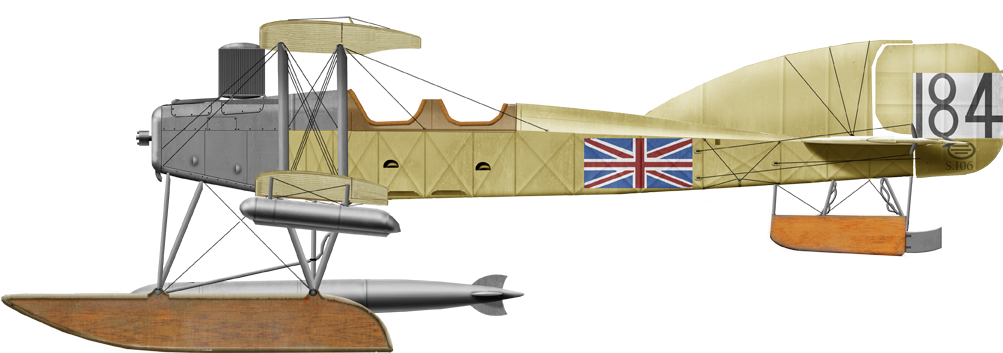
Short 184 (1915)
The Short Admiralty Type 184, often called the Short 225 after the power rating of the engine first fitted, was a British two-seat reconnaissance, bombing and torpedo carrying folding-wing seaplane designed by Horace Short of Short Brothers. It was first flown in 1915 and remained in service until after the armistice in 1918. A Short 184 was the first aircraft to sink a ship using a torpedo, and another was the only British aircraft to take part in the Battle of Jutland.

✈ 20/02/2024
Curtiss F11C(BFC-2) Goshawk (1932)
The Curtiss F11C Goshawk is now a somewhat forgotten USN naval biplane fighter of limited production (28 for the BFC-2). Declined into the C2 with landing undercarriage and a sole prototype with Grumman’s retractable undercarriage (C3), it only saw service for a time on USS Saratoga (BFC-2/VB-2B, VF-1B) and Enterprise (VB-6). It had far more success at export as the Hawk I and II for China, Thailand or Colombia and Peru (all seeing action) as well as Chile, Norway, and Turkey.
✈ 10/02/2024
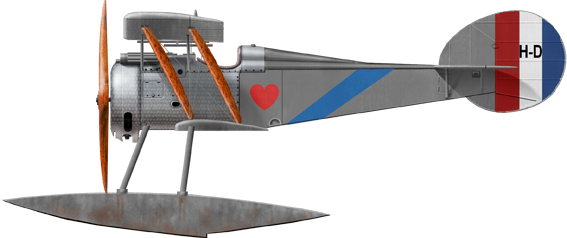
 Hanriot HD2 (1917)
The Hanriot HD.2 was a biplane floatplane fighter aircraft produced in France during the First World War that was used after the war for testing the use of aircraft from warships. Derived from the excellent late war fighter HD1, it was designed as an interceptor to defend flying boat bases and their reconnaissance assets engaged in ASW duties over the channel, north sea and Atlantic. They were also used postwar to be launched by ships, notably the battleships Paris and USS Mississippi with the USN. Around 30 were built in 5 variants, used until 1925.
✈ 05/02/2025
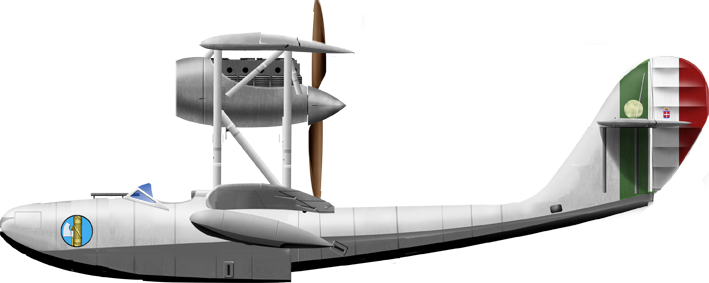
CANT 25 (1927)
The CANT 25 was a single-engine biplane seaplane developed by the aeronautical division of the Italian company Cantieri Riuniti dell’Adriatico (CRDA CANT). It made its maiden flight in 1927 but was only accepted in 1938. With 38 built in an amphibious and catapulted versions, it became the Adriatic shipyard’s first success. The CANT 25 deroved from the 18ter and stayed in service until 1943 with the Regia Aeronautica.
19/01/2025
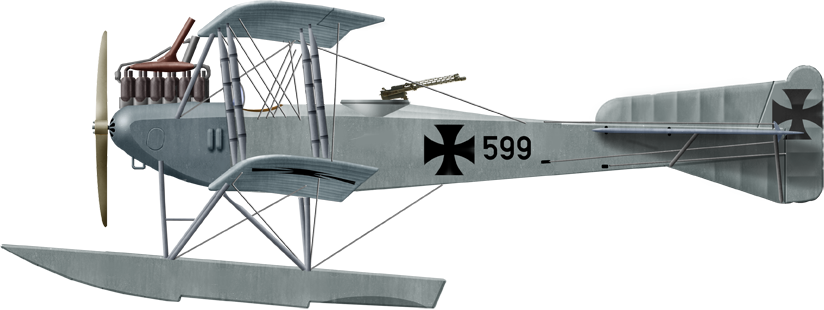
✈ Friedrichshafen FF.33 (1914)
Friedrichshafen FF.33 was a German single-engined reconnaissance three-bay wing structure biplane, using twin floats, designed by Flugzeugbau Friedrichshafen in 1914 for the Marine-Fliegerabteilung aviation forces of the Kaiserliche Marine. This prolific model (315 manufactured) became the prime German observation seaplane in WWI and of Poland, the Netherlands, Finland and Sweden postwar.
07/01/2025
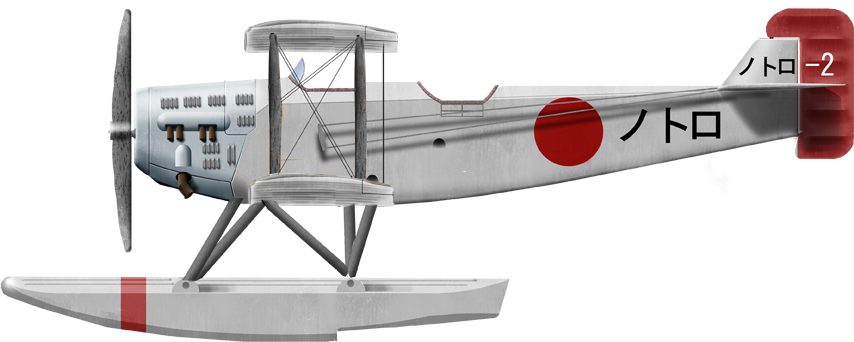
✈ Yokosuka E1Y (1923)
The Yokosuka E1Y was a Japanese observation floatplane of the twenties, one of the first. It was single-engined, designed and developed by the Yokosuka Naval Air Technical Arsenal for the Imperial Japanese Navy. With 320 built as the Type 14 Reconnaissance Seaplane, entering service in 1925 it remained one of the main reconnaissance types until gradually replaced from 1932, but still in service until 1937. It found use from all Cruisers and IJN Battleships of that era and fought in China, notably from IJN Notoro.