
 US Navy Escort Destroyers (1942-44): 154 planned, 148 completed (6 cancelled, 46 to Britain)
The TE (better known as the Buckley class from its lead vessel) or “long hull” were the second escort destroyers of the US Navy. Solely dedicated to ASW escort from a British request for the Atlantic, the majority were still pressed in the Pacific. In all, the USN would build 563 destroyer escort (1000 ordered, cancelled 1943), with iterative improvements reflected by their acronyms GMT, TE, TEV/WGT, DET/FMR. Like the escort aircraft carriers, Bogue or Casablanca class, they really were unsung heroes of WW2.
Their career was rather short however since they ended on the disposal list once their job was accomplished. The immense majority were scrapped after 1947 albeit many survived after some time in reserve on export via MDAP program to allies and friendly nations of the USA aross the globe in the cold war. Many were still around in the 1970s. Let’s cite Chile, the Republic of China, Colombia, Ecuador, South Korea, Mexico, and the Philippines. This post ist thus about the TE “long hull” and careers of all 148 ships will be covered ultimately #ww2 #destroyerescort #buckleyclass #pacificwar #battleatlantic. For space reasons, career will be abbreviated with the essentials and sticking points, with exceptions for the most outstanding ships each time, like USS Buckley herself, made legendary for their close quarter combat with U66 which inspired 1957 flick “the enemy below” with Mitchum and Jürgens.

Launch of USS Buckley on 9 January 1943 at Bethlehem Steel, Hingham Yard.
Development
Introduction: Unsung Heroes
In fact, they took up the same unglamorous jobs and, for the most part, avoided public scrutiny. They continue to be a much less “sexy” topic for seasoned or aspiring naval historians to choose from. However, it would be impossible to overstate their role in the European victory. They damaged the U-boat arm much more than ordinary destroyers. Up to the last assault on Berlin, they made sure that thousands of soldiers and supplies continued to move freely from the democratic arsenal to the front lines. Naturally, there were many moving components involved in the effort to win the battle of the Atlantic, including Ultra, new detection systems, new tactics (like the hunter-killer groups based on escort carriers), and simply outproducing Germany in what is still the longest and worst battle of attrition in history. They also distributed the glory for the Pacific victory fairly by releasing fleet destroyers from escorting amphibious groups or the massive logistic train of TF 38/T58 and numerous other fleets operating in the region.
At initially, however, their structure was uncertain. The category of “escort destroyer” emerged out of thin air. During World War I, the ASW effort was distributed among any ships that could be discarded for that escort task; at the time, sloops and sub-chasers were the nascent methods of countering submarines. While the US supplied thousands of the latter through its industrial power, Britain was strong on the first (and Q-ships). Armed with the first depth charge racks from the beginning, the “four stacker” flush deck destroyers of the Clemson and Wickes class tested Y-Guns and developed an ASW capacity. However, the sub-chasers were solely coastal and unsuitable for Atlantic service, and no intermediate design was considered at the time.
The British Way of ASW escort
When ships were sunk and the first U-boat deaths were reported on the first day of the war in September 1939, the Battle of the Atlantic essentially began. By then, the idea of ASW escort had gained greater traction, and numerous people began working on ways to make it better before the war. In fact, the Versailles Treaty and its prohibition on submarines were repealed in 1935 by the Anglo-German naval treaty, which was signed in the wake of appeasement efforts with Nazi Germany. Up until that point, Germany had been secretly working with IvS in the Hague (Netherlands) on new designs that were constructed and run by Turkey, Finland, or Sweden (see the latest article on the Type VIIA). Type I, Type IIa/b, and Type VIIA were in construction in 1935. It was no longer unrealistic to imagine a new submarine warfare situation and a potential new conflict.

A flower class corvette
The first attempt to design a specific ASW vessel was made in 1938 when it was proposed that, if it were simple enough, it could be built in civilian yards rather than in Britain’s already overburdened Naval Yards. Other ideas included reviving the convoy system, converting trawlers, and using RN sloops for the purpose. A whaler, which makes sense for the North Atlantic in the winter, was selected as the basis model for a new corvette. This means that the Flower class Corvette was already constructed when the war ended. On the one hand, it was commended for the quantity of convoy escorts it was able to acquire, initially just fleet destroyers, but after a year of operation in late 1940, it became evident that the concept had numerous flaws. Among other things, they were wet and uncomfortable for a bigger crew than a typical whaler of that size, slow, and vulnerable with only one shaft.
But these civilian yards were now accustomed to building a standardized ship to almost military specifications. At the time, this was a nationally acclaimed experience. Now owned by the government, this priceless resource for the war effort was effectively utilized for the admiralty’s next, more ambitious design, the River class Frigates. The design was far more sophisticated and military this time. This was a real two-shaft ship, much bigger, with better amenities, weaponry, and speed and range. It was a huge improvement over the courageous corvette.
In addition to Canadian and Australian yards, they were constructed starting in 1941 from a variety of yards (the prior “test” enabled them to select the finest at their game). The Rivers were succeeded by the Loch and Bay class, while the Corvettes would eventually evolve into the “improved flower” and castle class. In 1944-45, the Bay class used the same formula. In the interim, British-established navy yards were able to produce more ships than destroyers and submarines since they had significantly increased their capacity to wartime standards. This resulted in what is arguably the most influential design for our subject in terms of ASW.
 Indeed, the US Admiralty, led by CNO Admiral King, tracked all of these developments. The Frigates attracted some attention, however they were not very impressed with the Corvettes, which appeared to be a desperate idea. However, was the Hunt class that actually “sold” Admiral King on the idea of an escort destroyer. In actuality, it predated the River class Frigates and was designed to escort convoys in a more traditional manner after corvettes, which were constructed by reputable military yards. When the hunt class was planned in 1939, they were actually the first escort destroyers in history, although being referred to as “destroyers” in fact. The necessity for two types of destroyers—one for escort and fleet duty and another for escort work—was recognized by the RN even before the war began, and for many, the writing was already on the wall.
It was hypothesized that in the event of conflict, older WWI and 1918–1920 destroyers, including the V–W class, and former fleet commanders would assume that function, freeing up more contemporary A–B class fleet destroyers to assist the fleet. These aging vessels, which could be modified for ASW work but were not ideal for the position, were to be replaced by the new design. Fleet destroyers were much less so. Their strong artillery, speed, and torpedo armaments were designed for fleet operations rather than leisurely convoy escorts with depth charges and just submarines to attend to. It was acknowledged that these additional escort destroyers could not be financed in England’s tight budget during peacetime, but they would be readily available during wartime. That is what happened after September 1, 1939.
 Orders were placed at Cammell Laird, Yarrow, Vickers, John Brown, Swan Hunter, Scotts, White, and Stephen after the Hunt class was approved. At a symbolic 1000-ton standard and 1400-ton FL, these were already nearly as large as the WWI ships they were meant to replace. However, they differed greatly from classic destroyers in that they had two twin (dual purpose) 4-in/45 QF Mk.XVI HA instead of solid single 4.7-inch main guns and two banks of torpedo tubes (the Luftwaffe threat was taken seriously), no TTs and instead pompom AA guns, multiple racks and throwers for a large complement of depth charges, a slightly more advanced sonar room, and additional facilities. The Hunt class, on the other hand, required immediate and drastic revisions after suffering from grave design errors and deadly stability defects.
The greatly enhanced Type II (1940–41) and Type III (1941–42) were superseded by the Type I (1939–40). 84 military-grade ships in all. They were conceptually similar to the sloops that had been constructed earlier (1931 Shoreham, 1936 Grimsby, 1938 Egret) or concurrently (Black Swan class). Although the latter’s hull had a longer forecastle and could only reach 19 knots if equipped with turbines, the Hunt class could reach 27 knots, which was less than fleet destroyers but still sufficient to race toward a submarine, chase it away, and then return to the convoy at flank speed. A flower or river class, as well as valuable assets for a more active and effective escort job, could not do this.
The US policy for ASW
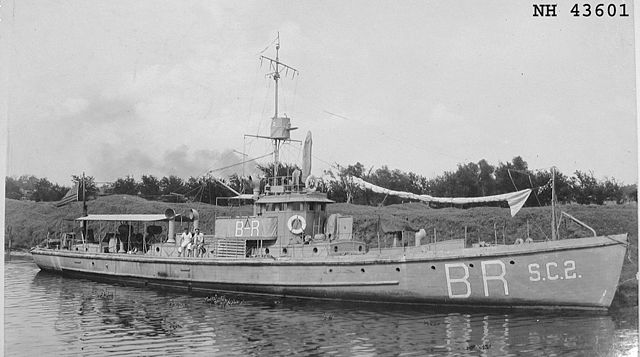
The 110-ft wooden SC boats
WWI experience and Interwar stance
This leads us back to 1939 and the status of ASW policy in the United States. First of all, the US had no operational ASW program and neutrality was in effect. Due to the lessons learned from World War I, the United States had a significant role in the development of late depth charge types and the first DC projector, known as the “Y Gun.” The closest known model to the dedicated, dirable ASW ship was the Eagle Boat, which Ford built in 1918 as a low-cost, all-metal, reasonably priced escort in coastal seas. They stood in contrast to the large number of wooden SC boats (Sc 110 ft series) that were sold to civilians after the war as a one-time ASW asset for the Entente. Armed with cannons and depht charges, the Eagle boats were slab-sided craft that could be quickly assembled from prefabricated components. Given that U-boats spent the most of their time at the surface during World War I, the emphasis on weapons serves as a reminder that the majority of them were captured.
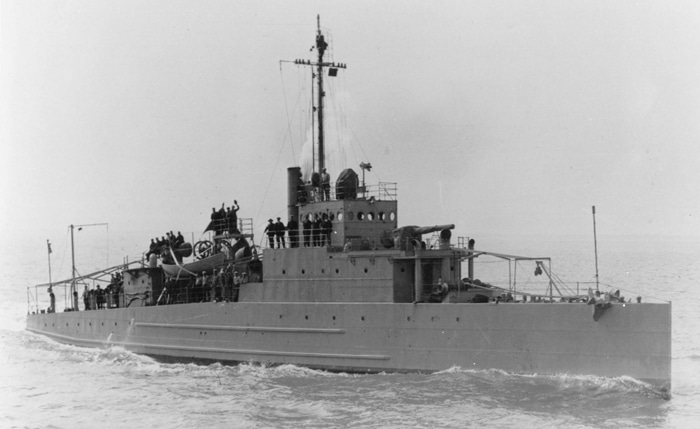
The Eagle Boats, 60 crude vessels by Ford, which arrived too late for WWI and left a sour taste to the Navy.
However, the Eagle Boat left the USN with a bad taste. Ford overpromised on a product that was offered off the hat by his design team with minimal input or communication with the USN or naval yards, demonstrating his clear lack of experience with maritime building. In terms of mass construction, it was more of a diversification exercise. No boat was delivered on time after the contract was signed in March 1918 (the first was not even delivered by November), and when they were, the Navy rejected them. The Navy was partially obligated to accept delivery on contractual conditions if the boats were delivered, at least for the initial order, not because the war was finished and the deal was canceled.
However, their low quality led to their rejection. They were simply unsatisfactory; they were shoddy vessels devoid of any nautical characteristics, with disconnected hull plates and fuel oil compartments that leaked. They were really awful at sea. In a postwar environment when it had to fire many employees, Ford lost time and money when the contract was reduced to just 60 and it had to make numerous revisions. During the interwar period, they witnessed a number of services for additional purposes, many of which were transferred to the US Coast Guard, which shared responsibility for ASW combat during World War I. The 1930s saw the scrapping of many. Some became targets. Only one boat remained in operation as a stationary training vessel throughout World War I in Miami. By December 1941, eight more were in shape, and during the “second joyful moment” of Dönitz’ grey wolves in 1942, they saw action. They were the USN’s sole ASW patrol ships at the outset of the conflict.
The first Atlantic Battle’s conclusion, neutrality, and post-1929 budget cuts, along with the Eagle Boat experience, left the USN without any motivation to expand ASW capabilities. In the event of conflict, the several and now-vintage Wickes-Clemsons would be utilized as escorts. They all had throwers and depth charge racks. Fifty of them had already been leased to the RN for ASW escort missions in 1940. Although Ford never went back to building ships, there were plans for a replacement for the Eagle Boats that would be created and constructed by specialized Yards and naval architects. When the US shared the burden of escort work in their own territorial seas and beyond in the Atlantic during the “quasi war” with Germany in 1941, discussions about these became noticeably more common.
A quasi-war in September-December 1941

USS Reuben James (D245)
Numerous accidents and near-misses had already occurred, and US captains were unable to remain motionless when they witnessed ships in their convoys being ravaged by U-boats, even though they had been told not to. Their goal was to scare these off of their watch without breaking a more delicate neutrality stance, so they ran at the alleged U-boat location, making sure to at least “keep their heads down” and not dropping anything. Nevertheless, from March 11 (the start of lend-lease) to July 11 (the start of active escort) to December 7, 1941, numerous US merchantmen were sunk. Then, in spite of Hitler’s orders, which Dönitz relayed, military ships occasionally became unintentional targets for U-Boat commanders. The USS Greer (4th) was 175 miles from Reykjavík in September. It was signaled a U-boat and proceeded for it, but it did not drop depth charges. Instead, it used sonar to confirm its position to other allies.
After being attacked by a British plane, U-652 maneuvered to face the USS Greer and avoided a torpedo that was thrown at her. Before entering port, Greer dodged a second torpedo and dropped DCs. In an effort to shape American sentiment, President Roosevelt openly condemned the events of September 11th. On September 20, the USS Truxtun unexpectedly sighted a U-boat in fog at a distance of fifty yards. After diving deep, she released depth charges. On the night of October 16–17, the USS Keany discovered a U-boat in the midst of the convoy, surfaced, and fired three torpedoes at it. Capt. Anthony L. Danis, her skipper, avoided two of them, but the third struck his boat. Despite the severe damage, she managed to survive and crawl back to Hvalfjordur for urgent repairs. During his speech on October 27, Pdt. Roosevelt declared
The shooting war has started. And history has recorded who fired the first shot …”
Destroyer No. 245 (DD 245) USS Reuben James (“the Rube”), commanded by Commander Edwards, was attacked and sunk by U-552 on October 31, just 37 days before Pearl Harbor, when that escort work grew more stressful than ever (it was now referred to in the press as a “quasi war”). Her back was broken by the torpedo after an ammunition magazine exploded. Despite the fact that the nation-continent had yet to experience war, she was the first American ship lost in World War II. When questioned later in Germany, Kapitänleutnant Erich Topp, the ship’s skipper, stated that he was unable to see the ship flying the US regulatory ensign and that he saw it dropping depth charges on another U-boat. Forty-four people made it out alive. The incident garnered media attention in the United States and led to a more forceful policy change against U-boats. Now this was a “free for all” against any detected U-Boat, uncontrolled. However, this incident was not as large as the Lusitania. Up until Pearl Harbor, the US would maintain its neutrality.
Roots: The British BDE program (1941)
Returning to the US Admiralty, all limits inherited from the Washington Treaty and London Conference were immediately lifted in September 1939, marking the beginning of World War 2. Large-scale building plans for cruisers, destroyers, battleships, and aircraft carriers were now unrestricted by tonnage constraints in terms of both quantity and quality; yet, no official escort destroyer was yet to be planned. Even by late 1941, when the Atlantic escort evolved into a full-scale combat operation, the United States was still not at war, as we can see above, therefore the primary motivation did not stem from the country’s immediate requirements. This does not imply, however, that anything was investigated.
In fact, the GMT and its successor were derived from a set of escort vessel design studies that the General Board had requested in 1940. The success of the British Hunt class, especially following the Mills-Cochrane mission to the Royal Navy, was a significant reason in the US’s interest. Early initiatives, such as the restoration of the historic Wickes-Clemsons, were abandoned due to the minimal savings they offered in comparison to a conventional destroyer that was far more capable.
Furthermore, destroyers could be obtained sooner because they were already in production. British interest in light second-rate destroyers rescued the idea. Prior to Roosevelt altering the US escort strategy, on June 23, 1941, the British Supply Council in North America requested that the Secretary of the Navy release a hundred escort ships over a long-term program.
A dual-purpose main battery (three 3-in/50 instead of two single-purpose 4-in/50) and a triple torpedo tube to counter possible surface raiders were the key modifications that were requested. Stocks released from escort conversions of existing “flush-deckers” that were to be converted into pure escorts would be used to supply the latter. Later on, however, a new production was needed. The conn was one level above the helm, and the bridge was of the British form. On August 15, 1941, the President authorized the building of 50 British destroyer escorts (BDE), despite the Bureau of Ships’ repeated claims that destroyers could be provided much more easily.
Given that the British were responsible for the majority of the escort responsibility in 1940, it made sense. Roosevelt also played a key role in this, agreeing in July 1941 to facilitate the British Government’s access to US shipyards’ proposals for a new kind of escort in addition to participating in the convoy escort, particularly of US ships headed to Britain and convoy up to the mid-Atlantic, where British ships would fully take over. The British did, in fact, seek a model that was based on their own Hunt class design, at least the upgraded Type II that was being built at the time. In 1940, the British Mills-Cochrane expedition visited US shipyards to gather ideas.
Despite being variations of a single design, the final US class was ostensibly separated into six classes for almost 500 ships produced.
It was decided that geared turbines would have provided the BDE with 24 kts of power. This was a significant, although not exacting, requirement. However, a production bottleneck caused by gear-cutting necessitated the replacement of submarine-type diesel engines. They added 130 tons and 33 feet in length. Additionally, diesel output was constrained by landing craft demands. Eight 1500 horsepower diesel engines, four with electric motors and four with tiny gears, were specified in the original design.
At a cost of 4.3 kts, geared diesels were now no longer used. These were “short hulls” or “GMTs,” which stand for “GM Tandem” (diesel) drive ships. The next propulsive technology to be investigated was turbo-electric; the hull had to be stretched, but the original horsepower was kept. It was discovered that the extending counterbalanced the displacement increase, and these TE units had a speed of roughly 24 kts. For ease of manufacture, the longer hull was standardized; other propulsion options included a geared diesel drive (FMR’, for reduction geared, also half Dower), the original diesel-electric system in a long hull (DET’), and a geared turbine with relatively tiny gears (WGT’). If you are still wondering why these strange acronyms were utilized, it is because of supply problems.
Construction
Naturally, the number of orders far outstripped the initial fifty. At its height, the DE Program aimed to complete 1005 units, including 105 “GMTs,” 54 “TEs,” 252 “TEVs” (also known as “TEs” with 5-in guns), 293 “WGTs,” 116 “DETs” and 85 “FMRs.” Many of these were ordered specifically to guarantee the completion of 260 units in 1943; in reality, over 300 were delivered that year. Mass cancellations started in the autumn of 1943, with 305 in September and October, another 135 in 1944, and two in Many “DEs” were changed to fast light transports (APD); out of a program that called for 50 of each, 44 “TES” and 51 “TEVs” were converted.Only seven of the twenty radar picket conversions that were planned were finished before the end of the war (DE51, 57, 153, 213, 223, 577, and 578). Numerous other radar pickets were converted in the 1950s as part of the North American air defense system.
Throughout the war, DE armament varied widely. The “TEVs” and “WGTs” were finished in accordance with the original design, which included weight and space reservations for the installation of two enclosed 5in/38 in lieu of the 3in/5S0. All “DEs” were supposed to be converted as armaments became available, however the “GMTs” were the only DEs that never carried torpedo tubes, so this program was dropped.
It is also ironic that the Royal Navy, who had first requested torpedo tubes, requested that they be removed from DEs that were given to them. However, the Royal Navy mandated the installation of hedgehogs, which were installed on all DEs. All but the “TEVs” and “WGTs” had the original high British-style bridge on the outside, which is ironically comparable to the 180-foot minesweeper/PCE, another class that was first constructed in response to Admiralty requirements. A lower bridge, akin to the one originally found in Sumner class destroyers and in some destroyer reconstructions, was used in ships built for Sin guns; it was also somewhat influenced by modern British practice.

Launch of USS Borum (DE-790)
The USS Camp, after a collision in April 1945, and 11 of the 40 “TEs” (DE217—219, 678-080, 696-698, and 700-701; the “TE” conversions were completed in the autumn of 1945) did not have this kind of bridge installed. The radar picket “TEs” were also not equipped with it; instead, they were given a large radar mainmast, a new CIC, and two in cannons. The triple TTs were removed from numerous ships and replaced with four Army model single Bofors weapons during refit. Additionally, some late-production ships were finished without the tubes: six “WGTs” (DE448—450, 510, 537, and 538) had ten single 20mm, three twin 40mm, and one quadruple 40mm aft. The triple tubes were swapped out for Army type 40mm in four “I’s” (DE575–578).

TE class ships in construciton at Bethlehem Hingham 20 January 1943
The Yards in charge were the following:
Bethlehem, Hingham Shipyard, MA: Lead builder, 17 ships DE51 to 155 (many converted as APD).
Bethlehem, Fore River Shipyard, MA: 10 ships DDE 667 to 683
San Francisco Shipyard, CA: 12 ships DE-633 to 644
Charleston Navy Yard, SC: 15 ships DE 199 to 213
Consolidated Steel, TX: 12 ships DE-789 to 800
Defoe Shipbuilding, MI: 13 ships DE-693 to 705
Dravo Corporation, PA: 3 ships, DDe 665 to 667
Norfolk Navy Yard, VA: 10 ships DE-153 to 198
Philadelphia Navy Yard, PA: 14 ships DE 214 to DE 223
Construction time improved over time:

USS Buckley DDE51 needed eleven months (July 42 to April 43), whereas USS Jack W. Wilke DE-800 needed (Oct. 43 to March 44) just six months, almost half the time.
Design of the class
So the first design under study are the “TE”, meaning “Turbine, Electric”. They were also called the “long hulls”. Unlike the Hunt class which had a classic forecastle, the US-built BDE as they were initially known from their British specifications, had flush-deck hulls for ease of construction and US design tendencies in general, more production firendly. This was the same as the wartime Fletchers, Gearing and Allen M Sumner, a proven design solution kept for decades even in the Cold War. However this reduced useful space inside the hull, in particular under the sloped deck forward, imposing peculiar internal arrangements.
Hull and general design
As can be seen above, the British military mission in June 1941 requested 100 BDEs based on a U.S. Navy conceptual design for a 280′ (85m) ship with a triple torpedo bank, two 5″/38 dual-purpose guns, extensive antisubmarine equipment, and a top speed of 24 knots. Due to shortages of both 5″/38 weapons and equipment, the “Evarts class” was designed as a stopgap and is nevertheless capable of defending against surfaced submarines. It is armed with 3″/50 guns on superfiring positions. They employed diesel engines, which resulted in a shorter hull and were terribly underpowered, with a top speed that was well below the target. However, they had enough of antisubmarine equipment that included the most recent advancements. However, this class gained notoriety for its propensity to roll.
Hull design


Despite having weaker weapons, the Buckley class ended up being larger than the Hunt class, even though turreted 5-inch guns were initially intended. Later classes would have these installed. Studying the Hunt class type I’s flaws, which included a serious instability during service due to a wholly mishandled stability calculation, was an essential task for US engineers of BuShips. However, the British insisted that the new ships include a tall bridge that combined an open bridge for watch with an enclosed steering bridge. Although the forward armament was lighter, more balanced, and more effective, the flush deck hull design allowed for overall weight savings and increased stability.
The TE class displaced 1,740 tons (fully loaded) for 1,432 tonnes standard, albeit Conways gives the figure of 1,823 tonnes fully loaded. Being “long hull” they reached 306 ft (93.3 m) overall in lenght for a beam of 36 ft 6 in (11.1 m), a bit more than the GMT for a draft superior as well, to 11 ft (3.4 m) fully loaded.
The revious “short hull” GMT measured 289 feet 6 inches (88.2 meters) overall and 283 feet 6 inches (86.41 meters) at the waterline. In comparison, it displaced 1192 tons standard for 1,360 tons fully loaded. When completely loaded, a beam at 35 feet (10.7 meters) has an average draft of 9 to 10 feet 1 inch (2.7 to 3 meters). Although the better beam was intended to save some draft and allow missions closer to the shore and in shallower seas if necessary, both types were notably larger than the Hunt class (85 x 5.8 x 3.27 m).
Instead of having a transom stern, they had a rounded and transom stern with some declivity. The hull lines were a variation of Gibbs & Cox’s “pear form” for the Fletcher class, with the greatest beam reaching roughly two thirds of the way aft. The deck space was ample, and the structures were measured, particularly for weight considerations. The prow ended in the same manner as the Fletcher class destroyer and had a standard stem that was halfway between clipper and straight. There was hardly much flare. The forward draught was, as usual, less than the aft draught, and the percentage of the stem above water was 3/4 of that of the submerged half. The percentage above and below the waterline was roughly 50% aft. A little axial rudder aft (too small as it turned out), two angled down anti-roll keels, a keel tail, and two long shafts with twin struts for smoother departure lines were all included. Prior to the installation of 5-inch gun turrets when they became available in 1944, the GMT and TEs were practically identical, sister ships with extremely similar designs. Their hull length was the only distinction.
Design Description

Rendition of USS England sourced from the blueprints.com
Similar to the GMT class, the TE’s overall attitude appeared “overloaded” on the surface. Its distinguishing feature was the lofty bridge that the British requested. Although it provided superior peripheral vision for identifying submarines that surfaced, it also resulted in certain stability problems, which were fixed in the subsequent TEV, WGT, and follow-up designs.
The two forward guns were positioned behind a superfiring post nearer the bridge and bulwarks in a deck position. The latter really had two open bridges: one on top with thick walls and a number of windscreens, and the other underneath, encircling the enclosed navigation bridge. Scopes were installed everywhere. Although the strong signal lamps could be used in that manner, there are two signal lamps there but no large light projector for night operations.
The distinctive, tall, raking mainmast behind the bridge thereafter appeared. It had a small radar support on top and supported the standard lights. The primary combat flag and other signal flags were also supported by a gaff. The single raked and topped funnel and the rear superstructure amidships followed. In order to keep the aft deck dry, US destroyers often had access to the rear through a door and a bulwarked wall.
The aft 3-in gun emplacement was supported in an elevated position by the rear structure. There were multiple Oerlikon 20 mm AA gun positions just aft of the funnel. A Bofors mount aft and three additional 20 mm positions near the bridge, which covered the front quarter, were added to these six amidship stations later in service. The towering bridge did, in fact, give the amidship mounts a poor arc of fire forward. Due to their small size, these ships could only transport an open, unpowered whaler for liaison and rescue at sea, with davits on the starboard side. Additionally, there were two amidship aft and four main rafts of the Carlin type, which were positioned at the bridge’s forward foot.
Powerplant: GE Steam Turbines
The most distinctive point of the whole 500+ destroyer escort was their powerplant. If GMT meant “GM Tandem” to describe a diesel-electric drive with electric distribution and transmission to enable a longer range and far more flexibility in operation, the TE (for “Turbines, Electric”) went for general electric steam turbines coupled with a turbo-electric transmission.
Where the GMT had four General Motors Model 16-278A diesel engines coupled with an electric drive on two propellers, the Buckley class needed more space for these steam turbines, unlike the compact diesels of the GMT, hence the distinction between the “long hull” versus the “short hull” that were the Evarts class. However their electric transpission was about the same and gave still a great deal in flexibility.
There were still consireable differences within ships in class, for the origins of their boilers, to feed the General Electric steam turbines, which also acted as generators, powering the electric on board systems when the ships were on station, regarless of the pressure in the boilers.
DE51 to DE98, DE563 to DE578, and DE665 to DE673 married to their General Electric steam turbine-generators two electric motors fed by two Foster Wheeler Express “D”-type water tube boilers.
DE153, DE154, DE156 to DE161, DE198, DE214 to DE223, and DE789 to DE800 had instead two 2 Babcock & Wilcox boilers.
DE155, DE199 to DE213, DE633 to DE644, DE675 to DE683, and DE693 to DE705 and two Combustion Engineering boilers.
This procurement was left to the choice of the yard in charge.
The steam turbines were rated for 6,750 hp each, for a total of 13,500 horsepower (10,100 kW).
They were coupled with two generators rated for 6,150 hp each, for a total of 9,200 kilowatts or 12,300 hp to feed all internal systems.
The latter ended with electric motors and a turbo-electric transmission driving the two propeller shaft for a great flexibility in regimes and faster response unlike a standard steam-base system.
This procured the Buckley class destroyer escort a top speed of 24 knots (44 km/h; 28 mph) with most ships even capable of 26/27 knots, versus only 19 knots (35 km/h; 22 mph) for the previous GMT class (short hulled diesel boats) albeit some performed 22 knots runs on trials. This gave the Buckley much more flexibility to zoom in an oiut of convoys and chase off submarines further out the convoys, but also some fleet work, as most battleships, even recent ones like the North Carolina and South Dakota class had about the same speed, not speaking of the 21-knots modernized dreadnoughts.
As for range, it was good for their size, and surprisingly better on the TE than the GMT, at 5,500 nautical miles (10,190 km) at 15 knots (28 km/h) versus 5,000 mi (4,300 nmi; 8,000 km) at 15 knots (28 km/h; 17 mph) for the GMT. Indeed the “short hull” had a diesel oil storage between 131 and 197 tonnes, and still could reach 6,000 nautical miles at 12 knots. For perspective this was a New-York to Alexandria trip without stopping.
However for any destroyer escort, this was a ludicrous comparison because they rearely stayed at convoy speed at 15 knots reality, but by shepherding the coboys, they used any margin they had to zoom in and out of the convoy, ready to pounce on any threat and do prolonged ASW chases for long hours, or stop to pick up men of sunken ships left behind, then return to the convoy at flank speed. Unlike the GMT the TE had just two steam turbines, giving less margin in case of breakdown than the four powerplants of the GMT, excellent for redundancy. See also
Protection
As escort ships, they lacked any armor at all, much like destroyers. In other words, any 8.8 cm Type VII round would penetrate any part of the hull or structures like butter; the same is true for 20 mm FLAK rounds. However, a surfaced U-boat would be overpowered by the fire of seven combined 20 mm Oerlikon and contend with four fast-firing 3-in main guns. Therefore, damage control underwater was the main focus. Like all ships of the era, they were heavily compartmented, with bulkheads separating the engine room from the drive unit, the fore and aft sections of the ship, and two pairs of diesel engines. As demonstrated by numerous destroyers during World War II, they could theoretically live even if their bow or stern were severed.
It had a double hull and side chambers that could be filled with oil to absorb the damage from blasts. But there was no cover for the primary weapons. The flat shields were standard on the Oerlikon AA weapons.
Armament

USS England on pinterest
Because the main 3-inch guns were dual-purpose and could deal with the Luftwaffe’s potential FW-200 Condor at high altitude, the ASW escorts were equipped with US ordnance, sufficient to deal with surfaced or submerged U-Boats and repel any air attack, despite the British initial requirements. An array of 20 mm Oerlikon AA weapons was in place to counter attacks from lower altitudes. For a fast response, post-diving strike, this was finished off by the new standard Hergdehog Mark 1 anti-submarine mortar, which is usually utilized when a U-boat is seen far away, preparing for the deep. Additionally, they were generously given a maximum of 160 Depth Charges for passes during long, exhausting chase hours. These were dispensed by two stern racks and six to eight side projectors (also known as Depth Charge Throwers or Y-Guns).
3 inch/50 Mark 20 guns

The Mark 20 was a far more recent version of the successful dual-purpose light-medium 76 mm naval guns, almost at the end of the line, whereas the Mark 2 had been in service since 1915. With their ability to raise to +85° and their constant lack of protection, they could reach a range of 14,600 yards (13,400 meters) at 43° elevation and 30,400 feet (9,300 meters) at AA ceiling. They required a small crew consisting of a single gunner with an optical telescope and a peep-site. With manual loading and ramming, the Mark 20 could fire about 20 rounds per minute. They were easy to handle and had 13-pound (5.9-kg) HE rounds. They were available in AP, AA with VT promixity fuze in 1944, and HE or illumination, some of which were always prepared to fight U-boats’ surface night tactics. It is unlikely that the automated Mark 22 (1944) ever took the place of the Mark 20.
5 inch/38 Mark 12 guns

In 1944, late ships were completed with two 5-in/38 gun turrets, one forward and one aft, a far more potent combination for any gunnery combat and also for AA fire in the context of the pacific. These were essentially the same turrets sported also by the Fletcher class destroyers, dual purpose guns (anti-surface and anti-aircraft (AA)), but not controlled by a Mark 37 Gun Fire Control System as on fleet destroyer, which considerably diminished their efficience.
⚙ 5-in/38 Mark 12 specifications
Turret Mount: Mark 30 Mod 41: 41,400 lbs. (18,779 kg)
Barrel: 3,990 lbs. (1,810 kg) without breech, 223.8 in (5.683 m) long
Muzzle Velocity: 2,500 fps (762 mps) average
Rate of Fire: 15-22 rounds/minute
Elevation: -10 to +85°
Range: Max 85°, 2,940 yards (2,688 m)
Crew: 8 inside, 7 outside open src
Ammunitions: c300 (360 on Fletcher)
Penetrating power: 13,800 yards (12,620 m): 1.0″ (25 mm) armor*
*with special common shell
28mm/75 Mk.1

According to Navypedia, the notorious “Chicago Piano” Mark 1 was installed at first due to a lack of Bofors. Having at least nine 20 mm Oerlikon AA weapons helped them make up for it.
In an attempt to give ships a more effective defense against increasingly sophisticated aircraft, the U.S. Navy developed the 28mm/75 calibre gun, known as the Mark 1, as an early anti-aircraft (AA) autocannon system in the 1930s. Although the method was innovative at the time, it ultimately failed and was rapidly replaced. With a barrel length of 75 calibres (2.1 meters) and an intermediate caliber of 28 mm (1.1 inch), this quadruple automatic anti-aircraft gun mount was most likely the Mark 1 Mod 2, which could fire 125 rounds per minute per barrel (cyclical). In practice, it could fire at 2,700 feet per second (823 meters per second), giving it an effective range of about 3,000 yards (2,700 meters) against aircraft. Five-round clips were used to feed it. The quad-barrel design, which resembled a pipe organ or a machine gun from the gangster era, gave rise to the term. Its objective was to fill the gap between heavier 3″/50 or 5″/38 dual-purpose weapons and.50 caliber machine guns.
40mm/56 Mk 1.2

Possibly the best AA gun of World War II, at least for the Allies, the heavy puncher was widely used. On the superstructure, a twin mount was positioned aft.
The 40 mm (1.57 in) Bofors, which is still in use today and is renowned for its hitting power and dependability, requires no introduction. The manual handling of the gravity-fed, 4-round clips is the only thing limiting this 56-caliber (2.24 m/7.35 ft) gun’s 80–100 effective rate of fire, which is 120 rounds per minute (cyclic). With regard to airplanes, the muzzle velocity is 881 m/s (2,890 ft/s) and the effective range is 5,000 m (5,500 yd). In contrast to the Mark 2 quad mount, the Mk.1 was the Twin mount and was primarily unshielded.
Read more
20 mm/70 Mark 4 Oerlikon

On the GMT class they were distributed on several positions aft of the funnel initially, but the standard by 1944 was to have
Read More
Depth Charges

Eight DCT (Depth Charge Thrower or K) guns were standard equipment; four of them faced the aft quadrant and four the broadside. They were positioned aft on either side. Two 10-DC depth charge racks aft finished this, bringing the total number of depth charges to 120–160. This was a huge ship that was larger than any other US ship, indicating their area of expertise. This was their only ASW weapon until the Hedgehog was introduced and replaced the “B” mount.
Mark 7:

Most likely, the finished Mark 7 models were utilized. They weighed 745 pounds (338 kg) and carried a 600-pound (272 kilogram) TNT payload with a sink rate and terminal velocity of 9 feet per second (2.7 mps). They were designed in 1937 and went into service the following year. It was adjustable between 50 and 300 feet (15 and 91 meters).
In the early stages of World War II, it was essentially a modified Mark 4, which was installed as standard on all destroyers, destroyer escorts, and ASW ships. It was redesigned to make building easier. Due to rumors of U-boats that could reach more than 250 meters, Mod 1 raised the depth setting to 600 feet (183 meters) when it arrived in August 1942. With a higher sink rate of 13 frames per second (4 mps), Mod 2’s warhead was increased to 400 pounds (181.4 kg) of TNT.
Mark 8:

This variant, which was designed in 1941 and released in 1943, was a magnetic handgun with an aluminum case to prevent magnetic interference. Compared to earlier preset depth charges, this “proximity” model was significantly more sophisticated and accurate. With a sink rate of 11.5 fps (3.5 mps) and settings ranging from 50 to 500 feet (15-152 m), it was able to carry 270 lbs. (122 kg) of TNT despite weighing “only” 525 lbs. (238 kg). Compared to the Mark 6 or even the subsequent Mark 9, the USN deemed it seven times more deadly. However, when it blew up…
It required a lot of upkeep and was unreliable. So much so that the model was discontinued from service in 1945 and a backup hydrostatic pistol was installed. The magnetic pistol burst when 20–25 feet (6–7.5 m) got close after arming itself when it detected the hull from 35 feet (11 m) to 200 feet (61 m). It was sorted by 150 lbs. (68 kg) of lead weight because it was too light. With 76,000 manufactured, this model was hailed as a USN “secret weapon” that would help win the war in the Atlantic. However, crews immediately found weaknesses in it, and it was quickly withdrawn after the war, with about 57,000 remaining in storage by September 1945.
Mark 9:

This was the standard-issue DC from 1943 to 1945 and well beyond, and it was from the same generation as the Mark 8. Technically, they were essentially the same as the preceding Mark 7, but they had a “teardrop” shape that allowed for a significantly higher sink rate in tests. They also included fins to generate a stabilizing spin, which allowed them to sink much more precisely. The Mod 2 could be set up to 1,000 feet (305 meters), the sink rate could be lowered to 15 (4.5 mps) if necessary by installing spoiler plates on the nose that functioned as brakes, and the warhead TNT was swapped out for Torpex. To enable slower warships (DEs, Frigates, and Sub-Hunters) to avoid the explosion plume, they were supplied as kits.
Mods 0, 1, and 2 had warheads that ranged from 200 lbs. (91 kg) TNT to 190 lbs. (86 kg). They weighed 320 lbs./145 kg, 320 lbs./145 kg, and 340 lbs. (154 kg) accordingly. The sink rate also fluctuated, ranging from 14.5 fps (4.4 mps) to 22.7 fps (6.9 mps).
The settings ranged from 50 to 300 feet (15-91 m) or 600 feet (183 m), which is almost the same as the Mark 7.
About the K Guns (Mark 6)

In 1941, the Projector Mark 6 was released, firing a single depth charge of the Mark 6, 9, or 14. The distances covered in only 3.4 to 5.1 seconds range from 60 to 150 yards (55 to 137 meters). They were typically positioned three on each side aft on the deck, near the aft deckhouse, on all destroyers equipped. For destroyers, it is four to six, but for destroyer escorts, it can reach eight. They persisted until the 1950s, when their output was so high that lend-lease was also a major source of funding.
The depth charge was put into each K-Gun, which was made up of an arbor (holder) that was placed inside the projector. It was deemed a hazard even though it could not be recovered until a cable was fastened to it after it fell into the sea. They were inexpensive metal parts that could be expanded. These were partially constructed from a 61 cm x 15 cm tube that was closed on one end and ended with a 12 by 31 inch (30.5 x 79 cm) tray on the other end. When shot, it became the primary projectile because it was designed to fit into the projector barrel. They weighed 70 pounds (32 kg) at first, then 65 pounds (29.5 kg) on later models, increasing range.
Black powder was utilized as the K-Gun propellant. The arbor was placed inside a tubular casing that measured 3″ (7.62 cm). The charge changed when the loads fluctuated between the required range of 60, 90, and 150 yards (55, 82, and 137 meters).
The USS Asheville (PF-1) tested the Mark 9’s built-in arbor in 1944, but the technology was too complicated and expensive to justify production in comparison to expandable arbors.
Thousands of tons of arbors are thought to have been placed on the Atlantic bottom following World War II, but they most likely rusted away because they were not given any special care.
Sensors
There too, it was pretty well rounded for their mission, covering all aspects surface, air and undersea passive or active detection.
SL Radar
Typical small 150 kW, 1300 lbs (590 kg) surface search radar designed for destroyer escorts.
The 300 lbs (136 kg)antenna was 45″ by 48″ (1.14m by 1.22m) parabolic in radome and PPi scope, 20 rpm and 100 feet/1 degrees accuracy.
Resolution 600 feet/6 degrees or 200 meters/25 degrees, 30 meters/1 degrees
Specs: Wavelength 10 cm, pulse Width 1.5 microsecond, Pulse Repetition Frequency 800 Hz
Range: 15 nm (30 km) low-flying bomber, 20 nm (35 km) cruiser, 13 nm (24 km) destroyer, 10 nm (20 km) submarine
829 SLs were manufactured in 1943-10, 480 SL-1 by 1944-7. They equipped the present destroyers and their successors. British crews were trained on them at first.
SA Radar
Standard small air search radar and first warning detector. Tailored for destroyers escorts and frigates, some were also found on destroyers. They were of the bed frame type, and relatively small. The SA-1 equipped rather destroyers.
Specs:
SA had an estimated reliable range of 40 miles on medium bombers at 10,000′, with antenna at 100′. Range accuracy is ± 100 yds. Bearing accuracy, ± 1° (lobe switching). No elevation.
The SA has 12 components and weighs a total of approximately 1500 lbs. The SA antenna measures 5′ x 8’8″. Including pedestal, it weighs 500 lbs.
The antenna should be mounted as high as possible, preferably 100 feet or more above the water, thus, on top of the mainmast of the GMT.
To operate, one operator per shift is required. PP required is 1950 watts at 115 volts, 60 cycles.
They were small enough to be fitted on sub-chasers and minesweepers as well.
See also
Type 128D SONAR
The type 128 was tested 1937 in Acheron. It was retractable, under dome, and also equipped the A, L, and Hunt-class destroyers. So it was only fitting it was provided for the early GMT class escort destroyer as well. It was equipped with a range recorder and could be controlled from the bridge. However, it was discarded as soon as the more modern Type 144 was available.
Type 144 SONAR
This improved sonar set had a fixed gyro-stabilized oscillator using a gyro compass for bearing indication. It is fully integrated with the Hedgehog or later Squid ASW mortars. The Type 144Q later appeared with a second oscillator trained with the main oscillator, but elevated down further for close range, around 400 yards. The 144 had a much better range of 2800–3000 yards (1800-2800m) depending on conditions. The ship needed to go slow to use it without many interferences. Note that some sources specifies a QGA sonar, US-pattern. It was perhaps installed postwar.
HF/DF
To detect enemy radar or radio emission and triangulate positions, the mast was topped by the characteristic cross-style antenna of the “Huff-Duff”, a British model built in the US as the FH 4 antenna. It was used as a MF Direction Finding array.
⚙ GMT Destroyer Escort specifications |
|
| Displacement | 1192t standard, 1,360-1,416 tons (fully loaded) |
| Dimensions | 289 ft 6 in x 35 ft x 9 ft (88.22 x 10.7 x 2.7 m) |
| Propulsion | 2 shafts, 4 × GM Model 16-278A diesels, electric drive |
| Speed | 19 knots (35 km/h; 22 mph) (top 21–22 knots) |
| Range | 5,000 mi (4,300 nmi; 8,000 km) at 15 knots (28 km/h; 17 mph) |
| Armament | 3× 3 in/50, 7× 20 mm AA, Hedgehog, 160 DCs |
| Sensors | SL, SA radars, Type 128D/Type 144 ASDIC, HF/DF FH 4a |
| Crew | 156 |
Misc. aspects on the GMT class
Naming
 The TE class were named after recently died USN servicemen, in a way to honour families and for maintaining the esprit the corps. Only those awarded a special decoration posthumously or citation, such as the Navy cross, were considered. The lead ship DE-51 was named after John Daniel Buckley, killed in action during the Japanese attack on the Hawaiian Islands on 7 December 1941.
The second-highest military honor bestowed upon sailors and marines who stand out for displaying exceptional bravery while facing an armed enemy force is the Navy Cross. Established in 1919, the Secretary of the Navy bestows it. Selected men in the largest pools of Navy and Marine Corps Medal and Navy Distinguished Service Medal recipients are more prevalent.
The TE class’s second ship (DE53) was named for Charles Lawrence, an Ordnanceman (December 29, 1916–December 7, 1941) killed in action during the Japanese attack on Pearl Harbor 7 December 1941. The Silver Star was also given to some of the recipients. But for destroyer escorts, there is a “club within the club” that is named after those who have received the Medal of Honour. Since Secretary of the Navy Gideon Welles established the Medal of Honor for enlisted personnel on December 16, 1861, it has undergone significant alteration, but it remains the highest military decoration in the Navy and Marine Corps. Only “conspicuous heroism and intrepidity at the danger of life, above and beyond the call of duty” led to its presentation.
General Evaluation
As the follow-up of the Evarts in a mass of 560 destroyer escorts, all of which were remarkably similar, the TE or Buckley class demonstrated exceptional convoy escort capabilities in any configuration and for any danger, both in terms of weaponry and detection. With more than 150 constructed for the TE alone, they were essential for wartime production spikes because to their speed and affordability. To speed up building even more, production was further optimized, and procedures and parts supply were streamlined. In 1945, it was cut in half.
Despite their towering bridge, they were comparatively good in choppy Atlantic conditions thanks to gravity calculations and all the weights down into the hull, which helped to maintain a stable sea keeping overall. With a thinner profile than a typical destroyer and a well-compartmented hull that allowed them to absorb damage better than anticipated, they also demonstrated their superior survivability. But they had flaws, such their still-limited firepower and speed: Their AA was inadequate against combined aircraft strikes, and they demonstrated a high degree of vulnerability to surface ships.
The “long hull” were not criticized unlile the “short-hull” for their shaft design, but equally had terrible living conditions and were claustrophobic. Beginning with the 1943 Mediterranean operations, particularly Operation Husky, and the 1944 Italian landings, they served in both the Atlantic and Pacific theaters and were crucial in escorting convoys to Europe and North Africa. They also protected convoys from German U-boats from the United States to Britain in order to prepare for D-Day.
Many TEs from the former Europan theater, as well as many finished in 1944, were deployed to the Pacific after Germany was nearly defeated in the spring of 1945. They participated in Okinawa and Iwo Jima (proved unprepared to fight Kamikaze) and saw action in the last stages of the island-hopping campaigns in the Pacific. Their greatest contribution, of course, was to the Royal Navy in the form of Captain-class frigates. They proved just as capable as the Hunt class and came at a pivotal moment in the RN’s victory in the Battle of the Atlancic.
However, the fact that they began a complete lineage in 1945 taints their heritage. Much was learnt to adapt later classes, like the Cannon classes, which were more capable and better armed.
(More to come in next updates)
Appearance

USS Paul G. Barker 1944 DE642
In terms of camouflage, measures consisted in the following:
Order CF-160: MS 32/3D external for the class and under order CF-161, measure 31/1D for the details and decks (vertical surfaces)
Order CF-4 from May 1944 precise 32/9D for the horizontal surfaces and CF-5 (MS 32/21D) was applied from December 1943.
Order CF-6 was applied from January 1944 for measure 31/3D and CF-88 for MS.33a/35D from March 1945.
Order CF-184 for MS 3-/22D was applied from December 1943. Order CF-185 for MS.32/6D was applied in 1944.
See more
USS Evarts for example was applied MS 21 as completed, all Navy blue. It was colourful mix of patterns and styles with MS 31/3D from 1944.
MS 21:
Navy Blue 5-N for all Vertical surfaces without exception. Horizontal Surfaces Deck Blue, 20-B. Wood decks be darkened to the colour Deck Blue. Deck Blue paint shall be used in lieu of stain.
MS 31/3D:
Paint all exposed vertical surfaces a pattern of Haze Gray 5-H, Ocean Gray 5-O, Black. Horizontal Surfaces, all decks and horizontal surfaces with Deck Blue, 20-B and Ocean Gray 5-O.
Canvas covers visible from the outside vessel dyed to Deck Blue.

USS Harmon 1944, old author’s illustration
Preserved: USS Slater

A single DE in the US symbolizes all 500+ masses of these, but no Evarts class was maintained. It is a valuable source of knowledge because all of these ships have a lot in common. As a museum ship, the USS Slater (DE-766) is a Cannon-class destroyer escort that has undergone extensive restoration. It is a poignant homage to the sailors who served on similar ships during World War II and is one of the last surviving destroyer escorts in the United States.
May 1944 saw the commissioning, and the name This Cannon-class, which was active in the Atlantic Ocean during WWII and is now preserved in Albany, New York, anchored on the Hudson River close to downtown, was named for Frank O. Slater, a sailor who was killed during the Naval Battle of Guadalcanal.
The Destroyer Escort Historical Museum presently operates it, and it has been completely restored to her WWII look, including accurate interior features, paint jobs, and weapons.
Of the more than 500 neglected naval boats, it actually underwent one of the most extensive restorations in the nation, thanks in large part to the efforts of committed volunteers and veterans of the Navy (in contrast, more destroyers of WWII had been maintained). Seasonally, guided tours are available, giving visitors access to the ship’s bridge, gun positions, crew quarters, engine room, and other areas.
Visit the website
The British GMTs: Captain class

HMS Lawford in 1944 (IWM). The Captain class are somewhat preferred by modellers, given their large choice of camouflages. It was rather dull for the GMT in US service
In 1940, France fell, offering its Atlantic coastline ports U-Boats, in addition to those already in Norway, giving them an alternative northerly or southern route to the Atlantic and British Isles. Great Britain also stood alone and U-Boats transitioned from a manageable nuisance to a real tyhreat, Churchill’s “worst nightmare”. New U-Boats started to be launched an ever-increasing rate so by 1941 Britain needed more suitable escort vessels, and needed them for yesterday. Even when pressing vintage WWI destoryers now repurposed for escort, and sloops, this was never enough to adequately cover deep ocean convoy. Work started on new corvettes, from a whaler, what became the Flower class, new sloops were ordered, and trawlers were converted for coastal escort, with the occasional fleet destroyers when not busy with fleet work already.
In September 1940 already, PM Winston Churchill approached President Franklin D. Roosevelt for the exchange of fifty ‘four stacker’ Clemson/Wickes flush deck destroyers from the US Navy reserve fleet, in exchange for a 99 years lease of six Caribbean Islands. However these destroyers, even after conversion in Britain, were worn out and suffered constant breakdowns and were found “very wet”. Yet still, they filled some of the gaps in the escort fleet until the arrival of dedicated escort en masse, produced by all Civilian yards across Britain and even in the commonwealth.

HMS Curzon in 1945, showing another camouflage, note the extra AA guns fully elevated
In March 1941, the US Government passed the Lend/Lease Act to procure merchant ships in addition of new warships built from US yards as well as ammunitions for the war effort. In June 1941 Britain sent a commission in the US to study a new escort vessel suitable for ASW in deep, open ocean, better suited than armed trawlers or the Flower class. This enabled the USN staff to have fundings to study this feasibility already since 1939. Captain E.L. Cochrane, of the Bureau of Shipping, visited Britain in 1940 and looked at the new Corvettes in construction, and was more convinced by the Hunt Class Destroyers. He came up with a new design already, at least remaining as an option on paper. So when Great Britain came later in 1941 with their request, the US Navy decided to build a serie or “escort destroyer”. Captain Cochrane made several alterations to the original design as well as changing the production method in order to reach scale quickly. But in the end, her came up with a ship costing half a fleet destroyer. President Roosevelt authorised construction in August 1941.
Orders for 50 were placed, in four shipyards, in November 1941: Boston, Mare Island, Philadelphia, Puget Sound, under teh designation British Destroyer Escort (BDE) later reduced to Destroyer Escort (DE) when the US entered the war and started tio requisition these on a rationing: For every five of these completed, four would be allocated to the US Navy, one to the Royal Navy. By mid-1943, the US yard did the impossible and had an amazing 1,005 of these ships on order, 563 alread completed, but the rest was cancelled. The stabdardizaton led to mostly power plant differences and led to six classes with some variations in armaments, the Evarts, Buckley, Cannon, Edsall, Rudderow and John C. Butler also known by their letters. However the needs of the RN led to the adoption of the first two, the Evarts (GMT) and Buckley (TE) classes, nearlly all built at Boston and Charleston NyD, Buckleys mostly at Bethlehem Steel Yard, Hingham.
In total, the Royal Navy received 32 Evarts and 46 Buckleys. The Free French received 6 Cannon Class but the US Navy had the lion share, 465, sent to the Pacific. The term “Destroyer Escorts” was chosen because outside their Anti-Submarine suite they had torpedo tubes and decent gunnery armament, so versatile as a Destroyer even though less capable and slower. For half the price and given their role, this was well enough. The RN did not care about that designation and called them “frigates”, using them unequivocally for ASW. The Lords of the Admiralty cammed them the “Captains Class” and chose to honor those of the Napoleonic wars, which apart Nelson and a few others admirals, never have been used for RN ships before.

Sub Lieutenant Anthony Large, BEM, South African Naval Force (Volunteers), of Durban, South Africa, taking a bearing on the ship’s compass on board HMS HOLMES whilst she was helping to guard the Allied supply lines to and from the Normandy beachhead. He won his British Empire Medal as a rating.

HMS Thornborough in 1944 (IWM)
The Captain-class frigates were with the 78 warships strenght only remained either of the Buckley-class or Evarts-class, classified as frigates in British service and built under Lend-Lease. tThey experiences a few changed in Briish service, and remained in Service in 1942–1945 for convoy escort, ASW, patrol and training. In coastal waters they were used to repel E-Boat attacks, in addition to their classic submarine hunting missions. They were just fast enough to leave and return to a convoy in each attack. They were powered (Evarts) in a Diesel-electric arrangement (GMT) or turbo-electric for the Buckley (TE). Their three 5-inch guns were certainly not equivament to the 5-in/38 of the USN, but they did the job, combined with a lighter AA against potentaial Luftwaffe attacks.
They also used US pattern depth charge throwers, but combined with British Hedgehog ASW mortars. The were also fitted with British sensors and camouflaged with wavy patterns, unlike US ships. The biggest issue for the RN was to find a crew of 180 officers and men for each, much more than for a Flower class corvette or River class Frigate.
The Captains were divided between the Evarts “Short-hull Captain” Diesel-electric (32 total) and Buckley-class “Long-hull Captain” with Turbo-electric drive, with more, 46 ships, transferred in total.

HMS Riou in 1944 (IWM)
The Naming Convention was after famous Royal Navy captains, of the Napoleonic era and in particular those that served under Admiral Nelson such as HMS Bentinck (K314), HMS Essington (K353), HMS Hotham (K583), HMS Holmes (K581). They concentrated on Atlantic convoy escort duty, either as direct escort or hunter-killer groups against U-boats but also took E-Boat escort missions before, during and after the Normandy Invasion (D-Day) in support and coastal operations as well, and remained in hunter-killer groups with escort carriers until 1945, but many also served in the English Channel and North Sea, as they were too small for the Atlantic escort.
Their primary area of operation was around the British Isles, Bay of Biscay and Irish Sea, or the GIUK gap (Faroe-Greenland-Iceland). None was preserved as museum ships, albeit they played a vital role alongside the River and Flower class in the Battle of the Atlantic, protecting Allied shipping. After the war, most were returned to the U.S. Navy and scrapped or sold off as surplus. They were however mass-produced with some shortcoming in production, so never intended for durability. This is still a very limited amount of service of three years on average.
There will be a dedicated article on them in 2026 or 2027.
In Popular Culture: The enemy below (1957)
Some scenes in the 1957 movie The Enemy Below (starring Robert Mitchum and Curt Jurgens) seem to be inspired by Buckley’s battle with U-66, particularly near the end of the movie where the U.S. Navy destroyer escort grounds on the deck of the submarine. The ship used in the film was the USS Whitehurst (DE-634). The battle with U-66 is detailed in an episode of the YouTube channel The History Guy: History Deserves to Be Remembered.
The story: At 03:08, on 6 May 1944, a months before D-Day, she was vectored in to a surfaced U-Boat by her Task Unit flagship, Block Island, after an aircraft report (likely one of her Avengers). The U-Boote was estimated the closest to USS Buckley, at just 20 km. So, she rushed on site. Watchmen on the CT of U66 saw a hull on the horizon. Believing the approaching ship to be ther supplier, the captain ordered to launched three flares. At just 4,000 yards they realized their error, but by that time, Buckley’s skipper, Lt. Comdr. Brent M. Abel, USNR, of Cambridge, Massachusetts, sounded the general quartters and crews were on the ready, guns pointing on their target, and started firing.
U-66 then manoeuvered to face the incoming bow, and fired one of her last torpedoes. Buckley, aiwting for it, easily saw the wake and dodged it. Then, unable to dive yet because their batteries were near empty, the captain decided to sell their skin steeply.

The bow of USS Buckley after her ramming, in repair at Boston NyD.
He ordered the autocannon crew to open fire as soon as ready. Buckley returned fire with her three-inch guns and given the distance, managed to hole the conning tower. Meanwhile, all guns blazing U66 sub backed away to manoeuver and fire another torpedo, dodged again by Buckley. At 03:28 so twenty minutes after the engagement started, Buckley rammed U-66 and the two were briefly locked together. Some of the German crew jumped out without orders, seeing their submarine burning out, others stook small arms from the locker on board and a western style shootout at vey close distances began. I soon degenerated to almost hand-to-hand combat.
The US crew unleashed almpst anything they had on hand, including shoes and coffee mugs, shell casings. It was reported on of the German sailors was hit and out of action by one of these mugs, making a unique case in naval history… The Buckley eventually ran full steam backwards and managed to back off, but the U-Boat, still manned and unable to dive yet, attempting herself to ram Buckley on her starboard side, hoping tro disable heir engine room. The collision broke Buckley’s starboard propeller shaft still. Then U-66 disengaged, slowly backed away, but not before hand grenades were tossed in her flaming conning tower. She eventually sank at 03:41 from her previous 3-in gun hits in her pressure hull and gradual flooding. Buckley picked up 36 German survivors.

The crew of U66 on USS Block Island after the battle.
They were transferred when back to the Block Island. Next she was detached to sail back to New York for repairs until 14 June 1944. The action was soon well known in naval circles and famous in the community of escort destroyer. Some high naval officers talked of the most “exciting” ASW kill in the whole Battle of the Atlantic. Her crew wa slater authorized to wear a combat star in the European-African Theater ribbon at all times, and Brent M. Abel was awarded the Navy Cross. This was still less impresive than a few boarding actions, notably one by a British crew that led to the capture of the Enigma machine and codes years before, changing the course of the war.
But the “Buckley battle” was still inspiring Hollywood later made a famous feature of it, whic stands out in the mass of war films of that era, not onl for the brillant casting, but also for near-documentary attention into detail. TEs were still around at the time, as well as tens of thousands of veterans that could be used as advisors. As for Brent M. Abel, he had an interesting career. Years after the battle, one of the German survivors located Mr. Abel and told him, as reported by the New Yorker:
“All of us survivors of the U-66 have always had the desire to get to know our wartime adversaries in the war on the sea and if the opportunity presented itself to say thank you for the fair treatment on board the Buckley and for saving our lives.”

USS Buckley in the summer 1944 in resfreshing cruise, after repairs.
Mr. Abel even helped organize a reunion of opposing sides in Germany. Abel, now a lawyer, resuming his prewar early career, in general downplayed the incident postwar, and allegedly in 1960 when one of his customer, a woman which wanted to contribute to the Black Panthers organization in Oakland Mr. Abel (now member of the Bohemian Club) suggested donating for their breakfast program and she followed his advice. Latter in life he purchased a cattle ranch in Yuba City. He passed out less than 20 years ago on December 26th, 2005 at San Rafael.
High Speed Transports: The APD-37 class
 APD-37 (fopr the Charles lawrence class) was the lead ship of the U.S. Navy’s new series of high-speed transports based on destroyer escort hulls. Formerly the Buckley-class destroyer escort DE-53, she was converted into USS Charles Lawrence (APD-37) in late 1944. APDs were High-speed transports (APDs), conversions of destroyers and destroyer escorts designed to deliver small assault units—Marine Raiders, Underwater Demolition Teams, Army Rangers—to hostile shores quickly and with fire support capability. The APDs carried up to around 200 troops and ample cargo. They could deploy via landing craft and also defend themselves with substantial armament. USS APD-37 started a new series of conversions, later using Rudderow-class destroyer escorts. The APD series began at APD-37 and extended through APD-139, culminating over 100 conversions .

Unidentified APD in October 1964 off Spain with USS Boxer (Essex class)
After conversion, APD-37 and fillow-up conversion displaced approximately 1,450 tons for the same dimensions, powerplant, and a crew of 15 officers and 198 enlisted personnel. But they were well modified,only keeping a single dual-purpose 5″/38 caliber gun, three twin 40 mm AA mounts, six 20 mm AA guns, two depth charge tracks while their transport Capability was boosted as they were equipped with two pairs of davits amidship aft to carry four LCVPs (landing craft) plus space for c160 troops and gear.
Originally commissioned the lead ship APD-37 was the former 1943 DE-53, converted and reclassified on October 23, 1944, namesake of her class and taking part in theOkinawa campaign, screening landing waves off Hagushi Beach beginning April 1, 1945, and conducting patrols against suiciders, aircraft, and submarines for about three months.
Post-War, after Japan’s surrender, she supported occupation landings, transported troops between the Philippines and Manus, and finally returned to San Diego and Norfolk before decommissioning in June 1946. She earned one battle star for her WWII service and was scrapped in 1965. Other APDs were most often camouflaged in a perculiar green-based pattern, sometimes complex and intricate, with 4-5 tonnes in some cases and loose directives.
The Charles Lawrence–class high-speed transports (APD-37 class) were the first purpose-built group of APDs based on Buckley-class destroyer escort hulls. After APD-50, production shifted to the Crosley-class APDs (APD-51 onward), which were based on the Rudderow-class DE hulls and became the largest single group of APDs.
The Lawrence class ran from APD-37 (USS Charles Lawrence) through APD-50, with 14 ships total:
APD-37 USS Charles Lawrence Lead ship, ex-DE-53. Served at Okinawa.
APD-38 USS Roper Ex-DE-54. Supported Pacific operations.
APD-39 USS Raymond W. Herndon Ex-DE-55. Converted late in war.
APD-40 USS Lloyd E. Acree Ex-DE-56. Commissioned 1945.
APD-41 USS Walter X. Young Ex-DE-57. Saw brief WWII service.
APD-42 USS Jacob Jones Ex-DE-58. Not to be confused with the earlier destroyer lost in 1942.
APD-43 USS John P. Gray Ex-DE-59. Served in the Pacific.
APD-44 USS Kendrick E. Carrell Ex-DE-60. Converted but commissioned late in 1945.
APD-45 USS Daniel T. Griffin Ex-DE-61. Similar role, limited combat action.
APD-46 USS Walter C. Wann Ex-DE-62.
APD-47 USS Wyman H. Newell Ex-DE-63.
APD-48 USS Donald W. Wolf Ex-DE-64.
APD-49 USS John L. Williamson Ex-DE-65.
APD-50 USS F. B. Bartlett Ex-DE-66. Final ship of the class.
Career of the TE class
 USS Buckley DE51
 USS Buckley was laid down on 29 June 1942, launched on 9 January 1943 and commissioned on 30 April 1943.
Between July 1943 and 22 April 1944, she stayed along the eastern seaboard as training ship. Only from there, she joined hunter-killer Task Group 21.11 (TG 21.11) in the North Atlantic and Mediterranean convoy routes. She went as far as the west of Africa, Cape Verde Islands in May 1944 and by early morning of 6 May, one aircraft from flagship USS Block Island (CVE-21) reported an enemy submarine 20 miles from Buckley. She sailed there at full speed. This was U-66 had trying to recharge batteries, and waited for a supply ship, almost dry from torpedoes. Long story short, she sank her after an epic fight (see above). Buckley’s reinforced straight bow was “buckled” aside, but not mushed, so she was able to sail “almost without effect” back to NYC by herself. After completing a refresher training at Casco Bay by July 1944, she escorted two convoys to North Africa, the last in November 1944 and operated on anti-submarine patrols alternated with convoy escort mission back along the eastern seaboard/North Atlantic until June 1945. With USS Reuben James (DE-153) she would sink U-548 on 19 April 1945. He last convoy was to repatriate North African campaign veterans in Algeria by June–July 1945, this was her last trip.
 But back to the east coast, she commenced a conversion as a radar picket ship, completed by October 1945, for the Pacific theater, which never happened. Instead, she took part in Navy Day at Jacksonville in Florida. On 31 October she reported to the 16th Fleet HQ at St. Johns River but was decommissioned, in reserve on 3 July 1946. On 26 April 1949 she was reactivated and reclassified as DER-51 and by 29 September 1954, reclassified back to DE-51, in reserve, only stricken on 1 June 1968, sold for BU in July 1969. She was awarded a navy Unit Commendation for sinking U-66, the US Campaign Medal with one battle star, European-African-Middle Eastern Campaign Medal with two battle stars and WW2 Victory Medal.
USS Charles Lawrence DE53
 USS Charles Lawrence was awarded on 10 February 1942 to Bethlehem Hingham Shipyard, she was laid down on 1 August 1942 and launched on 16 February 1943 and commissioned on 31 May 1943. Assigned to central Atlantic convoys for tankers between Norfolk and Casablanca, she made one trip from 16 August to 24 September 1943. Next she was in the high-speed tanker convoys in New York City to the east coast from West Indies oil ports. From 13 October 1943 ti 23 September 1944, she escorted eight such convoys to Northern Ireland and back to New York (1 lost). She was also battered by the “Christmas Hurricane” of 1943 for 20 hours. Reclassified APD-37 on 23 October 1944, converted at Sullivan Drydock in Brooklyn she became the lead ship in her class. After shakedown, she left Norfolk, on 27 January 1945 for Pearl Harbor, then Ulithi (23 March) and Northern Attack Force Screen, Okinawa, Hagushi beaches on 1 April 1945 and continued to patrol off Okinawa. She did the same in the Philippines, Marianas, and Carolines. Postwar she landed occupation forces in the Inland Sea and made runs between the Philippines and Manus, back to San Diego on 16 December 1945, Norfolk on 30 December, decom. 21 June 1946 in reserve, Green Cove Springs until sold 1965.
USS Daniel T. Griffin DE54
 USS Daniel T. Griffin was ordered in 1942 from Bethlehem Hingham Shipyard, laid down on 7 September 1942, launched on 25 February 1943 and commissioned on 9 June 1943. She was converted as an high speed transport, reclassified as APD-38 on 23 October 1944. Her first mission was a convoy to Casablanca (15 August-24 September 1943) and between New York and Northern Ireland, first of 8 transatlantic voyages until 23 September 1944. She was converted as HS transport at Staten Island, New York on 22 October and arrived at Pearl Harbor on 6 February 1944, for Underwater Demolition Teams. She was sent to San Pedro Bay, Leyte on 5 March for the invasion of Hononhan Island, from Kerama Retto, part of the assault on Okinawa. She screened ships at Kerama Retto, swept mines, delivered explosives to the Okinawa beaches and acted as rescue ship until 18 May. On 6 April she shot down 2 Kamikaze and protected the damaged ISS Morris (DD-417) and put out her fires, escorted her to Kerama Retto. She was in Saipan from 20 May to 19 June 1945, escorted a convoy to Okinawa, then to Ulithi and on 11 July was in San Pedro Bay, Leyte until 22 September, then carried occupation troops to Kure on 6-11 October. Back to Manila she redeployed troops until 2 December and sailed home, San Diego, Norfolk, Green Cove Springs, decommissioned on 30 May 1946. Postwar she was transferred to Chile on 15 November 1966, and renamed Luis Virgilio Uribe (APD-29), active until decommissioned 1995.
USS Donnell DE56
Donnell was ordered on 27 Nov 1942, laid down 13 Mar 1943, launched 26 Jun 1943, commissioned 23 Oct 1945. Torpedoed by U-473 in North Atlantic 3 May 1944; reclassified IX-182 15 Jul 1944; served as a floating power plant at Cherbourg, France. Struck 10 Nov 1945, sold 29 Apr 1946
USS Fogg DE57
Fogg was ordered to Hinghem, laid down on 4 Dec 1942, launched 20 Mar 1943, commissioned 7 Jul 1943, decommissioned 27 Oct 1947. Reclassified DER-57 18 Mar 1949, reclassified DE-57 28 Oct 1954. Struck from Navy List 1 Apr 1965; sold for scrap 4 Jan 1966.
USS Foss DE59
Foss was ordered to Hingham, laid down on 31 Dec 1942, launched 10 Apr 1943, commissioned 23 Jul 1943, decom. 30 Oct 1957, reserve, struck 1 Nov 1965, sold for scrap.
USS Gantner DE-60
Gantner was laid down 31 Dec 1942, launched 17 Apr 1943, commissioned 29 Jul 1943. Decommissioned 23 Feb 1945. Converted to High Speed Transport, reclassified APD-42 23 Feb 1945 undeil decom. 2 Aug 1949.
USS George W. Ingram DE-62
Ingram was laid down 6 Feb 1943, launched 8 May 1943, commissioned 11 Aug 1943, decom. 23 Feb 1945 to be converted to High Speed Transport, reclassified APD-43, decom. 15 Jan 1947.
Ira Jeffery (ex-Jeffery) DE-63
Started as USS Jeffery she was laid down on 13 Feb 1943, launched 15 May 1943, decom. 15 Aug 1943. On 23 Feb 1945 recommissioned after being converted to High Speed Transport, reclassified APD-44. Decom. 18 June 1946, reserve, BU.
USS Lee Fox DE-65
Lee Fox was laid down on 1 Mar 1943, launched 29 May 1943, commissioned on 30 Aug 1943. Recommissioned after conversion 31 Jul 1944 as High Speed Transport, APD-45, decom. 13 May 1946.
USS Amesbury DE-66
Amesbury was laid down at Hingham on 8 Mar 1943, launched 6 Jun 1943, commissioned 31 Aug 1943. Recom. on 31 Jul 1944 after being converted to High Speed Transport, reclassified APD-46, decom. 3 July 1946.
USS Bates DE-68
Bates was laid down at Hingham on 29 Mar 1943, launched 6 Jun 1943, commissioned 12 Sep 1943. She was recommissioned on 31 Jul 1944 after conversion to High Speed Transport, reclassified APD-47. Sunk by kamikazes and bombs off Okinawa 25 May 1945.
USS Blessman DE-69
Blessman was laid down a Hingham on 22 Mar 1943, launched 19 Jun 1943 and commissioned 19 Sep 1943. Recommissioned on 31 Jul 1944 after being converted to High Speed Transport, reclassified APD-48 31 Jul 1944. Decom. 15 January 1946.
USS Joseph E. Campbell (ex-Campbell) DE-70
USS Campbell was laid down at Hingham on 29 Mar 1943, launched 26 Jun 1943, commissioned 23 Sep 1943. She was recommissioned on 24 Nov 1944 after being converted to High Speed Transport, reclassified APD-49 and decom. 15 Nov. 1946.
USS Reuben James DE-153
USS Reuben James was the lead ship of the class at Norfolk Navy Yard, laid down on 7 Sep 1942, launched 6 Feb 1943, commissioned on 1 Apr 1943. Decom. 11 Oct 1947. Struck from Navy List on 30 Jun 1968, sunk as a target 1 Mar 1971. Took the name of a Clemson class DD famously sunk by a U-Boat in the quasi-war by late 1941.
Sims DE-154
Sims (which took the name of a Fletcher class sunk in action) was laid down at Norfolk on 7 Sep 1942, launched on 6 Feb 1943, commissioned on 24 Apr 1943. Recommissioned on 25 Sep 1944 after being Converted to High Speed Transport, reclassified APD-50. Decom. 24 April 1946.
USS Hopping DE-155
Hopping was laid down at Norfolk on 15 Dec 1942, launched on 10 Mar 1943, completed on 21 May 1943. Recom. 25 Sep 1944 after converted to High Speed Transport, reclassified APD-51, decom. 5 May 1947.
USS Reeves DE-156
Reeves was laid down at Norfolk on 7 Feb 1943, launched on 22 Apr 1943, completed on 9 May 1943. Recom. 25 Sep 1944. Converted to High Speed Transport, reclassified APD-52. Decom. 30 July 1946.
USS Fechteler DE-157
Fechteler was laid down on 7 Feb 1943, launched on 22 Apr 1943, commissioned on 1 Jul 1943. Torpedoed and sunk by U-967 northwest of Oran, Algeria 5 May 1944.
USS Chase DE-158
Chase was laid down at Norfolk on 16 Mar 1943, launched 24 Apr 1943 commissioned 18 Jul 1943. Recommissioned 28 Nov 1944 after converion to High Speed Transport, APD-54. Decom. 15 Jan 1946.
USS Laning DE-159
Laning was laid down at Norfolk on 23 Apr 1943, launched 4 Jul 1943, commissioned 1 Aug 1943. Recom. 8 Nov 1944 after conversion to High Speed Transport, APD-55, decom. 28 Jun 1946.
USS Loy DE-160
Loy was laid down at Norfolk on 23 Apr 1943, launched 4 Jul 1943, commissioned 12 Sep 1943. Recom. 23 Oct 1944 after conversion to High Speed Transport, APD-56. Decom. 21 Feb 1947.
USS Barber DE-161
Barber was laid down on 27 Apr 1943, launched 20 May 1943, commissioned 10 Oct 1943. Recommissioned 23 Oct 1944, converted to High Speed Transport APD-57. Sold to Mexico on 17 Feb 1969.
USS Lovelace DE-198
Lovelace was laid down at Norfolk on 22 May 1943, launched on 4 Jul. 1943, commissioned on 7 Nov. 1943. Decom. 22 May 1946, reserve. Sunk as target off California, 25 Apr 1968.
USS Manning DE-199
Manning was the led vessel of the class laid down at Charleston Navy Yard on 15 Feb 1943. She was launched on 1 Jun 1943, commissioned 1 Oct 1943. Decom. 15 Jan 1947. Struck from Navy List 31 Jul 1968. Sold for scrap 27 Oct 1969.
USS Neuendorf DE-200
Neuendorf was laid down 15 Feb 1943, launched 1 Jun 1943, commissioned on 18 Oct 1943. Decom. 14 May 1946. Struck from Navy List 1 Jul 1967.
USS James E. Craig DE-201
James E. Craig was laid down on 15 Apr 1943, launched on 22 Jul 1943 and commissioned on 1 Nov 1943. She was decommissoned on 2 Jul 1946. In reserve; struck from Navy List on 30 Jul 1968; sunk as target off California February 1969.
USS Eichenberger DE-202
Eichenberger was laid down on 15 Apr 1943, launched on 22 Jul 1943 and commissioned 17 Nov 1943. She was decommissioned on 14 May 1946 and after reserve, struck from Navy List 1 Dec 1972, sold for scrap 1 Nov 1973.
USS Thomason DE-203
Thomason was laid down on 5 Jun 1943, launched on 23 Aug 1943 and commissioned 10 Dec 1943. Sge was decommissioned on 22 May 1946. In reserve, struck from Navy List 30 Jun 1968, sold for scrap 30 Jun 1969.
USS Jordan DE-204
Jordan was laid down on 5 Jun 1943, launched on 23 Aug 1943 and commissioned on 17 Dec 1943. She was decommissioned on 19 Dec 1945, in reserve, struck from Navy List on 8 Jan 1946 and sold for scrap on 10 Jul 1947.
USS Newman DE-205
Newman was laid down on 8 Jun 1943, launched on 9 Aug 1943 and commissioned on 26 Nov 1943. She was recommissioned on 5 July 1944 after being converted to High Speed Transport, reclassified APD-59. Decommissioned for good on 18 Febuary 1946.
USS Liddle DE-206
Liddle was laid down on 12 Jun 1943, launched on 9 Aug 1943 and commissioned on 6 Dec 1943. She was recommissioned on 5 Jul 1944, after convertsion to High Speed Transport, reclassified APD-60. Decommissioned a last time.
USS Kephart DE-207
Kephart was ordered and laid down on 12 May 1943, launched on 6 Sep. 1943, commissioned on 7 Jan 1944, recommissioned on 5 Jul 1944 after converion to High Speed Transport, reclassified APD-61 5 Jul 1944. Decom. 21 Jun 1946.
USS Cofer DE-208
Cofer was laid down on 12 May 1943, launched on 6 Sept. 1943 and commissioned on 19 Jan. 1944. Recommissioned on 5 Jul 1944 after conversion as High Speed Transport, reclassified APD-62 and decom. 28 Jun 1946.
USS Lloyd DE-209
Lloyd was laid down on 26 Jul 1943, launched on 23 Oct 1943 and commissioned on 11 Feb 1944. Recom. 5 Jul 1944 after conversion to High Speed Transport, she was reclassified as APD-63.
USS Otter DE-210
Otter was laid down on 26 Jul 1943, launched on 23 Oct 1943 and commissioned on 21 Feb 1944. Decom. January 1947, reserve, sunk as target off Puerto Rico 10 Jul 1970.
USS Hubbard DE-211
Hubbard was laid down on 11 Aug 1943, launched on 11 Nov 1943 and commissioned on 6 Mar 1944. She was recommissioned after conversion on 1 Jun 1945 as High Speed Transport, reclassified APD-53, deocmmissioned on 15 Mar 1946.
USS Hayter DE-212
Hayter was laid down on 11 Aug 1943, launched on 11 Nov 1943, commissioned on 16 Mar 1944, recommissioned on 1 Jun 1945 after converion to a High Speed Transport and reclassified APD-80. Decommissioned on 19 Mar 1946.
USS William T. Powell DE-213
William T. Powell was laid down on 26 Aug 1943, launched on 27 Nov 1943 and commissioned on 28 Mar 1944. Reclassified DER-213 18 Mar 1949, decommissioned 9 Dec. 1949, recom. 28 Nov 1950, reclassified DE-213 1 Dec 1954. Recom. 17 Jan 1958. Struck 1 Nov 1965, sold for scrap 3 Oct 1966.
USS Scott DE-214
Scott was laid down at Philadelphia Navy Yard on 1 Jan 1943, launched on 3 Apr 1943 and commissioned on 20 Jul 1943. Converison canceled 10 Sep 1945. 3 Mar 1947 after a conversion to High Speed Transport and reclassification as APD-64. Struck 1 Jul 1965, sold for scrap 20 Jan 1967.
USS Burke DE-215
Burke was laid down on 1 Jan 1943, launched on 3 Apr 1943 and commissioned on 20 Aug 1943. Recommissioned 24 Jan 1945 after being converted to High Speed Transport, reclassified APD-65. Decommissioned 22 Jun 1949.
USS Enright DE-216
Enright was laid down on 22 Feb 1943, launched on 29 May 1943, commissioned on 21 Sep 1943. Decom. 24 Jan 1945, converted to High Speed Transport, reclassified APD-66. Decom. 21 Jun 1946.
USS Coolbaugh DE-217
Coolbaugh was laid down on 22 Feb 1943, launched on 29 May 1943 and commissioned on 15 Oct 1943. Decommissioned on 21 Feb 1960. Struck from Navy List 1 Jul 1972, sold for BU 17 Aug 1973.
USS Darby DE-218
Darby was laid down on 22 Feb 1943, launched on 29 May 1943, commissioned on 15 Nov 1943, decommissioned on 28 Apr 1947, in reserve unril Struck from Navy List 23 Sep 1968, sunk as a target 24 May 1970.
USS J. Douglas Blackwood DE-219
J. Douglas Blackwood was laid down on 22 Feb 1943, commissioned on 29 May 1943, launched on 15 Dec. 1943. Decommissioned 20 Apr 1946, in reserve until struck from Navy List 30 Jan 1970, sunk as a target 20 Jul 1970.
USS Francis M. Robinson DE-220
Francis M. Robinson was laid down on 22 Feb 1943, launched on 29 May 1943 and commissioned on 15 Jan 1944. Decommissioned on 20 Jun 1960. Struck from Navy List 1 Jul 1972, sold for scrap 12 Jul 1973.
USS Solar DE-221
Solar was laid down on 22 Feb 1943, launched on 29 May 1943 and commissioned on 15 Feb 1944. Decommissioned on 21 May 1946. Destroyed by ammunition explosion at Earle, New Jersey 30 Apr 1946. Hulk sunk at sea 9 Jun 1946.
USS Fowler DE-222
Fowler was laid down 5 Apr 1943, launched on 3 Jul 1943 and commissioned on 15 Mar 1944. She was decommissioned 28 Jun 1946 in reserve. Struck from Navy List 1 Jul 1965, sold for scrap 29 Dec 1966.
USS Spangenberg DE-223
Spangenberg was laid down on 5 Apr 1943, launched on 3 Jul 1943, commissioned on 15 Apr 1943. Decommissioned on 18 Jul 1947. Reclassified DER-223 in March 1949, reclassified DE-223 1 Dec 1954. Struck from Navy List 1 Nov 1965, sold for scrap 3 Oct 1966.
USS Ahrens DE-575
USS Ahrens was the lead ship built at Bethlehem Shipbuilding Corporation, Bethlehem Hingham Shipyard, Hingham, Massachusetts, laid down on 5 Nov 1943, launched on 21 Dec 1943, commissioned on 12 Feb 1944. She was decommissioned on 24 Jun 1946. Struck from Navy List 1 Apr 1965, sold for scrap 20 Jan 1967.
USS Barr DE-576
Barr was laid down on 5 Nov 1943, launched on 28 Dec 1943, commissioned on 16 Feb 1944. Recmmissioned 31 Jul 1944, converted to High Speed Transport, reclassified APD-39. Decommissioned 12 Jul 1946.
USS Alexander J. Luke DE-577
Alexander J. Luke was laid down on 5 Nov 1943, launched on 28 Dec 1943, commissioned on 19 Feb 1944. Reclassified DER-577 7 Dec 1945, decommissioned 18 Oct 1947. reclassified DE-577 in August 1954. Struck from Navy List 1 May 1970, sunk as a target 22 Oct 1970.
USS Robert I. Paine DE-578
Robert I. Paine was laid down on 5 Nov 1943, launched on 30 Dec 1943, commissioned on 26 Feb 1944. Decommissioned on 21 Nov 1947. Reclassified DER-578 18 Mar 1949, reclassified DE-578 1 Dec 1954. Struck from Navy List 1 Jun 1968, sold for scrap 18 Jul 1969.
USS Foreman DE-633
Foreman was laid down on Bethlehem Shipbuilding Corporation, San Francisco aka Union Iron Works on 9 Mar 1943, launched on 1 Aug 1943 and commissioned on 22 Oct 1943. She was decommissioned on 28 Jun 1946. She was struck from Navy List 1 Apr 1965, sold for scrap 1966.
USS Whitehurst DE-634
Whitehurst was laid down on 21 Mar 1943, launched on 5 Sep 1943, commissioned 19 Nov 1943. Decommissioned on 27 Nov 1946. Recommissioned from 1 Sep 1950 to 6 Dec 1958 and from 2 Oct 1961 to 1 Aug 1962. Struck from Navy List 12 Jul 1969, sunk as target by Trigger (SS-564) 28 Apr 1971
USS England DE-635
USS England was laid down on 4 Apr 1943, launched on 26 Sep 1943 and commissioned on 10 Dec 1943. She was decommissioned on 15 Oct 1945 and Reclassified APD-41 in mid-1945 but conversion to High Speed Transport was canceled 10 Sep 1945. Struck from Navy List 1 Nov 1945, sold and broken up 26 Nov 1946.
USS Witter DE-636
Witter was laid down on 28 Apr 1943, launched on 17 Oct 1943 and commissioned on 29 Dec 1943. She was decommissioned on 22 Oct 1945. Reclassified APD-58 in mid-1945 but conversion to High Speed Transport was canceled 15 Aug 1945. Struck from Navy List 16 Nov 1945, sold and broken up 2 Dec 1946.
USS Bowers DE-637
Bowers was laid down on 28 May 1943, launched on 31 Oct 1943 and commissioned on 27 Jan 1944. Decommissioned on 25 Jun 1945. Converted to High Speed Transport, reclassified APD-40.
USS Willmarth DE-638
Willmarth was laid down on 25 Jun 1943, launched on 21 Nov 1943, commissioned on 13 Mar 1944. Decommissioned on 26 Apr 1946. In reserve. Struck from Navy List 1 Dec 1966, sold for scrap 1 Jul 1968.
USS Gendreau DE-639
Gendreau was laid down on 1 Aug 1943, launched on 12 Dec 1943 and commissioned on 17 Mar 1944. Decommissioned on 13 Mar 1948. Struck from the Navy List 1 Dec 1972, sold for scrap 11 Sep 1973.
USS Fieberling DE-640
Fieberling was laid down on 19 Mar 1944, launched on 2 Apr 1944 and commissioned on 11 Apr 1944. Decommissioned on 13 Mar 1948. Struck from Navy List 1 Mar 1972, sold for scrap 20 Nov 1972.
USS William C. Cole DE-641
William C. Cole was laid down on 5 Sep. 1943, launched on 29 Dec 1943 and commissioned on 12 May 1944. She was decommissioned on 13 Mar 1948. Struck from Navy List 1 Mar 1972, sold for scrap 20 Nov 1972.
USS Paul G. Baker DE-642
Paul G. Baker was lais down on 26 Sep 1943, launched on 12 Mar 1944 and commissioned on 25 May 1944, decommissioned on 3 Feb 1947. Struck from Navy List 1 Dec 1969, sold for scrap October 1970.
USS Damon M. Cummings DE-643
Damon M. Cummings was laid down on 17 Oct 1943, launched on 18 Apr 1944 and commissioned on 29 Jun 1944. Decommissioned 3 Feb 1947, struck from Navy List 1 Mar 1972, sold for scrap 18 May 1973.
USS Vammen DE-644
Vammen was laid down on 1 Aug 1943, launched on 21 May 1944 and commissioned on 27 Jul 1944. Active. Decommissioned 12 Jul 1969. Struck from Navy List 12 Jul 1969, sunk as target 18 Feb 1971.
USS Jenks DE-665
Jenks was the lead ship of Dravo Corporation, Pittsburgh, Pennsylvania, laid down on 12 May 1943, launched on 11 Sep 1943 and commissioned on 19 Jan 1944. Decommissioned 26 June 1946. Conversion to High Speed Transport and reclassification as APD-67 canceled. In reserve. Struck from Navy List 1 Feb 1966, sold for scrap 5 Mar 1968.
USS Durik DE-666
Durik was laid down on 22 Jun 1943, launched on 9 Oct 1943 and commissioned on 24 Mar 1944. Decommissioned on 15 Jun 1946. Conversion to High Speed Transport and reclassification as APD-68 canceled 1944. Placed in reserve. Struck from Navy List 1 Jun 1965, sold for scrap 30 Jan 1967.
USS Wiseman DE-667
Wiseman was laid down on 26 Jul 1943, launched on 6 Nov 1943, commissioned on 4 April 1944. Decommissioned on 31 May 1946. In reserve twice. Recommissioned fropm 11 Sept 1950 to 15 Apr 1973. Struck from Navy List 15 Apr 1973, sold for scrap 29 Apr 1974.
USS Weber DE-675
Weber was the first of the class laid down at Bethlehem Shipbuilding Corporation, Fore River Shipyard in Quincy, Massachusetts, on 22 Feb 1943. She was launched on 1 May 1943, commissioned on 30 Jun 1943. Converted to High Speed Transport, reclassified APD-75 15 Dec 1944. Decommissioned January 1947, stricken 1 June 1960. Sunk as a target, 15 July 1962.
USS Schmitt DE-676
 Schmitt was laid down on 22 Feb 1943, launched on 29 May 1943, commissioned on 24 Jul 1943. Converted to High Speed Transport, reclassified APD-76 24 Jan 1945. Decommissioned on 28 June 1949.
Stricken 1 May 1967.
USS Frament DE-677
 Frament was laid down on 1 May 1943, launched on 28 Jun 1943, commissioned on 15 Aug 1943. Converted to High Speed Transport and reclassified APD-77 15 Dec 1944. Decommissioned 30 May 1946,
Stricken 1 June 1960.
USS Harmon DE-678
Harmon was laid down on 31 May 1943, launched on 25 Jul 1943 and commissioned on 31 Aug 1943. Decommissioned 25 Mar 1947, in reserve. Struck from Navy List 1 Aug 1965, sold for scrap 30 Jan 1967.
USS Greenwood DE-679
Greenwood was laid down on 29 Jun 1943, launched on 21 Aug 1943 and commissioned on 25 Sep 1943. Active until 20 Feb 1967. Struck from Navy List 20 Feb 1967, sold for scrap 6 Sep 1967.
USS Loeser DE-680
Loeser was laid down on 27 Jul 1943, launched on 11 Sep 1943 and commissioned on 10 Oct 1943. Decommissioned on 28 Mar 1947, in reserve struck from Navy List 23 Aug 1968, sunk as a target 1969.
USS Gillette DE-681
Gillette was laid down on 24 Aug 1943, launched on 25 Sep 1943 and commissioned on 27 Oct 1943. Decommissioned on 3 Feb 1947. In reserve. Struck from Navy List 1 Dec 1972, sold for scrap 11 Sep 1973.
USS Underhill DE-682
Underhill was laid down on 16 Sep 1943, launched on 15 Oct 1943, commissioned on 15 Nov 1943. She was sunk by Japanese Kaiten human torpedo northeast of Luzon on 24 Jul 1945.
USS Henry R. Kenyon DE-683
Henry R. Kenyon was laid down on 29 Sep 1943, launched on 30 Oct 1943, commissioned 30 Nov 1943. Decommissioned on 3 Feb 1947. Struck from Navy List 1 Dec 1969, sold for scrap 22 Oct 1970.
USS Bull DE-693
Bull was the lead ship laid down at Defoe Shipbuilding Company, Bay City, Michigan. She was laid down on 15 Dec 1942, launched on 25 Mar 1943, commissioned on 12 Aug 1943, Converted to High Speed Transport, reclassified APD-78 31 Jul 1944. Decommissioned on 5 June 1947 (3 battle stars), stricken on 15 June 1966.
USS Bunch DE-694
USS Bunch was laid down 22 Feb 1943, launched on 29 May 1943, launched on 21 Aug 1943. Converted to High Speed Transport, reclassified APD-79 on 31 Jul 1944. 2 Battle stars, stricken on 1 April 1964.
USS Rich DE-695
Rich was laid down on 27 Mar 1943, launched on 22 Jun 1943 and commissioned on 1 Oct 1943. Sunk by three mines off Utah Beach, Normandy 8 Jun 1944.
USS Spangler DE-696
Spangler was laid down on 28 Apr 1943, launched on 15 Jul 1943 and commissioned on 31 Oct 1943. Active until 8 Oct 1958. Struck from Navy List 1 Mar 1972, sold for scrap 20 Nov 1972
USS George DE-697
George was laid down on 22 May 1943, launched on 14 Aug 1943 and commissioned on 20 Nov 1943. Active until decommissioned 8 Oct 1958, in reserve. Struck from Navy List 1 Nov 1969, sold for scrap 12 Oct 1970.
USS Raby DE-698
Raby was laid down on 7 Jun 1943, launched on 4 Sep 1943, commissioned on 7 Dec 1943, active until 22 Dec 1953. Reclassified DEC-698 2 Nov 1949, reclassified DE-698 27 Dec 1957. Struck from Navy List 1 Jun 1968, sold for scrap.
USS Marsh DE-699
Marsh was laid down on 23 Jun 1943, launched on 25 Sep 1943, commissioned on 12 Jan 1944. Active until decommissioned on 1 Aug 1962. Struck from Navy List 15 Apr 1973, sold for scrap 20 Feb 1974.
ISS Currier DE-700
Currier was laid down on 21 Jul 1943, launched on 14 Oct 1943 and commissioned on 1 Feb 1944. Active until deocmm. 4 Apr 1960. Sunk as a target off California 11 Jul 1967.
USS Osmus DE-701
Osmus was laid down on 17 Aug 1943, launched on 4 Nov 1943, commissioned on 23 Feb 1944. Decommissioned on 15 Mar 1947. Struck from Navy List 1 Dec 1972, sold for scrap 27 Nov 1973.
USS Earl V. Johnson DE-702
Earl V. Johnson was laid down 7 Sep 1943, launched on 24 Nov 1943 and commissioned on 18 Mar 1944. Decommissioned on 18 Jun 1946. Struck from Navy List 1 May 1967, sold for scrap 3 Sep 1968.
USS Holton DE-703
Holton was laid down on 28 Sep 1943, launched on 15 Dec 1943 and commissioned on 1 May 1944. She was decommissioned on 31 May 1946, in reseve, Sold for scrap, 30 May 1974.
USS Cronin DE-704
Cronin was laid down on 19 Oct 1943, launched on 5 Jan 1944, commissioned on 5 May 1944. Decommissioned 31 May 1946. Reclassified DEC-704 13 Sep 1950, reclassified DE-704 27 Dec 1957. Struck from Navy List 1 Jun 1970, sunk as target 16 Dec 1971.
USS Frybarger DE-705
Frybarger was laid down on 8 Nov 1943, launched on 25 Jan 1944, commissioned on 18 May 1944. Decommissioned on 30 Jun 1947. Recommissiond 6 Oct 1950. Reclassified DEC-705 13 Sep 1950. Decommissioned 9 Dec 1954. reclassified DE-705 27 Dec 1957. Struck from Navy List 1 Dec 1972, sold for scrap 27 Nov 1973.
USS Tatum DE-789
 Tatum was the lead ship built at Consolidated Steel Corporation, Orange, Texas on 22 Apr 1943. She was launched on 7 Aug 1943, commissioned on 22 Nov 1943. Converted to High Speed Transport, reclassified APD-81 15 Dec 1944. Active. Stricken 1 June 1960, scrapped 8 May 1961.
USS Borum DE-790
Borum was laid down on 28 Apr 1943, launched on 14 Aug 1943 and commissioned on 30 Nov 1943. Decommissioned on 15 Jun 1946. Conversion to High Speed Transport and reclassification as APD-82 canceled September 1945. Active, struck from Navy List 1 Aug 1965, sold for scrap 1966.
USS Maloy DE-791
Maloy was laid down on 10 May 1943, launched on 18 Aug 1943 and commissioned on 13 Dec 1943. Conversion to High Speed Transport and reclassification as APD-83 canceled September 1945. Reclassified EDE-791 14 Aug 1946. She was decommissioned on 28 May 1965. Struck from Navy List 1 Jun 1965, sold for scrap 11 Mar 1966.
USS Haines DE-792
 Haines was laid down on 17 May 1943, launched on 26 Aug 1943 and commissioned on 27 Dec 1943. Converted to High Speed Transport, reclassified APD-84 15 Dec 1944. Decommissioned 29 April 1946.
In reserve, stricken on 1 June 1960.
USS Runels DE-793
Runels was laid down on 7 Jun 1943, launched on 4 Sep 1943 and completed on 3 Jan 1944. She was converted to High Speed Transport, reclassified APD-85 24 Jan 1945. Decommissioned on 10 February 1947. Stricken 1 June 1960. Fate: Sold for scrap, 10 July 1961.
USS Hollis DE-794
 Hollis was laid down on 5 Jul 1943, luaunched on 11 Sep 1943 and commissioned on 24 Jan 1944. Converted to High Speed Transport, reclassified APD-86 24 Jan 1945. Active until decommissioned on 16 October 1956. Stricken on 15 September 1974, Sold for scrap, 1 July 1975.
USS Gunason DE-795
Gunason was laid down on 9 Aug 1943, launched on 16 Oct 1943 and commissioned on 1 Feb 1944. Decommissioned on 13 Mar 1948. Reserve until sunk as target 28 Jul 1973, struck from Navy List 1 Sep 1973.
USS Major DE-796
Major was laid down on 16 Aug 1943, launched on 23 Oct 1943, commissioned on 12 Feb 1944. Decommissioned on 13 Mar 1948. Struck from Navy List 1 Dec 1972, sold for scrap 27 Nov 1973.
USS Weeden DE-797
Weeden was laid down on 18 Aug 1943, launched on 27 Oct 1943 and commissioned on 19 Feb 1944. Decommissioned on 9 May 1946. Struck from Navy List 30 Jun 1968, sold for scrap 27 Oct 1969.
USS Varian DE-798
Varian was laid down on 27 Aug 1943, launched on 6 Nov 1943 and commissioned on 29 Feb 1944. She was decommissioned 15 Mar 1946, in reserve. Struck from Navy List 1 Dec 1972, sold for scrap 12 Jan 1974.
USS Scroggins DE-799
Scroggins was laid down on 4 Sep 1943, launched on 6 Nov 1943, commissioned on 30 Mar 1944. She was decommissioned on 15 Jun 1946. Struck from Navy List 1 Jul 1965, sold for scrap 5 Apr 1967.
USS Jack W. Wilke DE-800
Jack W. Wilke was laid down on 18 Oct 1943, launched on 18 Dec 1943, commissioned on 7 Mar 1944. Decommissioned on 24 May 1960. Struck from Navy List 1 Aug 1972, sold for scrap 4 Mar 1974.
Read More/Src
Books
Friedman, Norman, U.S. Destroyers: An Illustrated Design History
Conway’s all the world’s fighting ships 1921-47 p.135
Destroyer Escort Sailors. By Destroyer Escort Sailors Assn. 1997, Turner Pub Co.
Destroyer Escorts in Action By Adcock, Al 1997, Squadron/Signal Publications.
Destroyer Escorts of World War Two By Walkowiak, Thomas F. 1996, DE Sailors Assoc. Orlando. Pictorial Histories Pub. Co., Missoula
The Captain Class Frigates under the White Ensign By Collingwood, Donald 1999, USNI.
Links
web.archive.org hazegray.org/
navypedia.org/ TE class
en.wikipedia.org Buckley-class
web.archive.org plateau.net/ escorts.html
uboat.net allies warships Destroyer+Escort
web.archive.org hazegray.org escorts/
web.archive.org nvr.navy.mil
navsource.net
web.archive.org destroyerescort.com/
web.archive.org bosamar.com/
web.archive.org navsource.org/
web.archive.org hnsa-guide.htm
web.archive.org history.navy.mil
web.archive.org floatingdrydock.com camo.htm
web.archive.org desausa.org links.htm
web.archive.org/ desausa.org delinks.htm
web.archive.org plateau.net classevar
en.wikipedia.org Cleveland Diesel Engine Division
shipcamouflage.com buckley_class.htm
en.wikipedia.org/ Buckley-class_destroyer_escort
commons.wikimedia.org Category:Buckley class
web.archive.org hazegray.org escorts/
vintagedieseldesign.com
jproc.ca/
ussslater.org/
Videos
Model Kits
https://www.scalemates.com/topics/topic.php?id=126625
3D
https://www.thingiverse.com/thing:6884790
https://sdmodelmakers.com/buckley-class-destroyer-escort-12-inch-model.html
https://steamcommunity.com/sharedfiles/filedetails/?l=portuguese&id=3123404017&searchtext=